
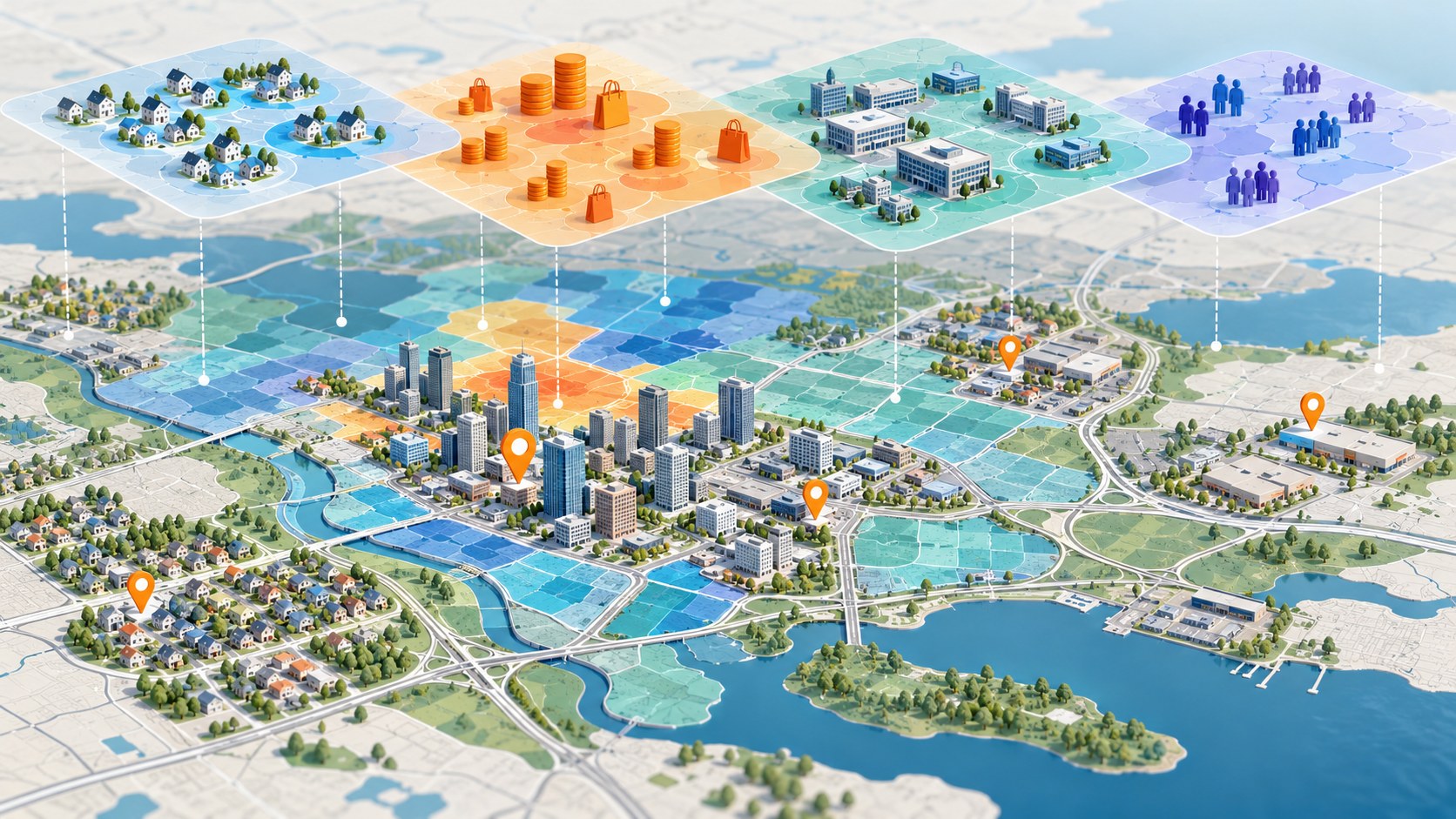
Maptive has partnered with Applied Geographic Solutions, known as AGS, to give businesses more data about the markets around the places they map. The partnership adds licensed demographic, consumer, business, and risk data to a platform where teams already work with their own records.
The new data covers the United States and Canada, with separate packages for each country. Census data remains available alongside the added AGS data.
For a company looking at its customers or deciding where to expand, that means more questions can start with the map it already uses. The places where a business works are one part of that choice. It also needs to understand the people and businesses nearby, including how local households spend.
Census remains part of the map
Census data helps businesses plan. Counts of people and households, along with income data, help a team understand who lives near its sites. These measures can explain why areas with similar customer counts may serve quite different groups of people.
Maptive already brings that data into its maps. Users can map their own records and study the people and households nearby. The AGS partnership builds on that work with other measures and modeled estimates for businesses that need them.
Census data remains a useful starting point. Commercial models can draw on public data as part of their own methods, too. The AGS data adds other kinds of evidence for questions that need more detail.
What AGS adds to the picture
Applied Geographic Solutions builds models of people and places. Its work includes estimates of current conditions and forecasts that help describe how an area may change during the years a business is planning for.
In Maptive's United States offering, teams can examine estimates of household spending, business and job counts, and demographic forecasts. Risk measures add data about conditions such as crime and natural hazards. Canadian packages have their own data on people, jobs, consumers, and homes.
Household income describes how much households earn. Spending estimates add detail about what they spend in each category. Business counts show how many businesses are in an area, while forecasts of people and households show how the area is expected to change.
For a team reviewing a market, household makeup helps describe the people it hopes to serve. Nearby business counts and estimates of spending on what it sells add detail to that assessment. The team chooses data to suit its question.
That is useful when a company is planning past its next sales period. A choice to open a site or extend a sales area can affect the business for years. Current customer records show the business as it stands, while demographic forecasts give the team another point of reference for the years ahead.
Spending estimates describe an area, and demographic forecasts describe a modeled future. Neither predicts the company's own sales.
From location records to market questions
Customer addresses show where a business has formed relationships with buyers, while sales records show where its revenue has come from. Its existing locations also show where it has chosen to operate.
Those records also reflect the decisions the business has already made. They do not, on their own, describe every market it has yet to enter. A region with few customers may deserve a closer look, but the blank space alone says little about whether it fits the company.
The partnership gives Maptive users more evidence about the people and businesses near their own mapped locations. That data helps them discuss why an area may deserve attention and which conditions support that view.
Keeping that data in the map also helps a team explain its question to coworkers. They can refer to market information as they discuss an area's existing customers and nearby locations. A territory boundary gives them another way to define the area they want to study.
The business still chooses what it needs to know. A team checking its current reach may care most about households and the number of businesses nearby. A team planning to expand in a few years may focus more on expected change. Each can start with the records it already knows.
Access through Maptive
The partnership brings AGS data into Maptive for use inside the app. Package contents vary by country, so teams can start with the market and measure they need to study. They can still use the Census layers to learn about the people who live in an area.
For Maptive, the partnership adds more data about the places on a company's map. Teams can see where the business has a presence and study what is nearby. They have more evidence to decide which places deserve a closer look before choosing what to do next.