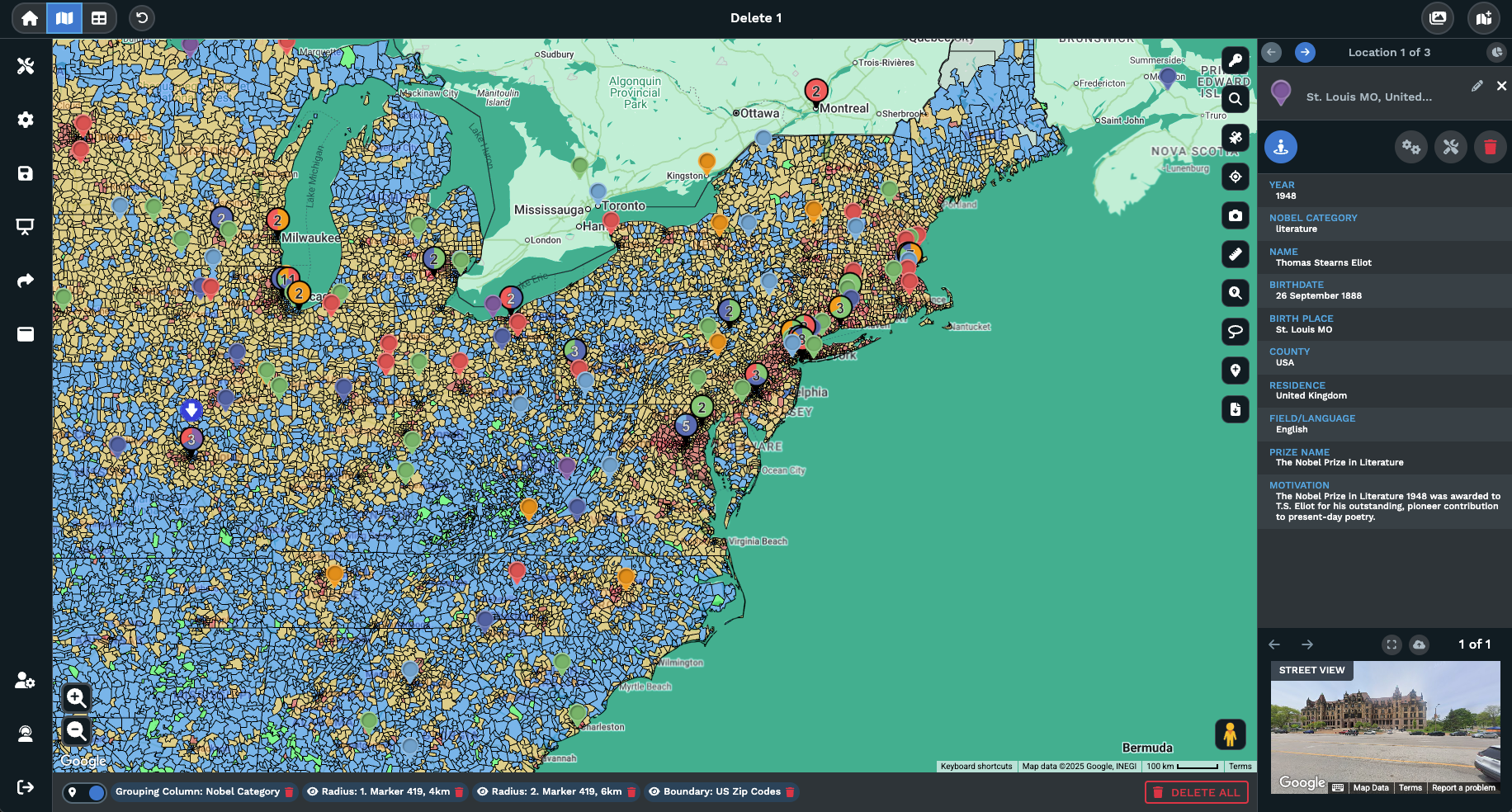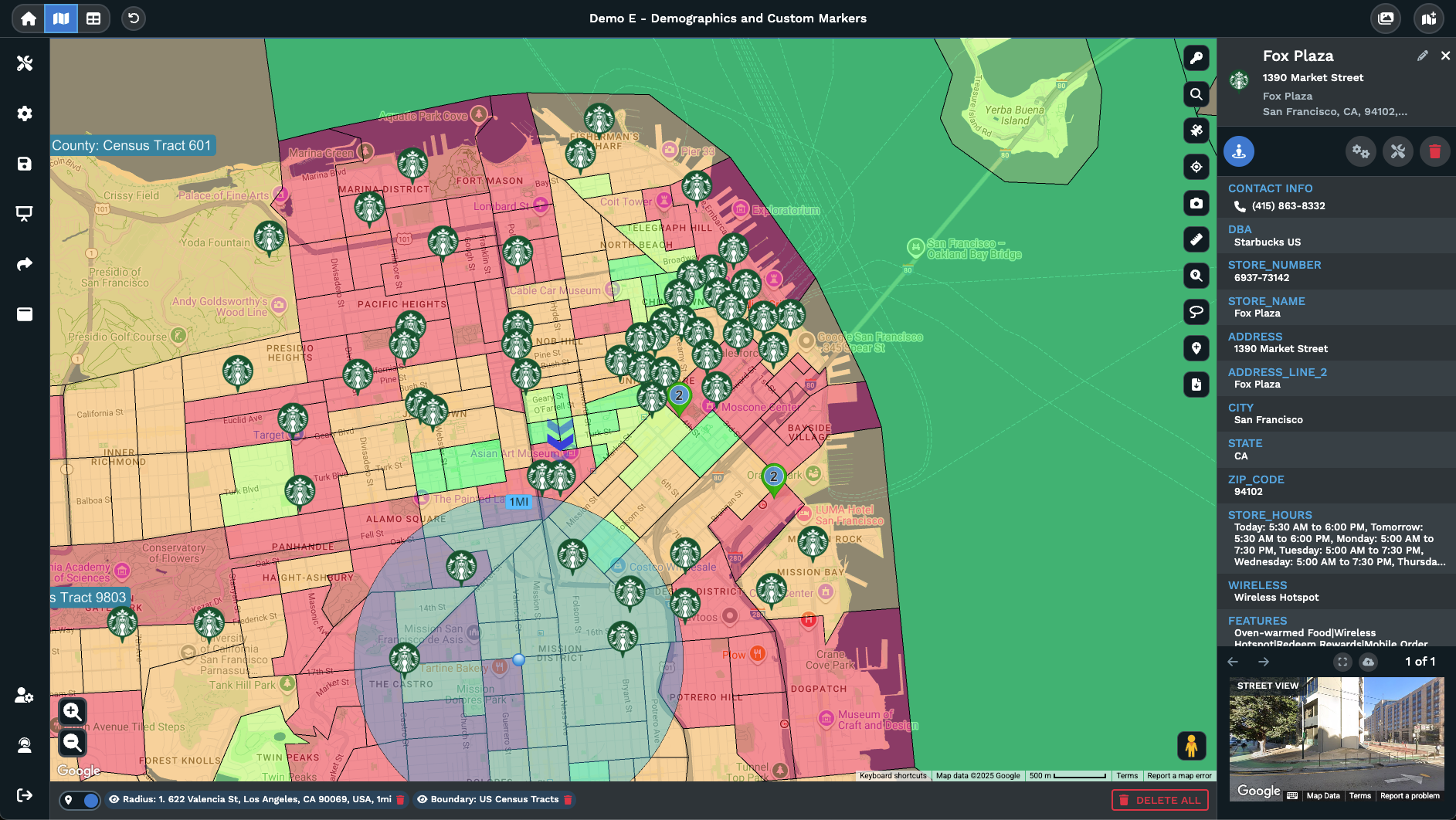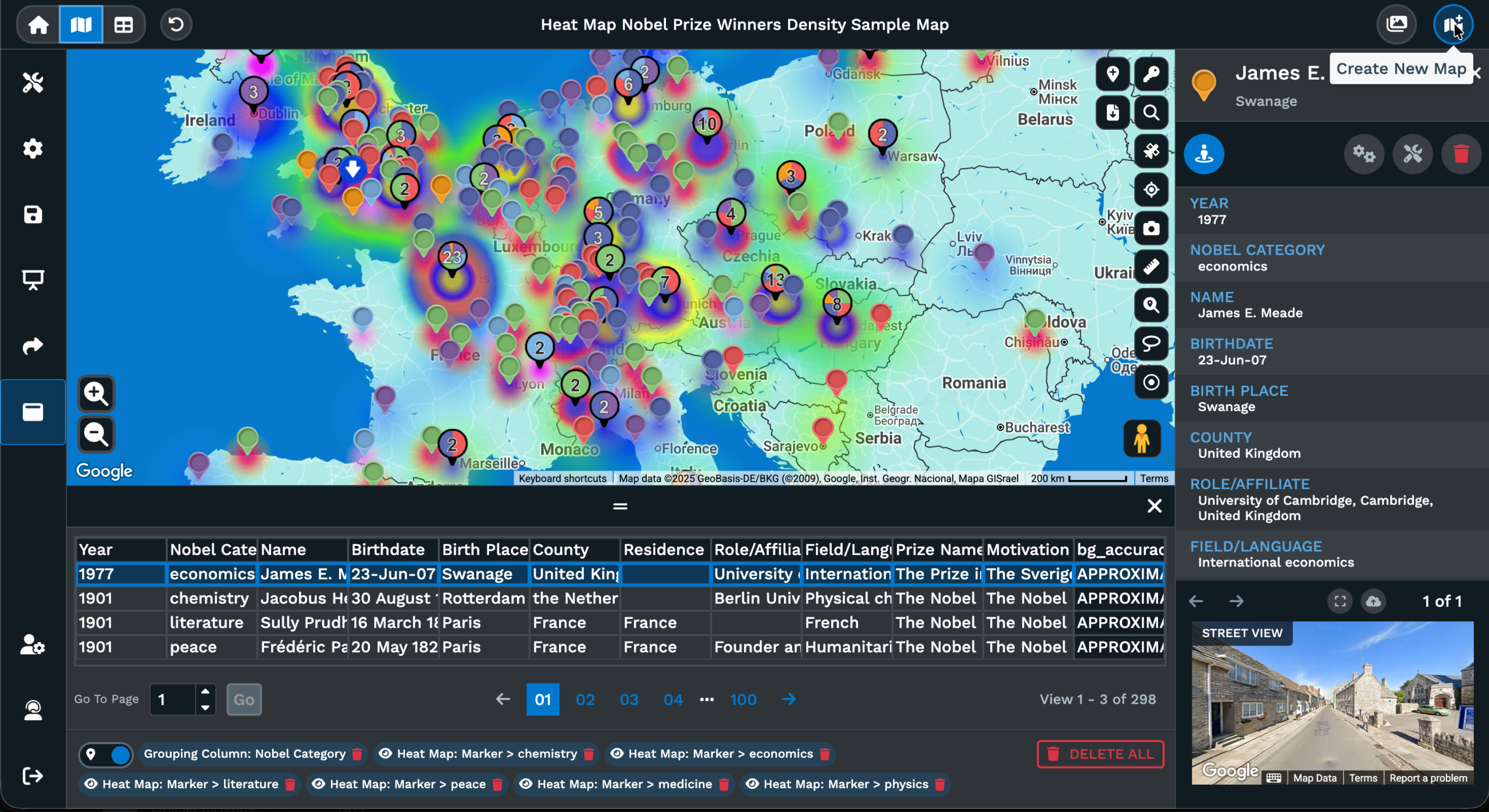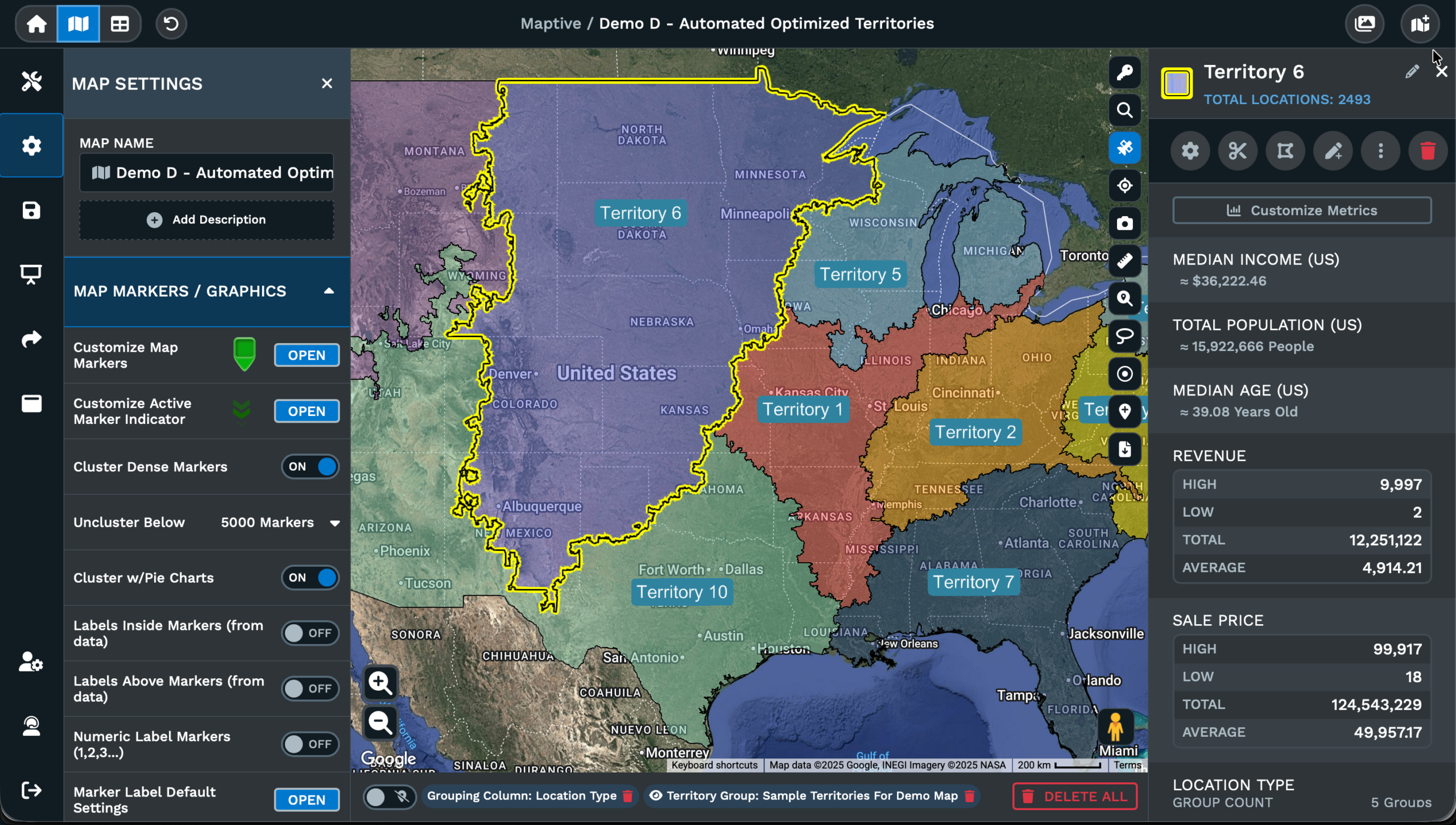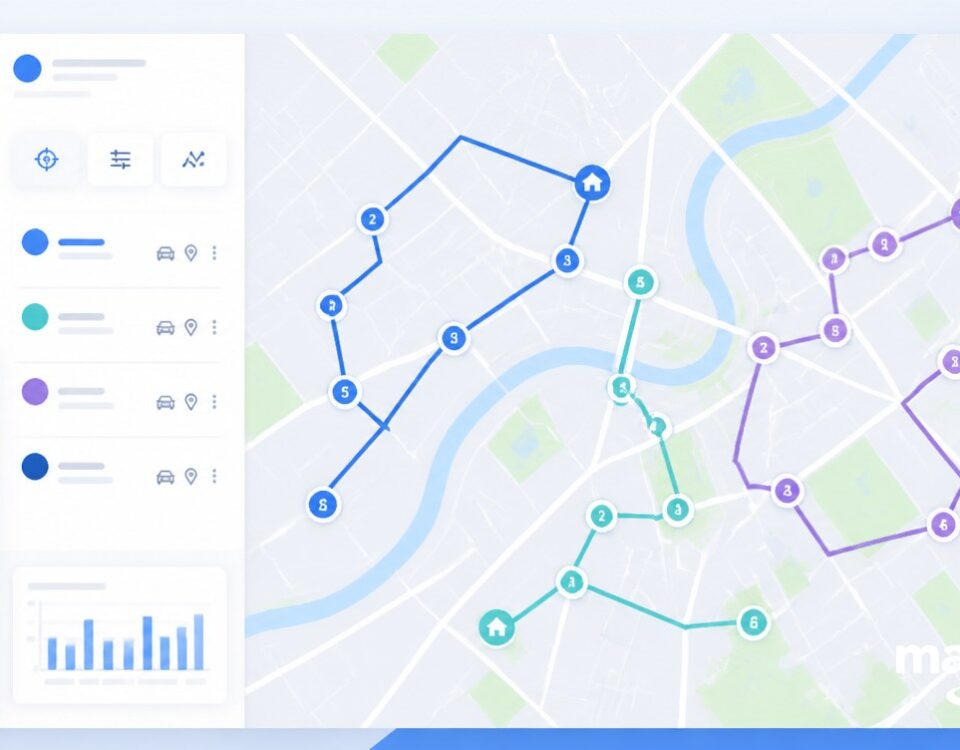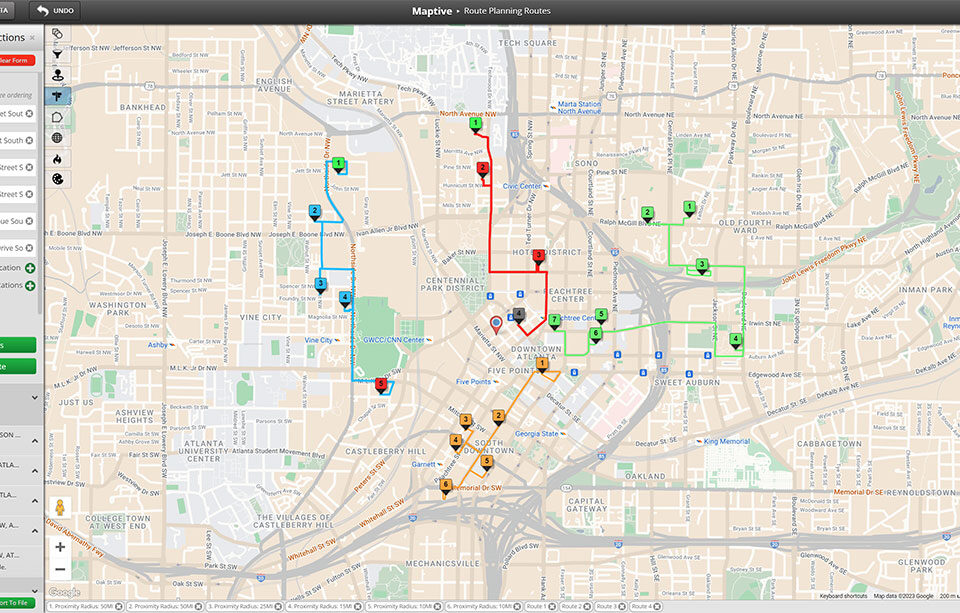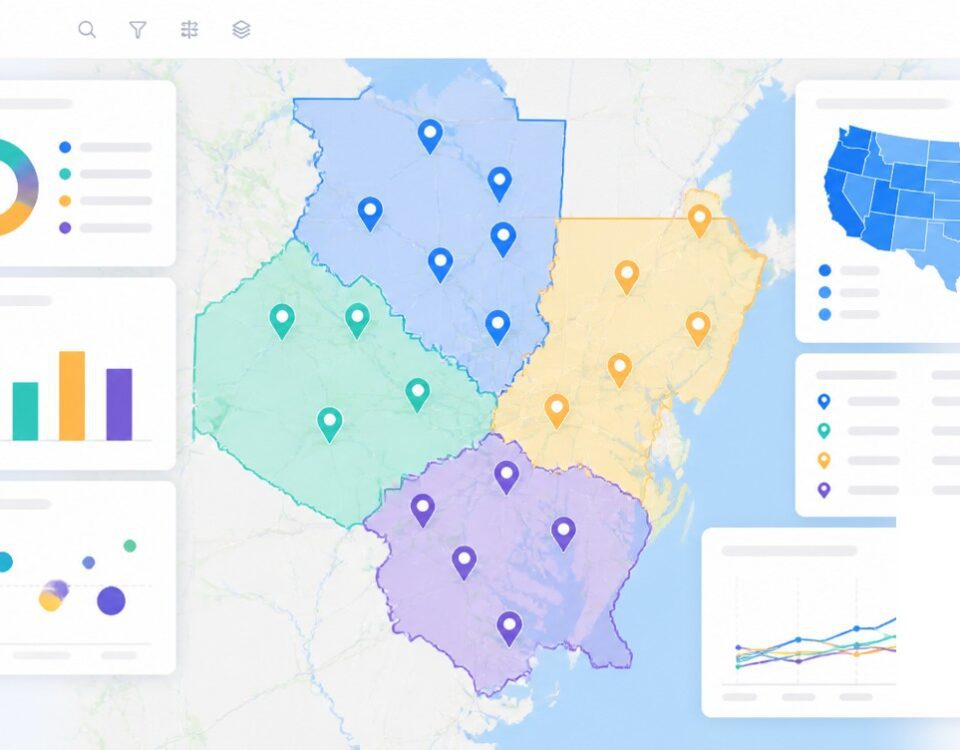
Geographic Boundary Tool

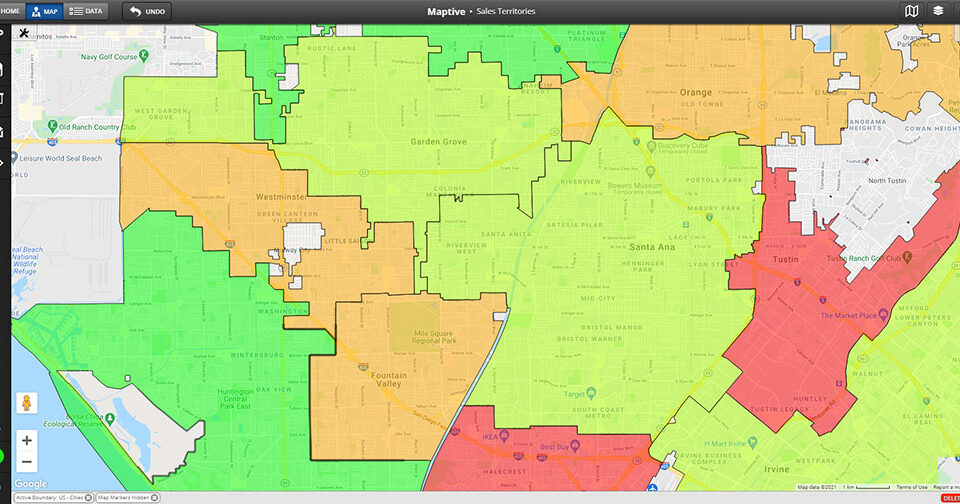
Color whole regions on your map by the data behind them. Pick a boundary set, choose a fill type, and Maptive paints every polygon to match the metric you want to track now.

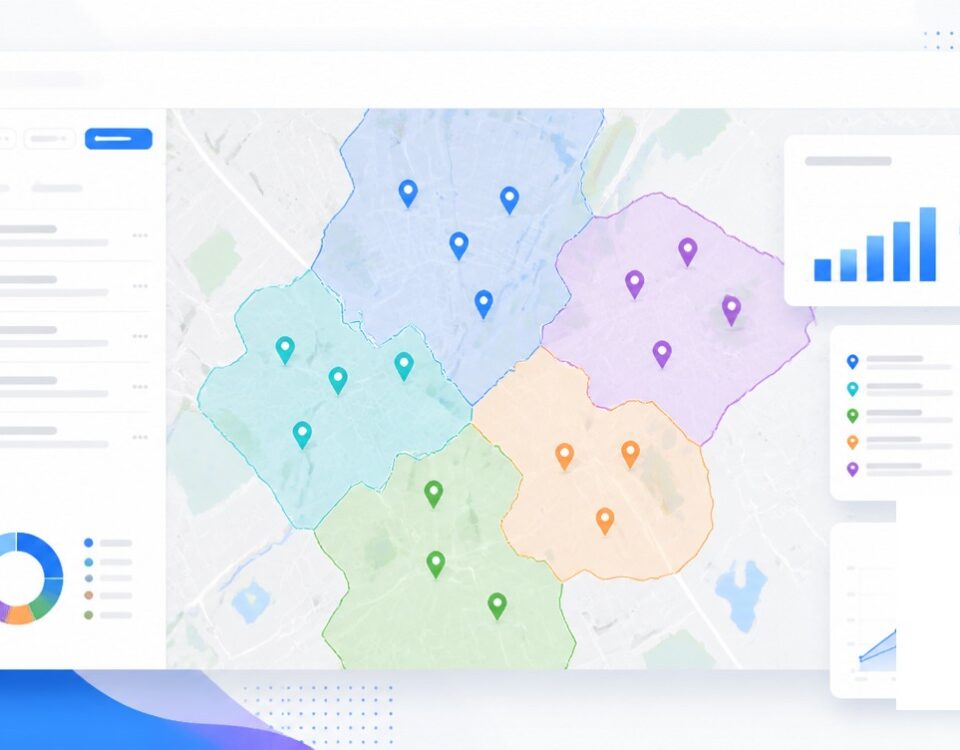
Boundary Patterns Across Your Map
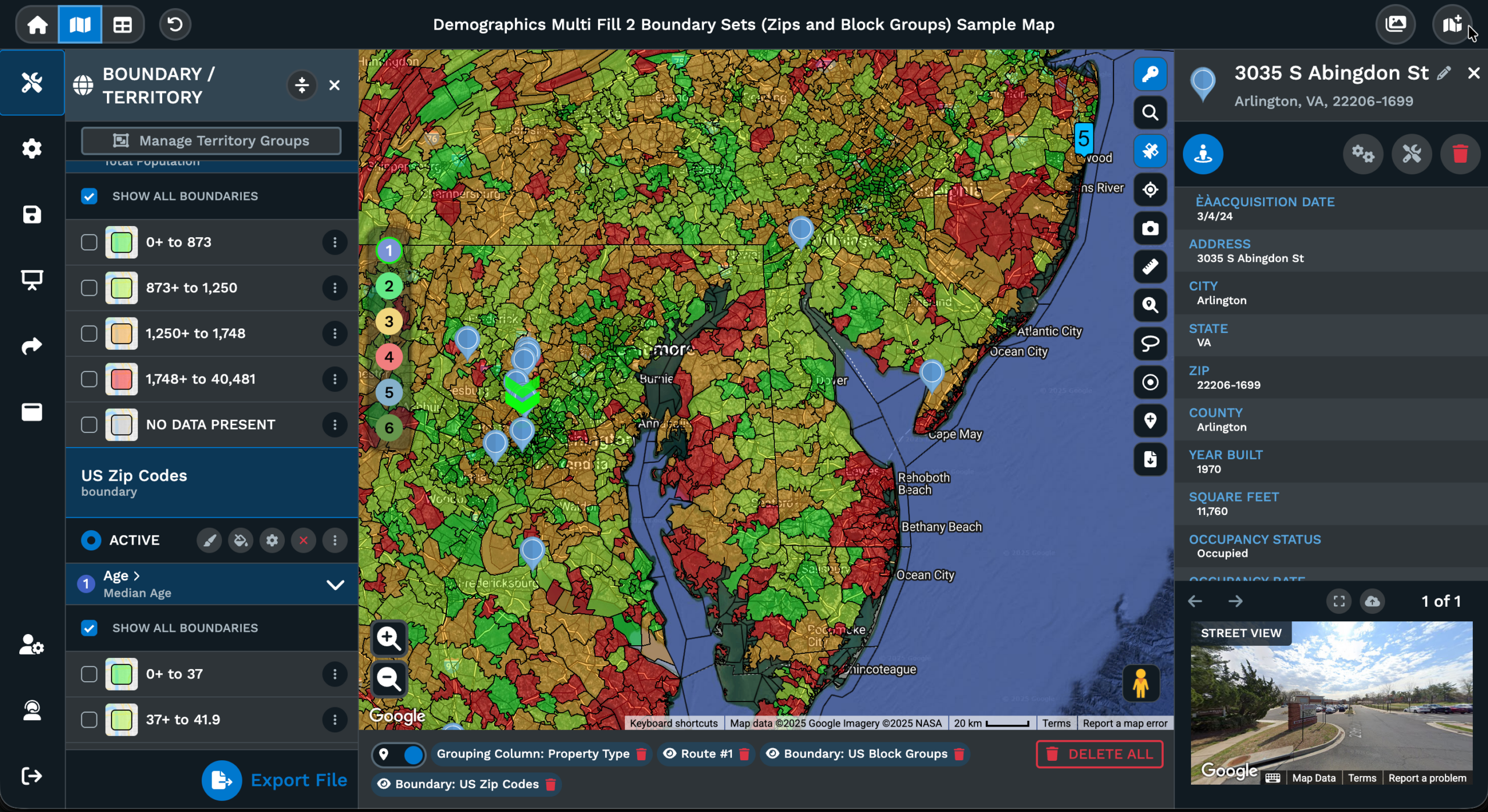
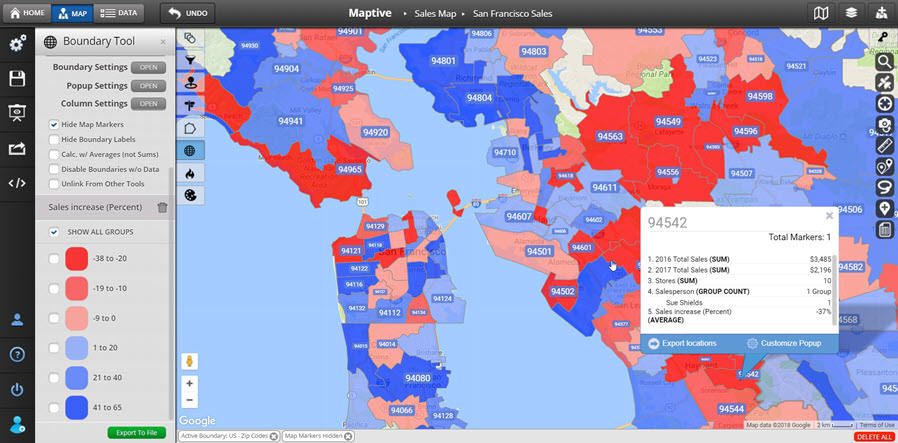
The Boundary Tool sits inside Map Tools. Open it, pick a Boundary Set, and decide how each polygon gets colored. The panel groups every fill, edge, and label control in a single view.

Fill type menu: Pick from No Fill, My Numerical Data, My Group or Territory Data, Marker Count and Location Density, or Demographic Census Data on a chosen boundary set.

Function dropdown: Aggregate a numeric column across each polygon by Sum, Average, Max, or Min, then watch the color scale update so the busiest regions read the loudest.

Fill Settings: Adjust the color progression, set how many ranges show, switch between Value Ranges and Percentage Ranges, and tune Opacity from 0 to 100 across each range.

Boundary Formatting: Set Line Width, Line Color, and toggle Ignore Filters, Combine Groups, Hide Areas W/O data, or Disable Boundary Hover and Click for the active set.

Sync Data tab: Choose Geometry to match markers by point in polygon, or Data to match by a column value, which suits census track numbers and incomplete address fields.

Add More Fills: Stack multiple fill layers on 1 boundary set, swap the active fill from the panel, and remove any fill with the red garbage can icon when you are done.

Color Boundaries in 3 Steps

Faster Decisions From Boundary Maps

Regional Totals at Sight
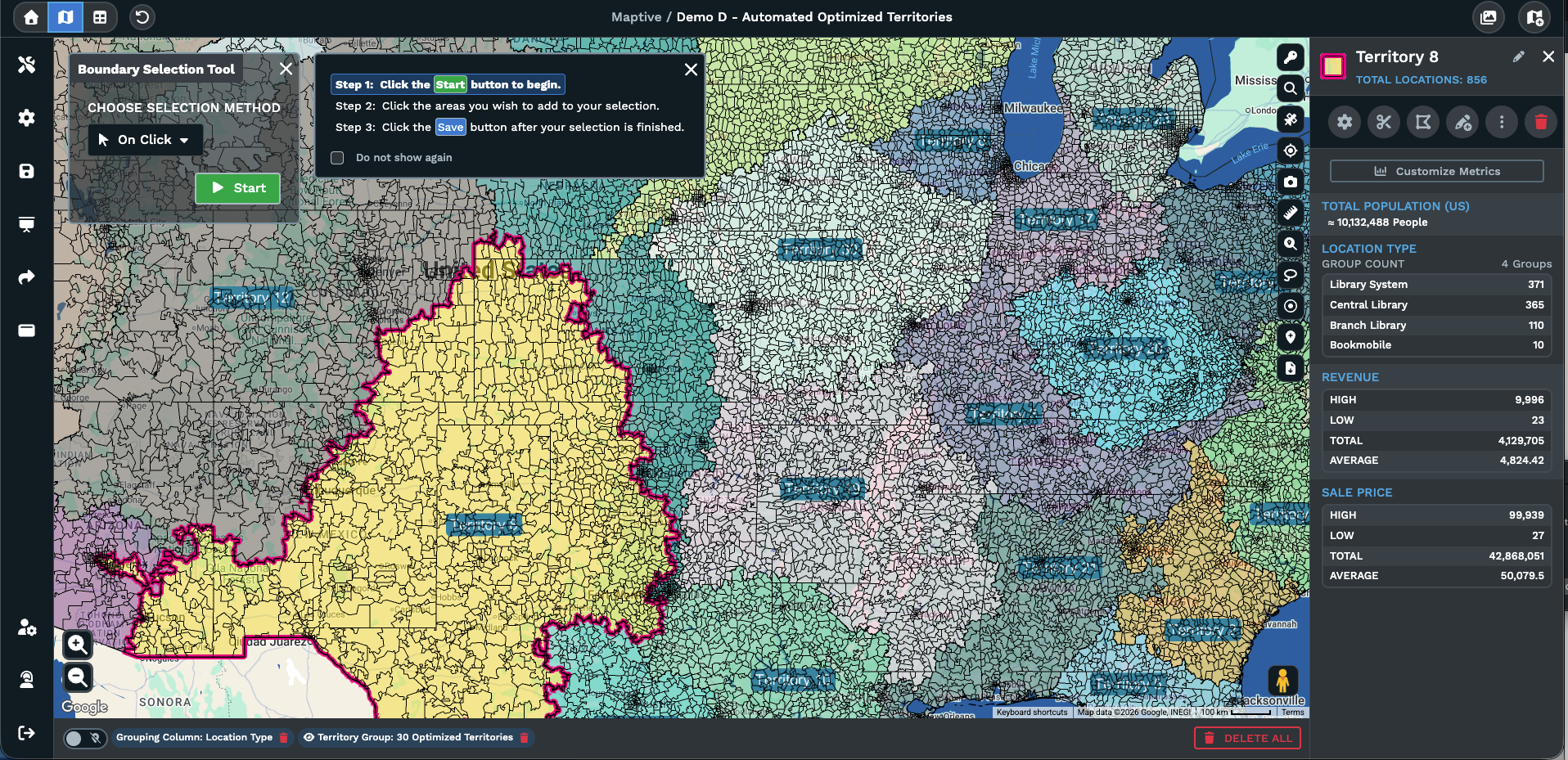
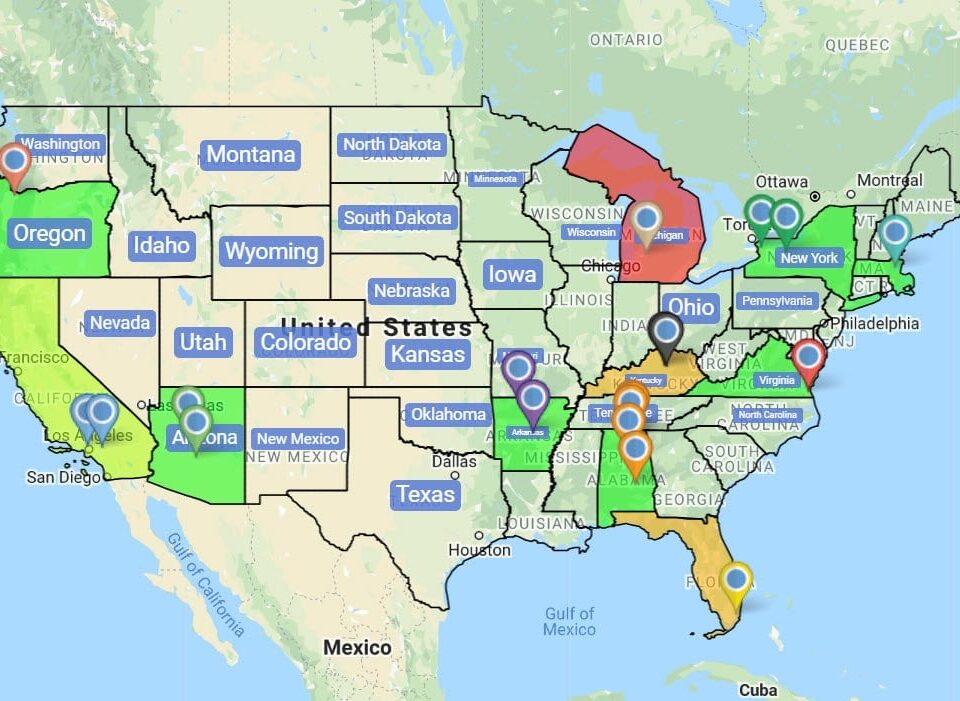
A spreadsheet of revenue by state hides the pattern in a wall of digits. Load US States as a boundary set, pick My Numerical Data, set Sum on the column you care about, and the totals paint onto the map. Every region holds its own number and its own color so the highest and the lowest read first, with the middle band sitting between them.

Density Without Pin Clutter

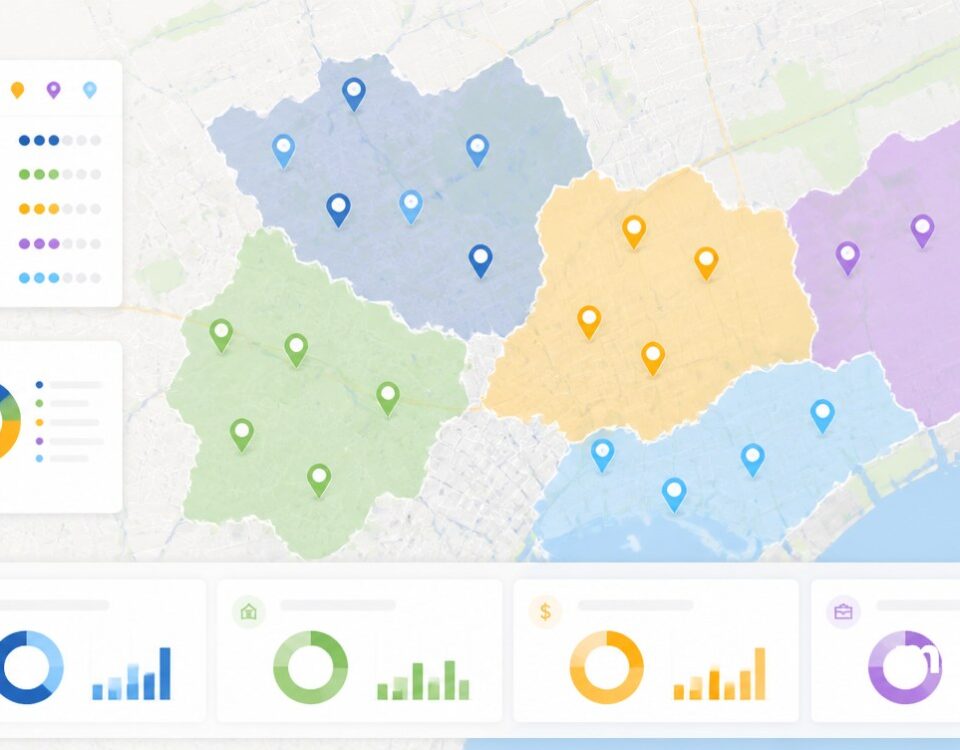
A pile of overlapping pins makes it hard to tell where the work concentrates. Switch the fill type to Marker Count and Location Density, hit Load Boundaries, and each polygon shades by how many of your records fall inside its border. The crowded areas darken and the empty ones lighten, so manual counting drops out of the workflow for good.

Demographic Context Built In

Joining Census data to your own regions by hand burns hours on every project. Pick Demographic Census Data as the fill type on a US or Canada boundary set, choose a Demographic Group and pick a metric, and the values paint across every polygon on the map. Click any region to read the full breakdown in the right side panel.

Categorical Maps Read Faster

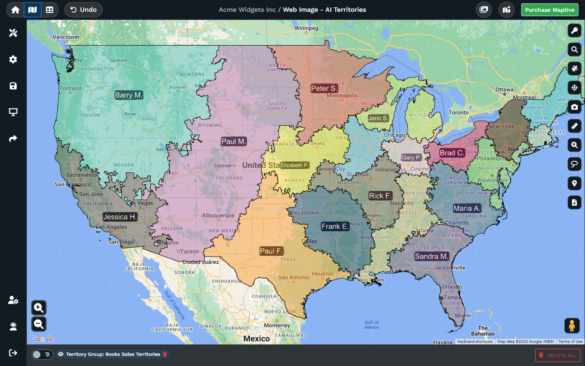
When a column holds a category like rep name or service area, a dot map only goes so far. Pick My Group or Territory Data, point Maptive at the column, and each polygon takes the color of the winning category for the markers inside it. The result reads like a coverage map with category totals already attached to every polygon.

Focused Coverage Snapshots

Sometimes you want to show 1 region without the country around it. Click a polygon, hit the Isolate Boundary Button in the right side menu, and pick a background color from the default list or set a custom hex. Maptive hides the rest of the map, leaving the polygon, its colors, and its totals on screen for the screenshot you want.

Stacked Views per Set

A single boundary set can answer more than 1 question for the same region. Use Add More Fills to stack a Sum fill, a Marker Count fill, and a demographic fill on the same set, then switch the active fill from the panel. The numbered indicator shows which fill is currently drawn, and the rest stay parked for later, ready when you need them.

Boundary Mapping by Zip and County

Building a Boundary Map

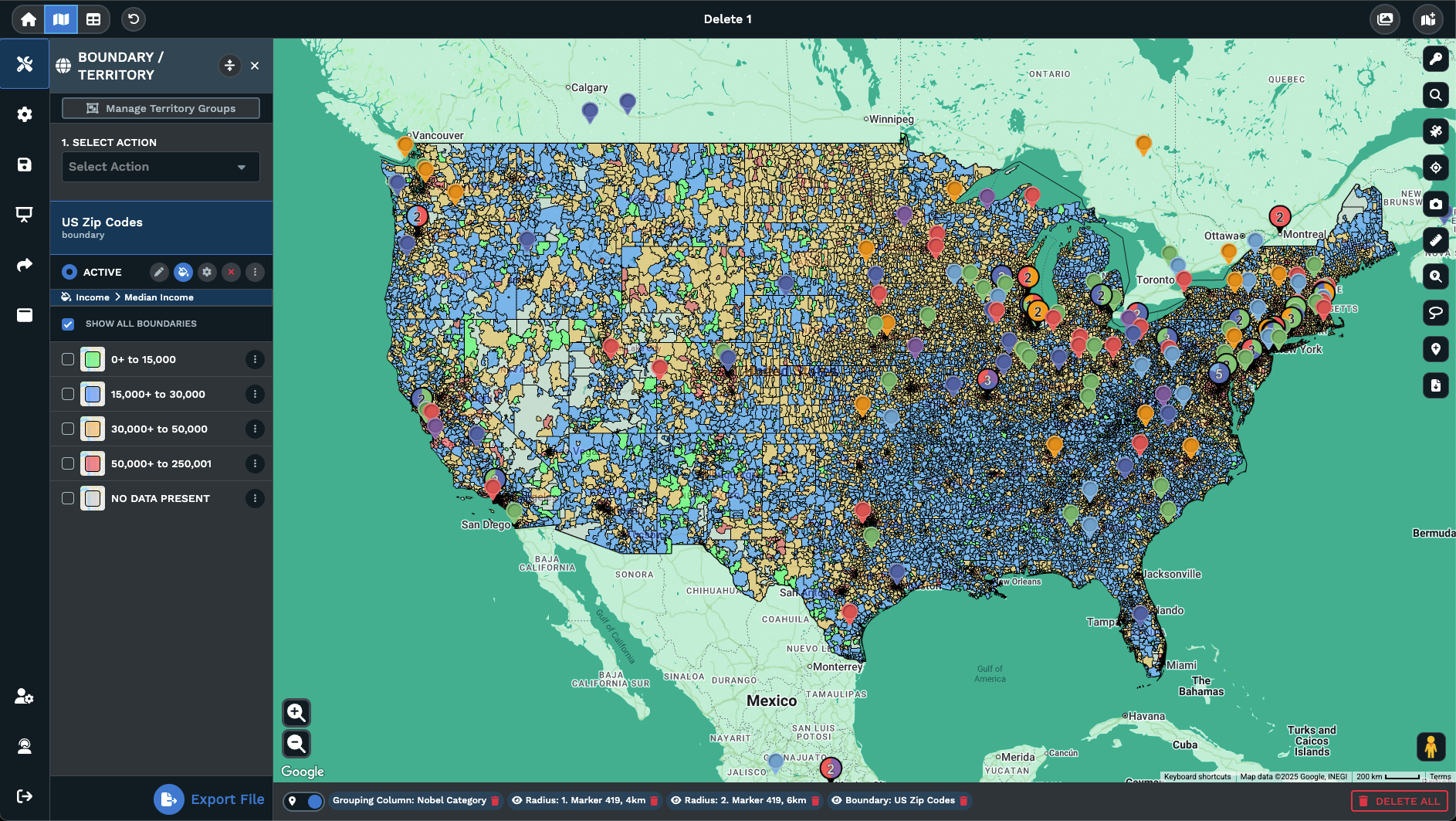
A boundary map starts with 2 picks. The first is the Boundary Set that covers your area, and the second is how each polygon gets colored. Open Map Tools, click the Boundary Tool, and open the Boundary Set dropdown. Pick US States or a set the panel offers. Maptive ships 5 fill types. No Fill or Manual Fill leaves outlines you color by hand. My Numerical Data colors by a column aggregated with Sum, Average, Max, or Min. My Group or Territory Data colors by a category column where the winning value drives the polygon. Marker Count and Location Density colors by row counts. Demographic Census Data covers population, income, and age across US and Canada.

Once a fill type is set, click Load Boundaries and the polygons paint across the map. Customize Fills opens the color progression, the number of ranges, and the range method. Value Ranges is recommended for a tidy spread, and Percentage Ranges suits fixed brackets. Opacity runs 0 to 100 per range, and the picker takes an HTML code for a brand palette.

Boundary Formatting sets Line Width and Line Color for polygon edges, with width at 0 to hide them. Toggles for Ignore Filters, Combine Groups, and Hide Areas W/O data round out the panel.

Connecting Markers to Polygons

Boundary maps only sing when your markers attach to the right polygon. Maptive handles that link in the Sync Data tab. The default option is Geometry, a point in polygon match where every marker drops into whichever boundary holds its coordinates. That works for addresses that geocoded cleanly, since the latitude and longitude place the pin somewhere on Earth.

The second option is Data, a text match against a column in your spreadsheet. Pick the column, point Maptive at the boundary attribute, and the rows attach by name even if the address itself never geocoded. The docs call out census track numbers as a primary case here, since long ID strings need an exact match rather than a coordinate hit. Incomplete address fields also benefit, because a row missing a street will tie to a boundary if the state or zip column lines up.

Once markers and polygons are linked, every aggregation runs on that connection. Sum, Average, Max, and Min draw from rows inside each polygon. Marker Count rises and falls with the same row set. Click any polygon and the right side panel opens with totals, row count, and any custom metrics. Combine Groups can fold same-group polygons into a single unit so totals merge.
Isolating Polygons for Snapshots

The Boundary Isolation Tool, also called the cutting tool, narrows the map to a single boundary or territory. Click any polygon, then click the Isolate Boundary Button in the right side menu. The rest of the map drops away, leaving the polygon, its fill, and its labels in place. Pick a background color from the default list, or set a custom color with the picker, to control what sits behind the isolated region on screen.

The tool isolates 1 boundary at a time. To show several states or zips together, build a territory first, either through the Automated Territory Tool or the Territory Drawing Tool, and isolate that territory instead. The same workflow applies to any group of polygons inside a single territory.

Removing the isolation is a 3 way option. Click the isolated polygon and click the isolation tool again to restore the full view, delete the boundaries or territories from the map, or click the garbage can icon at the bottom where boundaries and territories are listed. The docs name screenshot work as the case for the cutting tool, useful when you are taking an image of a region. Aggregated totals stay visible while the polygon is isolated, so the snapshot keeps its data context.


Boundary Tool FAQS

1How do I add a boundary set to my map?
Open Map Tools and click the Boundary Tool. The panel opens with a Boundary Set dropdown at the top, where you pick the geography you want, such as US States. Choose a fill type, set any function or column the fill type asks for, and click Load Boundaries. Maptive draws every polygon in that set across the map, ready for you to read totals from the right side panel, tune colors from Customize Fills, and adjust edges from Boundary Formatting whenever you need to.
2What fill types are available in the Boundary Tool?
The Boundary Tool ships with 5 fill types. No Fill or Manual Fill leaves outlines you color by hand. My Numerical Data colors by a numeric column you aggregate with Sum, Average, Max, or Min. My Group or Territory Data colors by a category column where the winning value drives each polygon. Marker Count and Location Density colors by row counts inside each polygon. Demographic Census Data covers population, age, household income, and other metrics for US and Canada boundary sets.
3Can I show totals inside each region of the map?
Yes. Pick the My Numerical Data fill type, point the Function dropdown at Sum, Average, Max, or Min, and select the numeric column you want totaled. Click Load Boundaries and Maptive runs the function on the rows inside every polygon. The label on each polygon can carry the value if you toggle Include Value, and clicking any region opens the right side panel with the aggregated number, the row count, and any custom metrics you have already set up for the map.
4How does the Boundary Isolation Tool work?
The Boundary Isolation Tool, also known as the cutting tool, hides the rest of the map and leaves a single polygon on screen. Click the polygon, hit the Isolate Boundary Button in the right side menu, and pick a background color from the default list or set a custom hex. The polygon keeps its fill, its labels, and any totals already on it. To remove the isolation, click the polygon and the tool again, or use the garbage can icon.
5Can I isolate more than 1 boundary at a time?
The cutting tool isolates 1 boundary or territory at a time. To show several polygons together, build a territory first that holds the polygons you want, then isolate that territory. The Automated Territory Tool can group polygons by a rule, and the Territory Drawing Tool lets you trace the area by hand. Once the territory exists, the same Isolate Boundary Button hides the rest of the map and keeps every polygon in the territory on screen for the screenshot you want.
6Does Maptive include demographic data on boundary maps?
Yes, with a region limit. The Demographic Census Data fill type pulls Census metrics like population, age, and household income onto polygons in US and Canada boundary sets. Pick the fill type, choose a Demographic Group, then pick a metric from the next dropdown. Click Load Boundaries and the values paint across the map. Click any polygon and the right side panel opens with the full breakdown for that region, with no extra upload required from you on top of the boundary set.
7How do I match my markers to the right boundary?
Open the Sync Data tab on the boundary set. Geometry, the default, runs a point in polygon match using the latitude and longitude already attached to each marker. Data is a text match against a column you pick, with the value compared to a boundary attribute. The docs recommend Data for census track numbers and any spreadsheet where addresses did not geocode cleanly, since the row will still tie to a polygon by the column value you chose rather than coordinates.
8Can I stack more than 1 fill on the same boundary set?
Yes. Click Add More Fills on the boundary set in the panel and pick another fill type. You can stack a Sum fill, a Marker Count fill, and a Demographic Census Data fill on the same boundary set, then switch the active fill from the panel. A numbered indicator shows which fill is currently drawn, since only 1 fill displays at a time. The red garbage can icon removes any fill layer you no longer need on the boundary set.
9How do I edit the colors and ranges of a fill?
Click Customize Fills on the active fill. The popup shows the color progression, the number of ranges, and the range method. Pick Value Ranges for a tidy spread or Percentage Ranges for fixed brackets, with the warning that some Percentage brackets may end up empty. Each range has an Opacity slider from 0 to 100 and a color picker that accepts an HTML color code. Save and the polygons repaint with the new colors as soon as you close the popup.
10Can I hide boundary edges or empty regions?
Yes. Open the Boundary Settings icon and click the Boundary Formatting tab. Set Line Width to 0 to hide the polygon edges, or pick a different Line Color if you want them visible but recolored. Toggle Hide Areas W/O data on to drop any polygons that do not have any rows attached to them. Other toggles include Ignore Filters, which locks colors when marker filters change, and Combine Groups, which folds same-group polygons into a single unit on the map.ProgressBatch 10: find docs and draft 10 pagesCross-validate 10 new pagesFinal batch: 9 remaining feature pagesAdd Keywords to Target tabRegenerate XLSX and verifyDraft Lasso Tool landing pageValidate counts and banned wordsStrip scenarios and convert numbersGround FAQs/SEO in real Maptive docsFull document factuality auditApply factuality fixes + reframe Step 3Sweep lands out of lasso docFetch territory tool docsDraft territory tool landing pageFetch Drawing Tool doc16Drafting drawing tool landing pageRe-extract Drawing Tool doc summaryFetch 5 Maptive feature docs in parallelDraft Boundary Tool landing pageDraft Heat Mapping Tool landing pageDraft Drive Time Polygons landing pageDraft Route Optimization landing page23Draft Filter Data landing page24Cross-validate all 5 new landing pagesWorking foldersecurity_landing_page.mdglobal_coverage_landing_page.mdfilter_tool_landing_page.mdcustom_markers_landing_page.mddemographics_landing_page.mdbubble_maps_landing_page.mdbase_maps_landing_page.mdcrm_mapping_landing_page.mdgoogle_places_landing_page.mdmarker_color_coding_landing_page.mdsatellite_maps_landing_page.mdgrouping_tool_landing_page.mddriving_radius_landing_page.mdprintable_maps_landing_page.mddistance_matrix_landing_page.mdheat_mapping_landing_page.mdboundary_tool_landing_page.mddrive_time_polygons_landing_page.mddistance_matrix_doc_summary.mdglobal_coverage_doc_summary.mddirections_doc_summary.mdshare_export_doc_summary.mdcalculate_distances_doc_summary.mdpresentation_maps_doc_summary.mdsecurity_doc_summary.mdprintable_maps_doc_summary.mddriving_radius_doc_summary.md_shared_prompt_block.txt_use_cases_create-custom-printable-maps.txt_use_cases_enterprise-level-security.txt_use_cases_best-global-coverage.txt_use_cases_calculate-distances.txt_use_cases_turn-turn-directions-google-navigate.txt_use_cases_share-embed-and-export-your-maps-on-maptive.txt_use_cases_create-custom-maps-for-your-presentations.txt_use_cases_driving-radius-maps.txt_use_cases_distance-matrix-calculator.txtgoogle_places_doc_summary.mdcrm_mapping_doc_summary.mddemographics_doc_summary.mdbase_maps_doc_summary.mdlocation_finder_doc_summary.mdsatellite_maps_doc_summary.mdbubble_maps_doc_summary.mdmarker_color_coding_doc_summary.mdcustom_markers_doc_summary.mdgrouping_tool_doc_summary.md_use_cases_location-finder.txt_use_cases_google-places-search.txt_use_cases_demographic-overlays.txt_use_cases_crm-mapping-software.txt_use_cases_satellite-image-maps.txt_use_cases_bubble-maps.txt_use_cases_custom-map-markers.txt_use_cases_marker-grouping-tool-color-code-a-map.txt_use_cases_customizable-base-maps.txt_use_cases_grouping-tool.txt_use_cases_boundary-tool.txt_use_cases_drive-time-polygons.txt_use_cases_optimize-routes-directions.txt_use_cases_heat-mapping-tool.txt_use_cases_filter-data.txtfilter_tool_doc_summary.mdroute_optimization_doc_summary.mdboundary_tool_doc_summary.mddrive_time_polygons_doc_summary.mdheat_mapping_doc_summary.mdterritory_docs_summary.mdMaptive_Feature_Use_Cases.xlsxexpanded_group_C.jsonexpanded_group_B.jsonexpanded_group_D.jsonexpanded_group_A.jsonexpanded_group_E.jsonurl_check_results.jsonmaptive_competitors.jsoncompetitor_espatial.jsoncompetitor_batchgeo.jsoncompetitor_zeemaps.jsoncompetitor_mapline.jsoncompetitor_maptitude.jsoncompetitor_geopointe.jsoncompetitor_badgermaps.jsoncompetitor_carto.jsonmaptive_features.jsonbuild_xlsx.pymaptive_writer_role.mdlasso_tool_landing_page.mdfeedback.mdterritory_tool_landing_page.mddrawing_tool_landing_page.mddrawing_tool_doc_summary.mdroute_optimization_landing_page.mdlocation_finder_landing_page.mdcalculate_distances_landing_page.mdpresentation_maps_landing_page.mddirections_landing_page.mdshare_export_landing_page.mdContextTrack tools and referenced files used in this task.

Related Reading