


Most franchise systems treat cannibalization as a contract problem to be litigated after the lease is signed, when it is a measurement problem that should be settled before any unit is approved. The data needed to settle it already sits inside the franchisor’s POS system, the franchisee’s same-store sales trend, and any commercial visitation panel. The failure is procedural.
In the second quarter of fiscal 2003, Krispy Kreme reported total revenue growth of 15% against same-store sales growth of 0.1%. The gap was the warning. Total revenue rose because the system kept opening units; per-store sales were flat because the new units were drawing from the old ones. The board had the numbers in front of it for more than a year before the SEC restatements of 2004 and 2005 caught up with the rest of the story. By then the chain had crossed 400 locations and pushed product into supermarkets and gas stations, which at peak supplied roughly half of total sales and saturated the trade areas of the factory stores that had defined the brand. The collapse looked like an accounting scandal. The cannibalization was visible in disclosed figures the entire time.
Cannibalization Is a Pre-Approval Problem
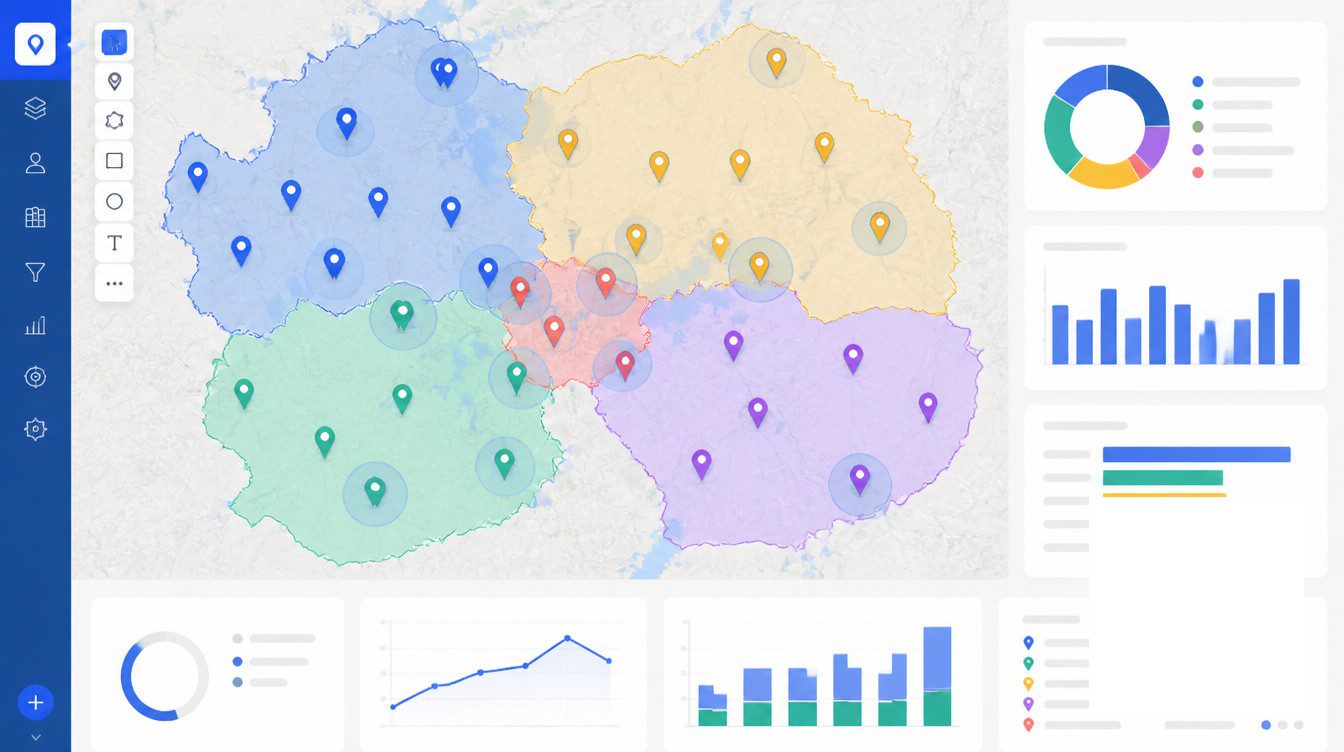
Franchise cannibalization is the transfer of sales from an existing same-brand location to a new one inside the same system, where the new unit’s revenue comes from redistributing demand rather than capturing previously untapped demand. It is the economic outcome of overlapping trade areas, regardless of what any franchise agreement says about territory.
Encroachment is the contractual side of the same fact pattern. It describes a franchisor placing a competing unit, or an alternate channel like grocery or airport distribution, inside a franchisee’s protected or exclusive territory. Encroachment claims hinge on Item 12 of the Franchise Disclosure Document, which states the type of territorial protection the franchisee was granted, if any. Protected territory now appears more frequently than exclusive territory in current FDDs, because franchisors prefer to retain the right to operate through non-traditional channels even where they will not sell another franchise. The distinction matters in court. It does not matter to the existing operator whose sales are falling.
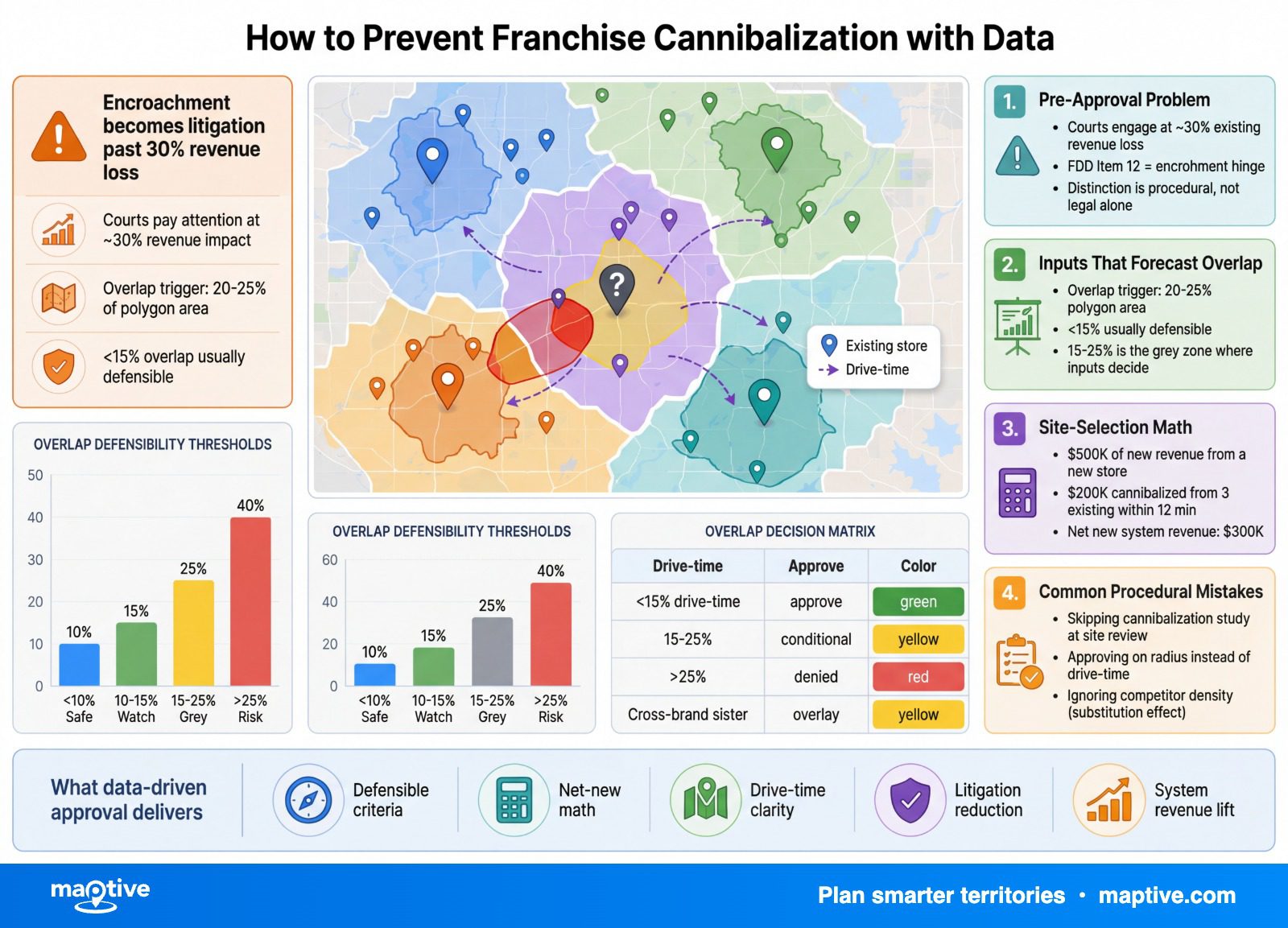
The reason the encroachment lawsuit exists at all is that the cannibalization measurement was either not run, not believed, or not allowed to be dispositive. Robert Purvin, chairman of the American Association of Franchisees and Dealers, continues to list encroachment and erosion of franchisee equity among the top three franchisee complaints. The Bryman v. El Pollo Loco decision held that opening a franchisor unit, or allowing another franchisee to open one, in close proximity to an existing operator can breach the implied covenant of good faith and fair dealing embedded in every contract. Courts pay attention once the existing operator loses around 30% of revenue. Franchisors interested in not getting to that point have to settle the question before approving the site.
The inputs to that settlement are not exotic. They are the same five fields any operations team can pull from its existing systems in a working week.
The Inputs That Actually Forecast Overlap
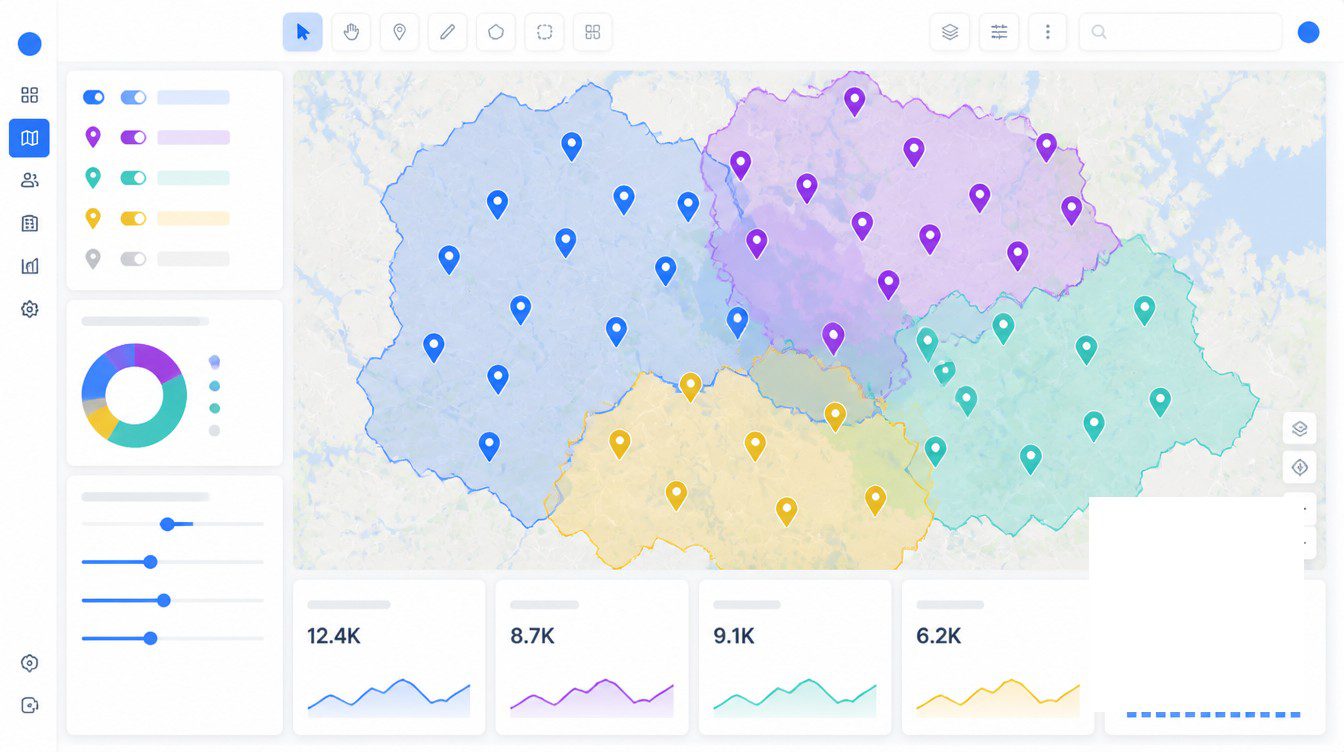
The pre-approval inputs that forecast cannibalization with usable precision number five. They are not equally weighted, and the order of decisive importance is not the order in which they are usually presented to a site committee.
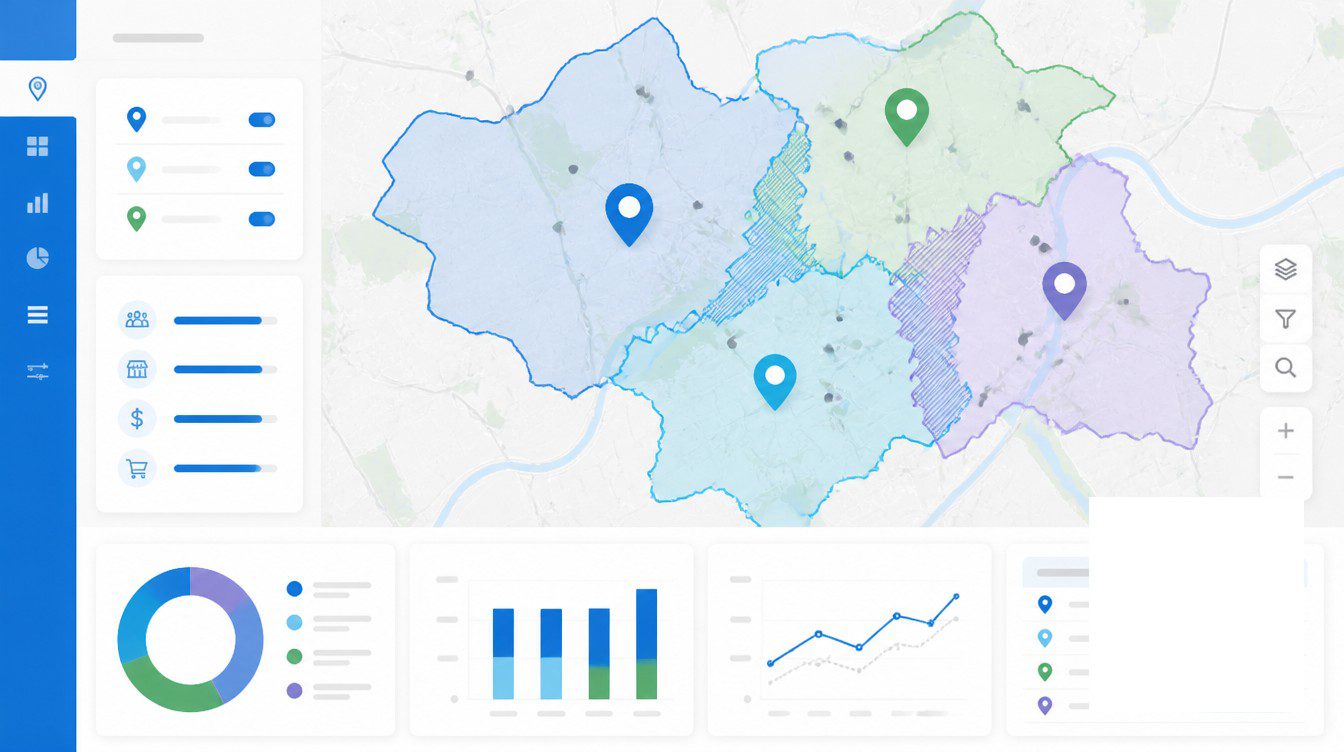
Drive-time isochrone overlap
The first input is the percentage of overlap between the drive-time isochrone of the proposed site and that of every existing unit within range. ZIP-code-based trade areas remain the dominant alternative in low-rigor systems, and they are wrong by construction. ZIP boundaries were drawn for U.S. Postal Service delivery routes in the 1960s; they have no relationship to how customers travel. A ZIP-based comparison routinely understates overlap and, on cheaper systems, produces an approval recommendation that an isochrone-based comparison would have rejected.
Industry practice puts the overlap trigger at 20-25% of the polygon area. Anything above that produces near-certain revenue transfer. Anything below 15% is usually defensible. The interval between 15 and 25 is where the rest of the inputs decide the question.
Sales-per-capita against the system mean
The second input is the ratio of unit density in the proposed market to the system-wide mean. A market running 4.2 units per 10,000 residents against a national system average of 2.8 is 50% over-supplied before anyone proposes a new unit. The metric is plain arithmetic on data the franchisor already owns. It is also the input most often ignored, because applying it would slow expansion.
Same-store sales trend of the closest existing unit
The third input is the trailing same-store sales trend of the unit nearest to the proposed site. The trend is the franchisor’s own data, captured at the point of sale, with no panel modeling required. A declining trend at the closest unit is a veto on the proposed site, not an input to a scoring model. Treating it as an input that can be outweighed by traffic counts or co-tenancy is how franchise systems end up with the Krispy Kreme pattern of rising aggregate revenue and falling unit performance.
Foot-traffic share from third-party visitation panels
The fourth input is third-party visit data from a commercial foot-traffic panel. Placer.ai-style mobile-device panels estimate visitation, customer transfer between locations, and shared audiences at the census-block-group level. SafeGraph supplies a global POI dataset covering roughly 6 million points with similar visit insights. The data measures what the POS cannot see, which is the customer who will visit the new unit instead of the existing one. Floor & Decor used Placer.ai visitation data to improve its customer-transfer model between locations by 80%, a reference point for what the panel data can produce when applied seriously to the site decision rather than to post-opening dashboards.
Delivery and online-order zone overlap
The fifth input is the overlap between the proposed unit’s delivery and online-order zone and that of every existing unit. Online orders leak between locations silently. A new unit inside the delivery footprint of an existing one will pull online orders without any visible change in foot traffic, and a foot-traffic-only impact model will report no cannibalization that the franchisee can later document. The 2018 Sense360 finding that third-party delivery does not cannibalize restaurant visits at the channel level has been misread to mean delivery overlap does not matter inside a brand. It does. The within-brand leakage is the entire question.
The Math Franchisors Should Set Before Site Selection
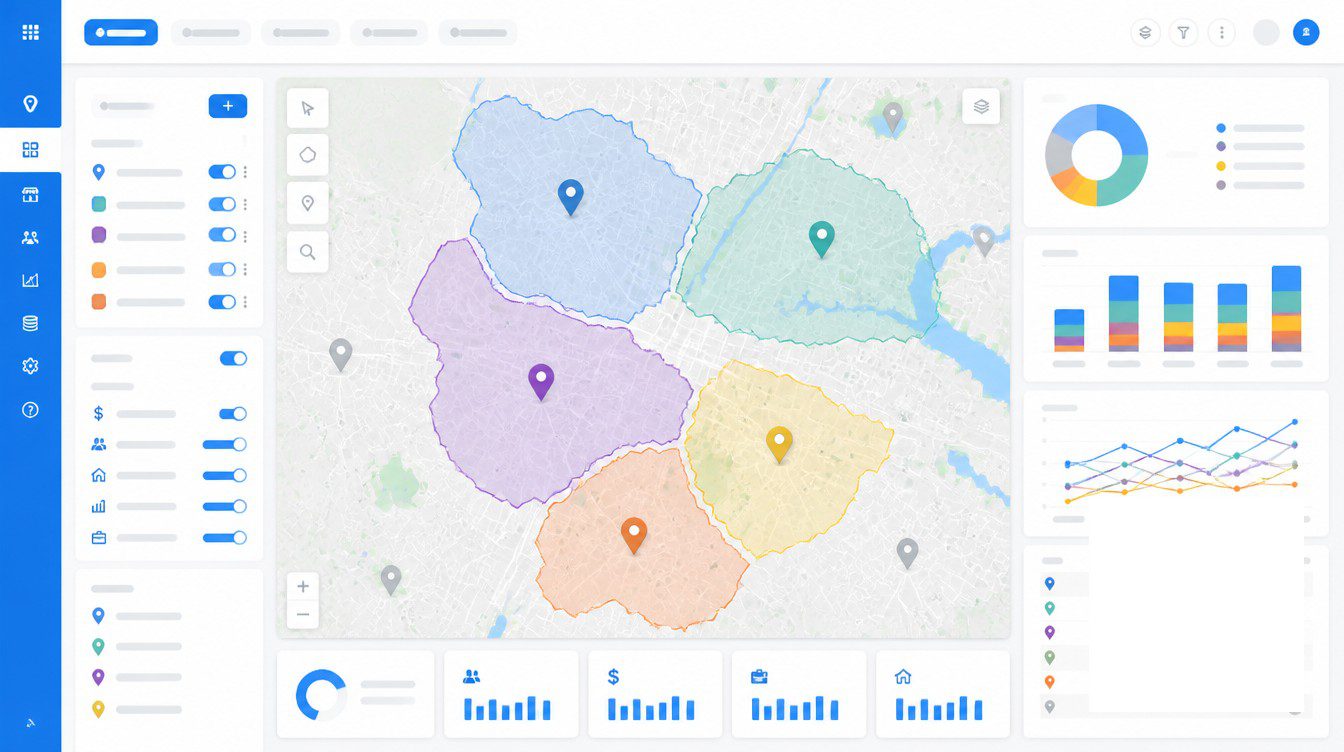
Cannibalization tolerance is a number the franchisor must set before reviewing any site, not negotiate after a site looks promising. Most systems carry no published threshold. That is why the same dispute keeps appearing inside the same systems.
The formula is mechanical. Cannibalization rate equals the decrease in sales at the existing store divided by the sales of the new store, multiplied by 100. Above 20% is generally treated as high. Above 30% is where legal exposure begins, because that is the loss figure at which courts have considered claims under the implied covenant of good faith.
Tolerance bands vary by vertical. Quick-service restaurant brands defensibly accept 25-30% because high visit frequency means the cannibalized store can remain profitable on a smaller customer base. Apparel and specialty retail target 15-20% because each lost visit carries a higher unit value and the cannibalized store has less room to absorb the loss. Service franchises sit closer to the apparel range. The precise number matters less than the discipline of declaring it in writing, by the franchisor, before any specific site enters the pipeline. A tolerance applied after the deal is preferred by the development team is not a tolerance.
Consider a worked example drawn from current franchise-development practice. A new franchise unit opens at $800,000 in first-year revenue. Five hundred thousand of that comes from three existing stores within a 12-minute drive, each losing $150,000 to $180,000. Net new revenue to the system is $300,000. The site committee’s projection looked like growth. The system’s projection looked like a wash, with three operators now running on lower volume and an additional unit on the cost base. The deal closed because the cannibalization number was not part of the approval threshold.
Domino’s is the disciplined counterexample. The company announced a plan to add 2,000 U.S. units by 2025 by densifying 25 large metros, and stated publicly that the fortressing strategy would compress same-store sales by 1% to 1.5% as sales transferred to new units. Domino’s leadership has been explicit that physical density without customer-habit density is cannibalization, and that the model only holds where order frequency is already deep enough to absorb the transfer. Starbucks operates the same logic at scale. Peer-reviewed work in Marketing Science estimated the average cannibalization imposed by a neighboring Starbucks at 1.2% within one mile and 0.4% within one to three miles, a figure Howard Schultz internalized in the early 1990s when he described the system as self-cannibalizing roughly a third of its stores every day. In both cases the threshold was declared in advance. In both cases the math was allowed to drive the site decision rather than the reverse.
Common Mistakes That Produce Avoidable Cannibalization
Three procedural mistakes account for most of the cannibalization that ends in arbitration or litigation. Each is correctable without buying new software, because the data sits inside systems the franchisor already operates.
Population-per-unit as a sufficient saturation test
The first mistake is approving sites on a population-per-unit rule alone. Service franchises typically operate on 25,000 to 50,000 residents per unit, food franchises on 15,000 to 25,000. These figures are floors, not approvals. Two markets with identical population can have different saturation depending on the density of competing brands, the distribution of consumer travel behavior, and the share of demand already captured by existing units in the system. Approving on population per unit is the methodological cousin of approving on ZIP-code trade areas. Both are convenient. Both produce predictable cannibalization in markets where unit density already exceeds the system mean.
Modeling foot traffic without modeling delivery
The second mistake is running an impact study on foot traffic without modeling delivery and online-order overlap separately. The Sense360 finding cited above has been read as a license to ignore delivery in cannibalization modeling, when the finding addressed third-party delivery against restaurant visits, not intra-brand online-order leakage between two units of the same franchise. A new unit inside the delivery zone of an existing unit will pull online orders without any visible change in store visits, and the existing operator will document the revenue loss months later from POS reports that the franchisor’s impact study did not anticipate. Delivery overlap belongs in the same scoring model as foot-traffic overlap, weighted in proportion to the unit’s online sales share.
Development incentives that override the impact study
The third mistake is allowing development incentives to outweigh the impact study. Subway is the cautionary file. The chain peaked at more than 27,000 U.S. units in 2015 and has closed roughly 7,600 since, finishing 2024 at 19,502 U.S. locations with average unit volume around $500,000 per Circana. The company filed 702 arbitration actions against U.S. franchisees in 2017, against one from McDonald’s, two from Dunkin’, and zero from Pizza Hut, Burger King, and Wendy’s. The disparity reflects a system that had already approved itself into oversaturation before the impact studies could matter. Quiznos collapsed from approximately 4,700 U.S. locations in 2007 to fewer than 400 by 2017 along the same vector, with franchisees alleging the franchisor opened stores too close together and forced inflated supply purchases. The Chapter 11 filing came in 2014. In both cases, the franchisor’s revenue model rewarded new openings before unit-level returns, and the impact study became a formality.
The fix in every case is procedural. A franchisor that publishes its cannibalization tolerance, requires the five inputs above before any site enters formal scoring, and treats the same-store trend at the closest existing unit as dispositive will not produce a Krispy Kreme or a Quiznos. The data already exists. Maptive and similar mapping platforms make the overlap arithmetic visible, but the prevention itself is a decision rule, not a tool selection.
Frequently Asked Questions
What is franchise cannibalization?
Franchise cannibalization is the transfer of sales from an existing franchise location to a new same-brand location, where the new unit’s revenue comes from redistributing demand inside the system rather than from previously untapped customers. It is the economic outcome of overlapping trade areas, independent of any contract terms.
What is the difference between franchise encroachment and cannibalization?
Encroachment is the contractual concept and describes a franchisor placing a unit or alternate channel inside a franchisee’s protected or exclusive territory in a way that may breach the agreement. Cannibalization is the economic outcome of sales transfer between same-brand units, regardless of what the contract says. A cannibalization event can occur without any encroachment, and an encroachment claim can be brought even where actual sales transfer has been limited.
How much sales transfer is too much?
Most retailers treat cannibalization under 15% as ideal and anything above 30% as a red flag. Quick-service brands often accept 25-30% because high visit frequency means the affected store can remain profitable. Apparel and specialty retail target 15-20% because each lost visit carries a higher unit value.
What is a normal cannibalization rate?
Industry guidance puts the normal acceptable range at 10-20% of the new store’s revenue. Anything above 20% is generally considered high, and anything above 30% is dangerous and may trigger legal exposure under the implied covenant of good faith.
How is cannibalization rate calculated?
The store cannibalization rate equals the decrease in sales at the existing store divided by the sales of the new store, multiplied by 100. For product cannibalization, the same formula applies with lost sales of the old item divided by sales of the new item. A rate above 20% is generally considered high.
What is FDD Item 12?
Item 12 of the Franchise Disclosure Document discloses what kind of territorial protection the franchisee receives, how the boundaries are determined, and what rights the franchisor reserves to open additional units nearby or to compete through alternate channels. It is the controlling document in most encroachment disputes.
What is the difference between exclusive and protected franchise territory?
An exclusive territory means the franchisor agrees not to open any other unit of any kind inside the defined boundary. A protected territory means the franchisor will not sell another franchise inside that boundary but may still operate through non-traditional channels such as airports, grocery, or national accounts. Protected territories appear more frequently in current FDDs than fully exclusive ones.
What is a Huff model?
The Huff gravity model, formulated by David Huff in 1963, predicts the probability that a consumer visits a given store as a function of the store’s attractiveness and the travel time to it relative to alternatives. It is the foundation of most commercial trade-area software used in retail site selection.
What is a buffer zone in franchise territory design?
A buffer zone is a neutral strip between two adjacent franchisee territories, commonly 0.5 to 1 mile wide, that prevents operators from competing along the edges of their assigned areas. Buffer zones reduce overlap-driven sales transfer and, paired with GPS-based alerting when proposed boundaries conflict, are now considered baseline practice in mid-market and enterprise franchise systems.
Can I sue my franchisor for opening a store too close?
A franchisee may have grounds for legal action if a new same-brand location causes a sales loss of around 30% or more, particularly under the implied covenant of good faith and fair dealing established in cases such as Bryman v. El Pollo Loco. Success depends heavily on the specific territory language in Item 12 of the Franchise Disclosure Document, since a franchisor’s duty not to encroach generally cannot be implied where the agreement expressly denies the franchisee an exclusive territory.