



Sales teams lose hours each week to poorly drawn territories. Reps drive past each other on highways, overlap on accounts, and leave entire regions untouched. Meanwhile, managers stare at spreadsheets trying to figure out why quota attainment looks uneven across the board. The fix sits in territory mapping software, and the options available in 2026 have grown sharper, faster, and more capable than anything from even two years ago.
The global sales mapping software market sits at roughly $2.5 billion in 2025 and is projected to reach $7 billion by 2033, according to recent industry estimates. That growth makes sense when you look at the returns. Harvard Business Review found that optimizing territory design can increase sales by up to 7%. Alexander Group reported productivity gains between 10% and 20%. And research from Xactly showed companies that get their territories right see up to 30% higher sales performance.
These numbers matter because territory problems are expensive. Bad alignment means wasted fuel, missed meetings, and frustrated reps who spend more time behind the wheel than in front of customers. The right software addresses all of it.
This guide breaks down the 15 best sales territory mapping tools for 2026. Each entry covers what the platform does well, where it fits, and who should consider it. The comparison table below offers a quick reference before you read further.
1. Maptive – The Best Sales Territory Mapping Software
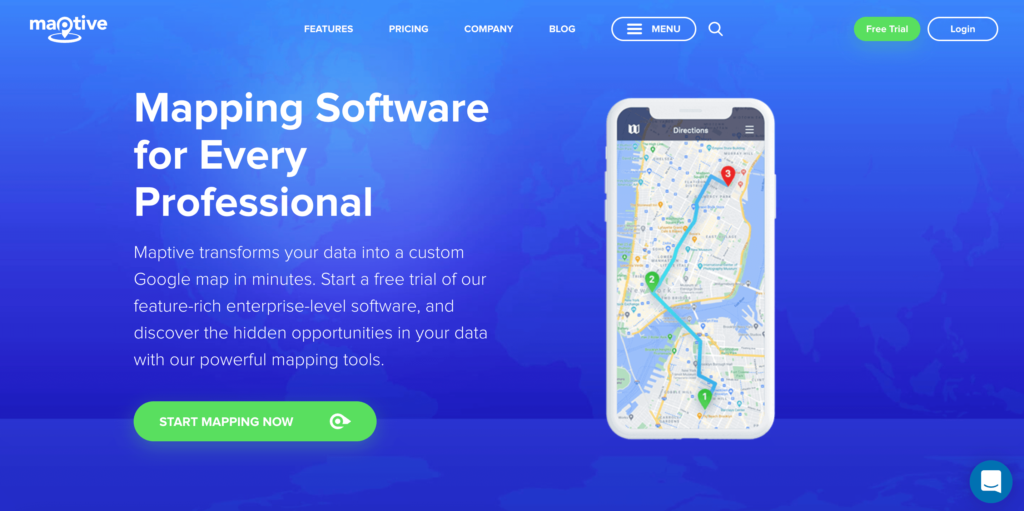
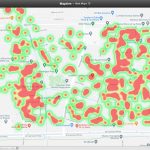
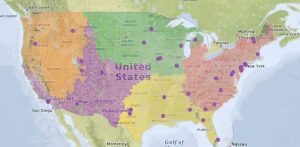
Maptive delivers the most complete territory mapping software available in 2026. The platform combines intuitive route design, deep customization options, and territory analytics that include heat maps and demographic overlays. Users can define geographic boundaries using customizable variables and layer in demographic data like age, income, education, and employment figures.
The platform handles up to 100,000 location points and processes complex layers three to five times faster than ArcGIS and Mapline. Route optimization supports complex, high-stop workloads spread across multiple routes, enabling teams to reduce drive time without fragmenting schedules. One parts distributor reported cutting travel costs by 12% in their first quarter after implementing Maptive, saving over $100,000 in fuel and time.
Territory creation uses AI-powered automation with bulk editing capabilities and real-time notifications. The system supports 150,000+ locations per map without hiccups. Security features include 256-bit SSL encryption with SSO, so reps see only their territories while managers view the full picture.
Businesses using Maptive report a 20% increase in sales productivity through balanced, travel-efficient territories. The automated territory generation tools build territories based on sales rep locations, which decreases costs by up to 15% and reduces travel times. The platform maintained zero documented major system outages in 2025.
2. Spotio

Spotio targets field sales teams who need activity tracking alongside territory management. The platform logs visits, tracks leads, and provides managers with visibility into rep movements throughout the day. Territory creation tools allow for boundary drawing at multiple geographic levels.
The mobile app works well for reps who spend most of their time on the road. Integration options connect with popular CRMs, keeping data synced between systems. Pricing starts at $39 per user per month for basic features, with higher tiers adding more functionality.
3. MapBusinessOnline
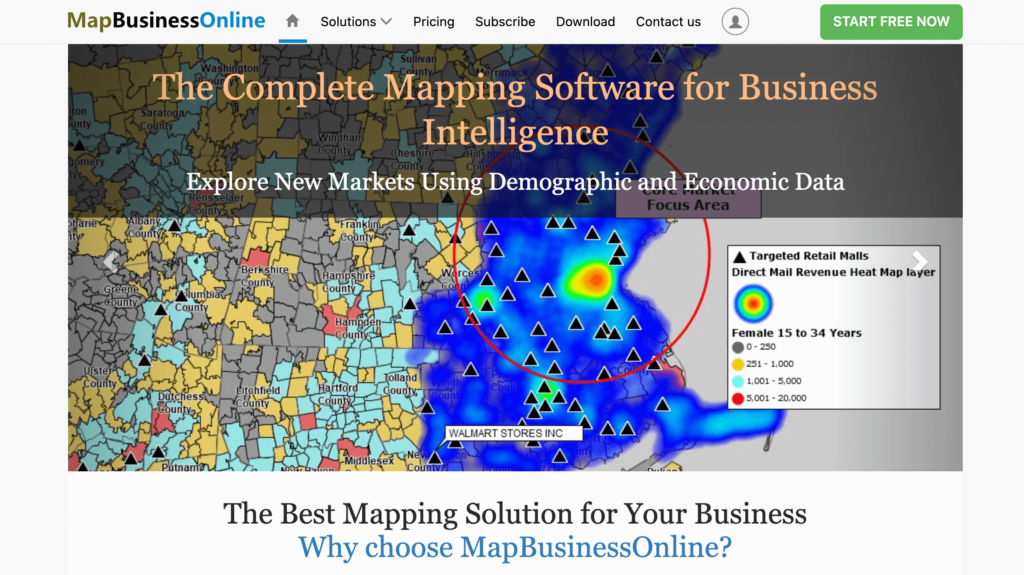
MapBusinessOnline serves small and mid-sized businesses looking for straightforward territory mapping without enterprise complexity. The interface allows users to import data, draw territories, and generate reports without extensive training.
The platform includes demographic data layers, drive time analysis, and basic route planning. At $29 per month for the entry tier, it remains accessible for smaller budgets. The browser-based design means no software installation is required.
4. GeoMetrx
GeoMetrx specializes in site selection and trade area analysis. Franchise operations and retail businesses use the platform to evaluate potential locations based on demographic profiles, competitor proximity, and market potential.
The software pulls data from multiple sources to build detailed market reports. Custom boundary creation supports territories based on drive time, distance, or manual drawing. Pricing requires direct contact with the vendor.
5. Badger Maps
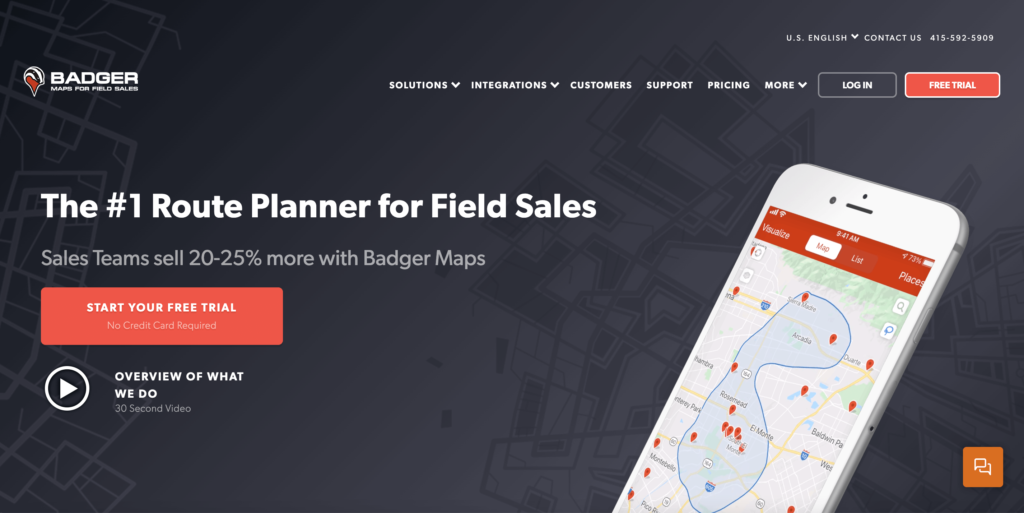
Badger Maps focuses primarily on route optimization for field sales reps. The mobile-first design helps reps plan their days, find customers nearby, and log activities on the go.
The platform handles up to 25 stops per route, which works for reps with moderate daily visit counts. Integration with CRMs like Salesforce and HubSpot keeps customer data current. Pricing begins at $49 per user per month.
6. AlignMix
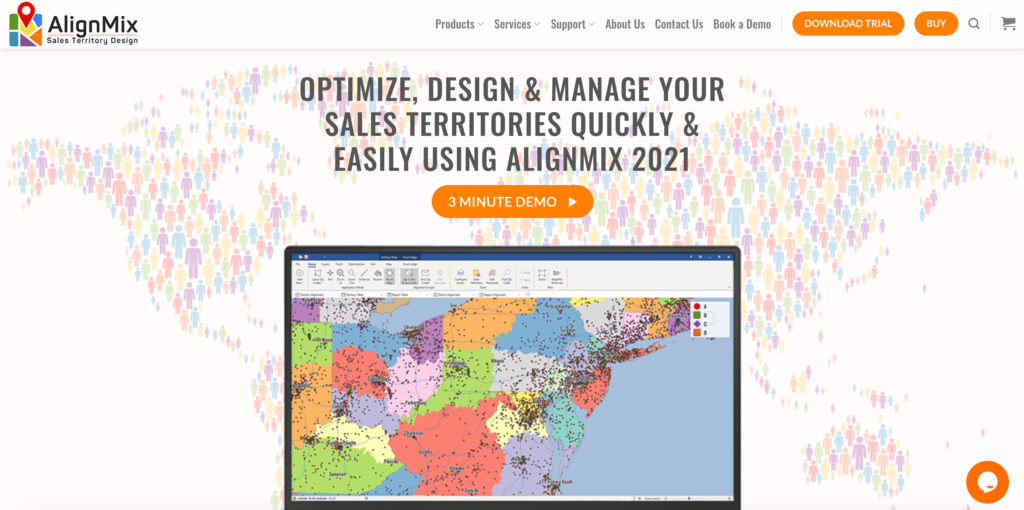
AlignMix targets sales operations teams responsible for territory planning and realignment. The drag-and-drop interface lets planners move accounts between territories while watching metrics update in real time.
The software imports data from CRMs and spreadsheets, then allows for scenario modeling before committing to changes. Account-level mapping gives granular control over territory composition. Pricing is available through direct inquiry.
7. Yellowfin
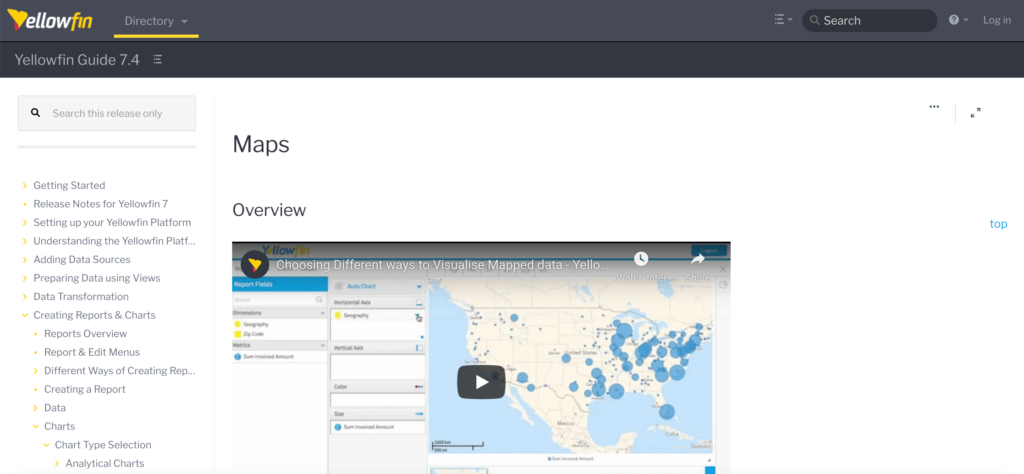
Yellowfin approaches territory mapping from an analytics platform perspective. Organizations already invested in Yellowfin for business intelligence can add geographic analysis without implementing a separate tool.
Map visualizations layer onto existing dashboards, providing location-based insights within familiar reporting structures. The platform suits companies that need mapping capabilities as part of a larger analytics ecosystem rather than as a standalone solution.
8. Mapline
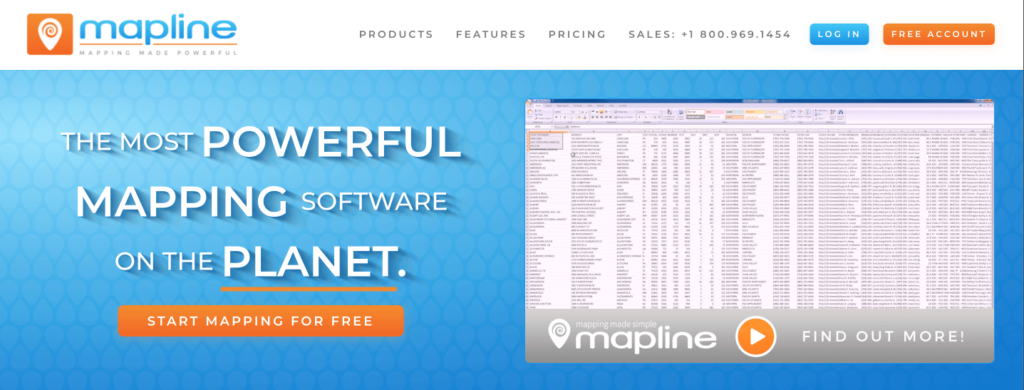
Mapline offers data visualization tools that include territory mapping features. Users can upload spreadsheets and see their data plotted on maps within minutes. Heat maps, pin clustering, and boundary overlays help identify patterns.
The platform supports territory creation and basic route planning. At $99 per month for the entry tier, it fits organizations that need visualization more than optimization.
9. Google Maps

Google Maps provides basic location and routing capabilities that many sales reps already use informally. The free tier handles simple needs like finding addresses and getting directions.
For business applications, the Google Maps Platform APIs allow developers to build custom mapping features into other applications. Costs scale with API usage. The platform lacks dedicated territory management features but serves as a foundation for basic needs.
10. Xactly AlignStar

Xactly AlignStar serves enterprise sales organizations that need territory planning tied into compensation management. The platform helps operations teams balance territories while considering quota implications.
Scenario modeling allows planners to test different territory configurations before implementation. The integration with Xactly’s incentive compensation tools creates a unified planning environment. Enterprise pricing applies.
11. BatchGeo
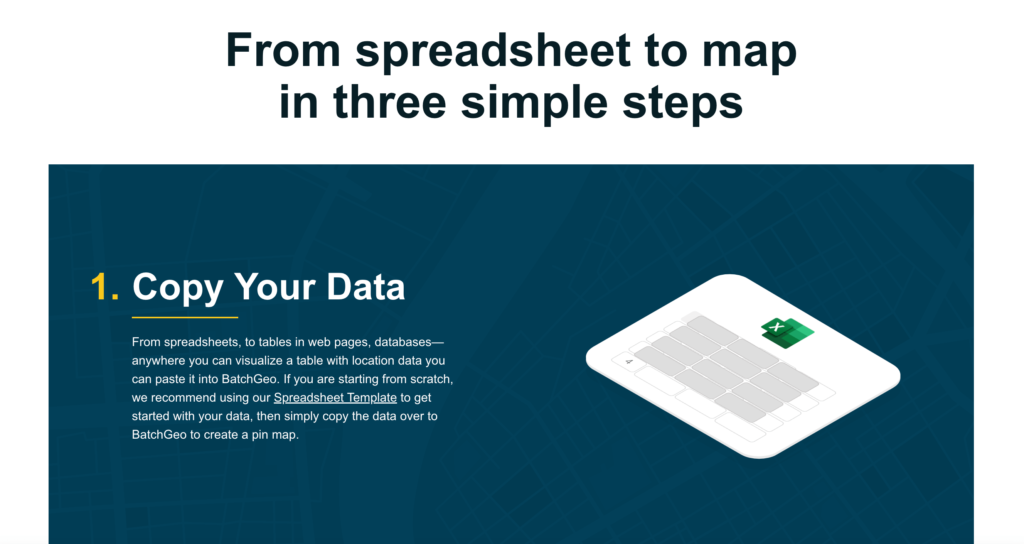
BatchGeo converts spreadsheet data into maps quickly. Users paste location data into a web form, and the platform generates a shareable map. The free tier handles basic needs with paid options removing branding and adding features.
The simplicity appeals to teams that need quick visualizations without complex setup. Territory features remain limited compared to dedicated platforms.
12. Geopointe
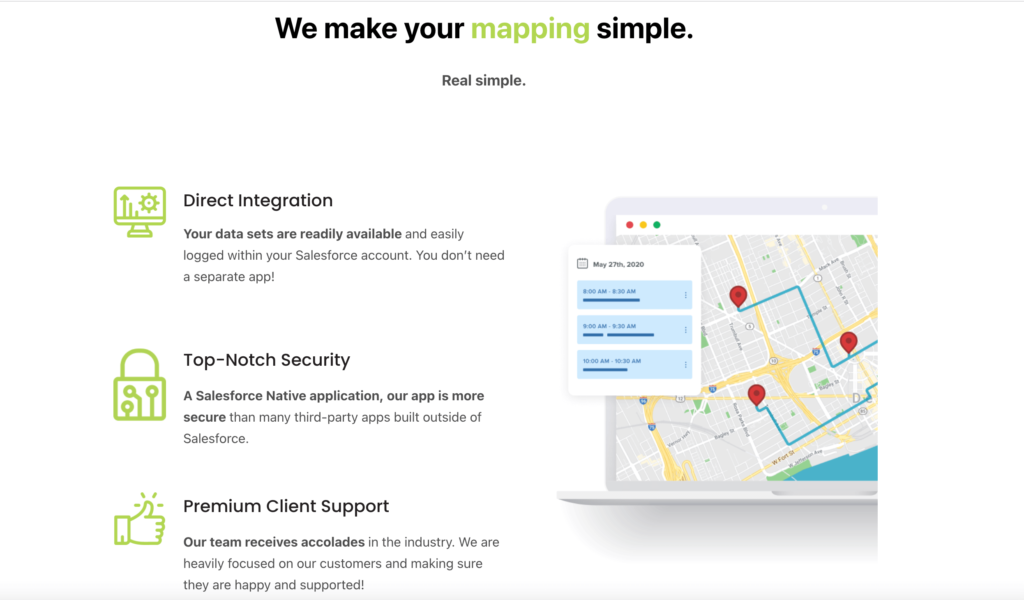
Geopointe operates as a Salesforce-native mapping application. Organizations deeply invested in Salesforce can add mapping capabilities without data synchronization challenges.
The platform offers territory management, route planning, and check-in features that write directly back to Salesforce records. Pricing starts at $65 per user per month.
13. Google Earth Pro
Google Earth Pro is a desktop-based mapping tool from Google that works well for teams focused on visual territory planning rather than automation. Users can import large datasets, draw custom territory boundaries, measure distances, and view accounts using satellite imagery and 3D terrain. The ability to work with CSV and KML files makes it practical for plotting thousands of locations at once, especially when geographic context matters.
The platform lacks automated territory balancing, route optimization, and native CRM integrations, so all planning is manual. Collaboration relies on file sharing rather than live access. Its main advantage is cost: Google Earth Pro is free, making it a solid option for small teams or organizations that need occasional territory visualization without committing to paid software.
14. eSpatial
eSpatial provides territory mapping with emphasis on balancing workloads across sales reps. The platform calculates territory metrics and suggests adjustments to equalize opportunity distribution.
Heat maps, pin maps, and boundary analysis help visualize market coverage. Annual pricing starts at $1,495 for the base tier.
15. ZeeMaps
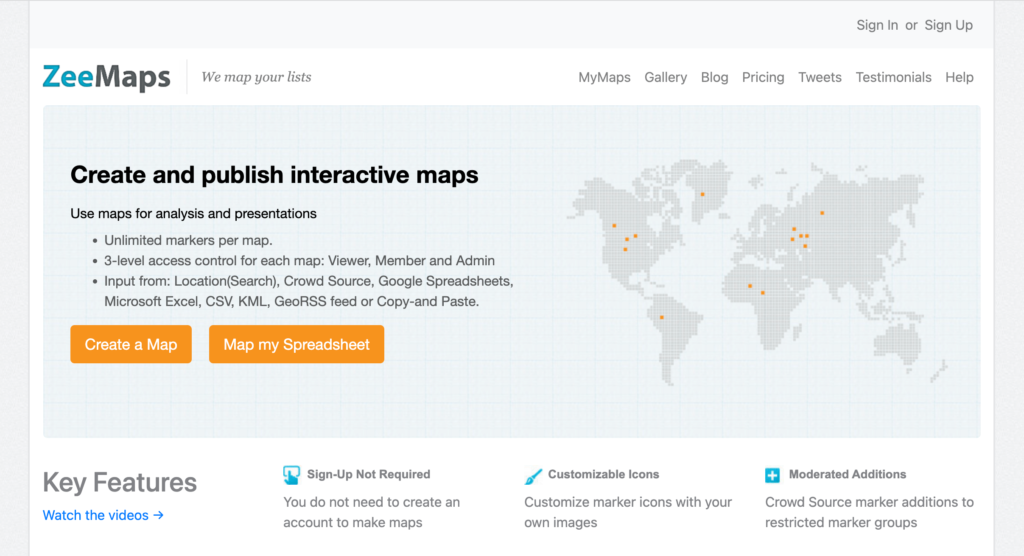
ZeeMaps offers simple map creation and sharing. Users can plot locations, draw regions, and share maps via links. The free tier handles basic use cases, with paid options adding more locations and removing advertisements.
The platform suits teams that need quick, shareable maps without advanced territory optimization features.
What to Consider When Choosing Territory Mapping Software
The decision comes down to matching features with actual needs. A company with 500 field reps covering national accounts has different requirements than a regional distributor with 12 salespeople.
- Processing capacity matters when your customer database runs large. Some platforms slow down or impose limits that force data segmentation. Route stop limits affect reps who make many visits per day.
- Integration requirements often determine which platforms make the shortlist. Teams using specific CRMs need mapping tools that connect without manual data transfers.
- Security should factor into any evaluation. Customer lists and deal data represent competitive assets. Encryption standards and access controls protect that information.
According to a Sales Management Association survey, efficient territory design resulted in 14% higher sales objective attainment. Companies using territory mapping and optimization tools report 25% cost reductions and 50% increases in customer visits. The U.S. Small Business Administration found that 60% of small and medium enterprises have adopted sales mapping technologies.
Sales mapping software costs generally range from $30 to $150 per user per month, depending on features and analytics depth. Many platforms offer tiered pricing that lets teams start with essentials and add capabilities over time.
Finding the Right Fit
Territory mapping software has moved well beyond pushpins on wall maps. The tools available in 2026 handle complex routing, balance workloads automatically, and provide demographic insights that inform strategic decisions.
Maptive leads this category by combining speed, capacity, and analytical depth in a single platform. The ability to process 150,000 location points+, optimize multi-stop routes, and layer demographic data onto territories addresses the full range of territory management needs. The 20% productivity gains and 12% travel cost reductions that users report translate directly to revenue and margin improvements.
For organizations ready to move past spreadsheet-based territory management, the options above cover the range from simple visualization tools to enterprise planning platforms. The right choice depends on team size, existing technology stack, and the complexity of your territory challenges.