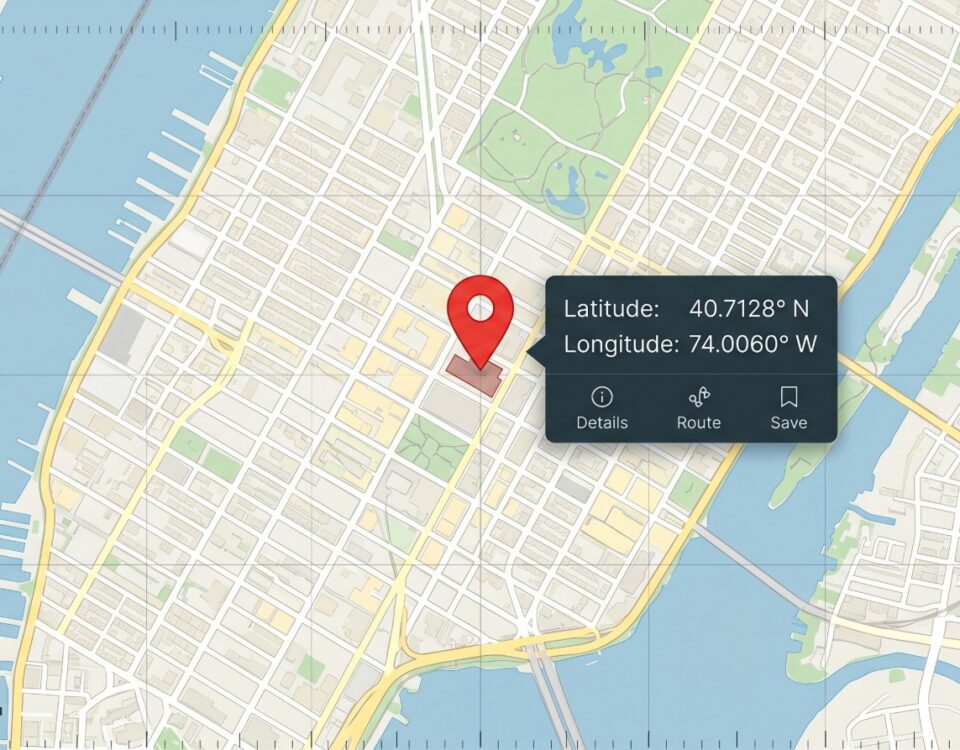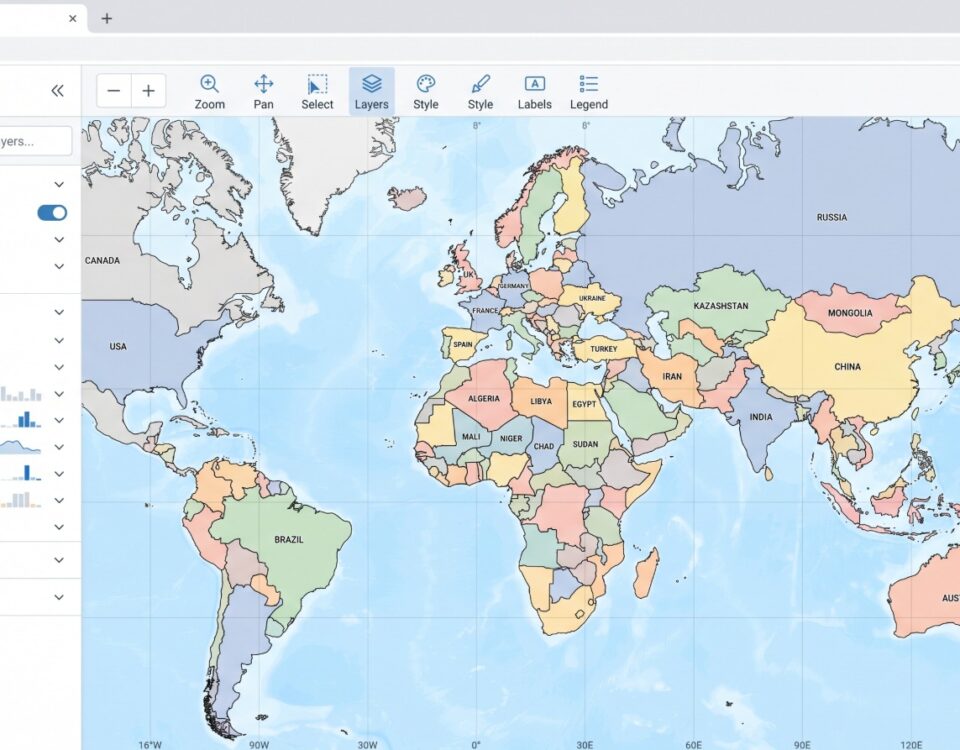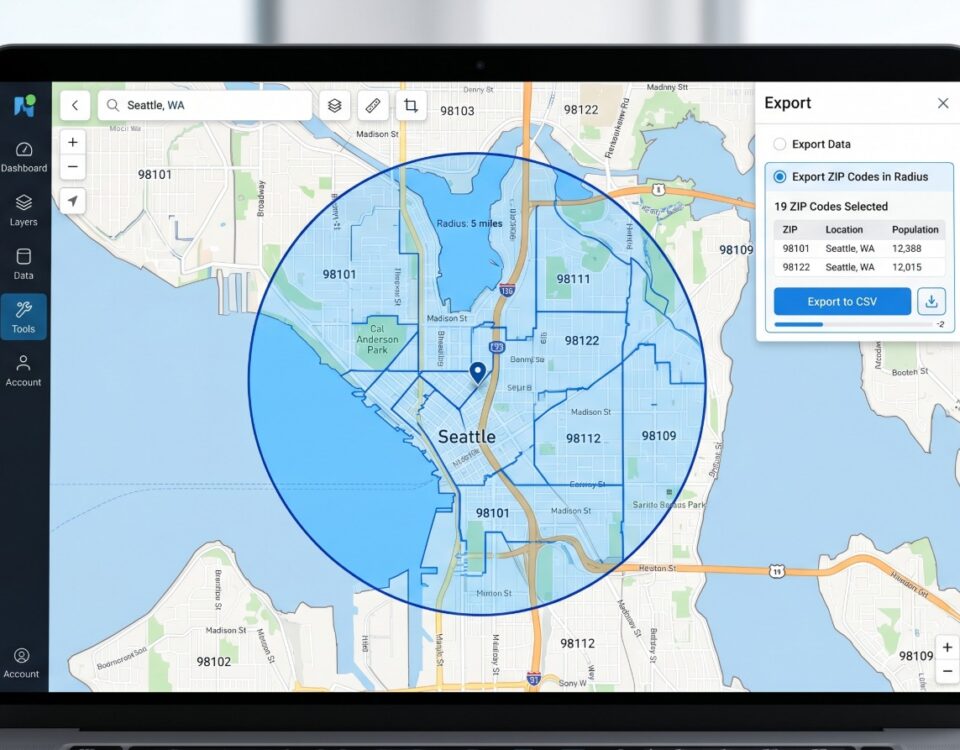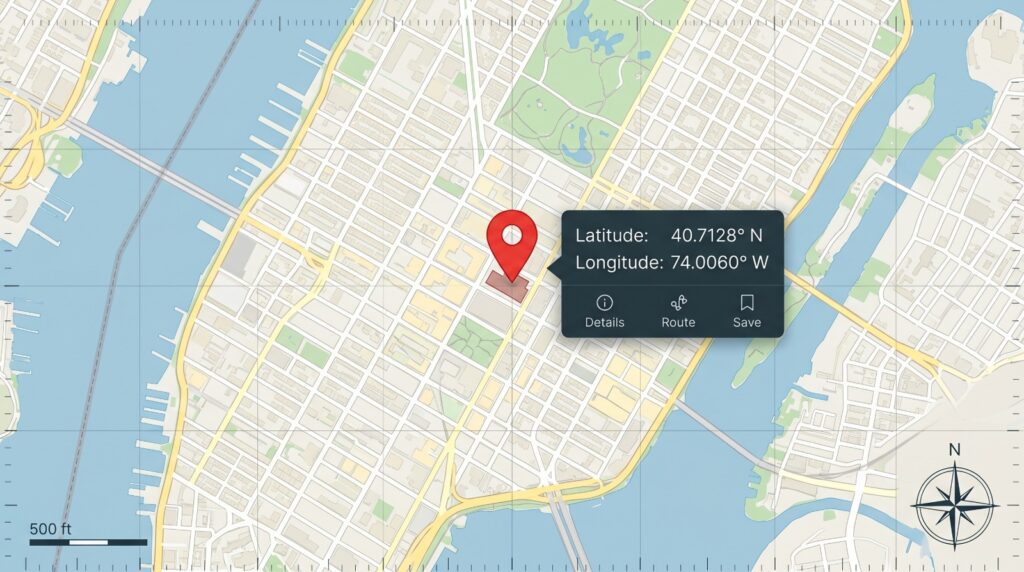



Franchise territory mapping is the process of dividing a brand’s national footprint into operating areas defined by zip codes, mileage rings, drive-time polygons, demographic boundaries, or some combination of those primitives, and then encoding the result in Item 12 of the Franchise Disclosure Document so each franchisee knows what was granted and what was reserved. The work sits at the intersection of geography, demography, and contract law, and the choices made early in a franchise system’s life govern its operating disputes for decades.
The U.S. franchise sector ran roughly 851,000 units in 2025, contributing about $578 billion in franchise GDP and projected total franchise output above $936 billion. The forecasted unit growth for the year was approximately 20,000 new establishments, a 2.5% expansion, with national franchise employment projected to add 210,000 jobs. Inside those numbers are systems that allocated territory carefully and systems that did not. Subway initiated 702 arbitration actions against U.S. franchisees in 2017, compared with one filed by McDonald’s and two by Dunkin’ in the same year, an outcome traceable in part to a contractual structure granting no designated territories at all.
This article covers the grant types a franchisor can offer, the legal frame imposed by Item 12 and state registration regimes, the methods used to draw boundaries on a map, the analytical work behind trade areas, the sizing benchmarks observed across verticals, the recurring encroachment and cannibalization failure modes documented in case law, and the metrics by which a territory’s operational health is judged at renewal.
Territory Grant Types and What Each One Promises
The federal Franchise Rule recognizes two formal categories for Item 12 disclosure, exclusive and non-exclusive, with a third category, protected, used widely in commercial practice. The distinction matters because the words on the page determine what a franchisor can do later. The grant type controls what kind of competing presence is permitted in the granted area, including sister-brand units, kiosks, online sales, and corporate-owned stores, and that allocation reaches every line of the operator’s P&L.
The grant type also controls the franchisee’s exit. An exclusive operator who sells a territory transfers a defensible asset. A non-exclusive operator transfers an operating unit on land they happen to occupy. The valuations behave accordingly. Anyone buying a franchise on a multi-year horizon should understand the grant type as the central commercial term, not as boilerplate.
Exclusive territories
An exclusive territory is one in which the franchisor contractually promises not to establish a company-owned or franchised outlet selling the same or similar goods or services under the same or similar trademarks within the granted geographic area. The promise is total in scope within those terms. A franchisor cannot label a territory exclusive while reserving the right to operate competing units of the same brand in the area. The label and the contractual reservations have to agree.
True exclusivity has become less common at the system level because it restricts the franchisor’s growth options. Where it does exist, exclusivity is usually tied to a substantial up-front fee, a multi-unit commitment, or an area development obligation that justifies the give-up of corporate flexibility. Some franchisors grant exclusivity for a defined number of years, after which the territory converts to protected or non-exclusive. Others grant exclusivity for one product line but not another, which is useful where a single brand operates across multiple verticals.
The trade-off for the franchisor is operational. An exclusive area locks future expansion to the existing operator’s pace of opening, the operator’s willingness to reinvest, and the operator’s ability to serve the demand the brand can attract. If demand outruns the operator, the franchisor cannot place a second unit to capture it without breaching the contract. The pattern produces the case law described later in this article.
Protected territories
A protected territory bars the franchisor from establishing another franchised or company-owned unit of the same brand within the area, but typically reserves rights to sell online, operate alternative brands, serve national accounts, and use non-traditional venues such as airports, stadiums, hospitals, kiosks, and college campuses. The protection is meaningful on the ground and porous in every channel that did not exist when the agreement was drafted.
This is now the most common grant in mid-sized and large systems. It gives the franchisee a defensible operating area while preserving the franchisor’s ability to add online revenue, alternative formats, and captive-market placements. The drafting questions are about exclusions. Which alternative brands count as the same business, which non-traditional venues are reserved, and how online customer ownership is allocated when an order is placed inside the territory but fulfilled from a central facility.
Anytime Fitness grants a protected territory with a radius no larger than three miles, containing a population of no more than 30,000 people, with the boundary set by the franchisor at its sole discretion using mapping and demographic software. The size is small, but the protection within those three miles is contractual. Other fitness brands draw similar boundaries, generally between 1.5 and 5 miles, calibrated to membership behavior in walk-up and drive-up trade areas.
Non-exclusive territories
A non-exclusive territory reserves the franchisor’s right to open company-owned or franchised outlets selling the same goods or services under the same trademarks within the franchisee’s area, including at non-traditional venues such as airports, stadiums, hospitals, parks, and campuses. The franchisee is granted a location, not an area.
McDonald’s franchise agreement is the most-cited example. Paragraph 28(e) states that “no ‘exclusive,’ ‘protected’ or other territorial rights in the contiguous market area of such Restaurant is hereby granted or inferred.” Subway goes further, with agreements stipulating that the franchisor and its affiliates “have unlimited rights to compete” with the franchisee. Domino’s grants no territory protection, and multiple Domino’s stores commonly sit in close proximity in high-demand markets. Chick-fil-A operators receive no exclusivity in their site grants; corporate selects the locations through its own real estate team based on traffic counts, population density within a 3-mile radius, and brand expansion targets.
Non-exclusive grants are not categorically unfair. They give the system the ability to capture demand the franchisee cannot serve at the cost of contractual certainty for the operator. Conflict in practice depends on how the system manages site approval, sister-brand strategy, and online channels. A non-exclusive system with disciplined gating and good operator communication can run for decades without dispute. A non-exclusive system with cheap approvals and weak gating produces the Subway saturation pattern.
Hybrid arrangements and area development
A number of franchisors split the difference between the three primary categories. Jiffy Lube, for example, does not grant exclusive rights, but existing stores are protected by a 3-mile non-compete ring, with other franchisees free to develop service centers outside that radius. The ring functions as a partial protection embedded inside an otherwise non-exclusive structure. Other systems grant exclusivity for the unit’s immediate trading area while reserving rights in the surrounding region for expansion.
Area development agreements operate on a related principle. A developer takes exclusive rights to a defined geographic area in exchange for a binding schedule to open a specified number of units. If the schedule is met, the exclusivity holds; if a milestone is missed, the territory shrinks or the agreement terminates entirely. Area development fees typically run in the mid- to high five-figure range, varying with the number of units, the timeline, and the perceived value of the geography awarded. The structure aligns the developer’s incentives with the system’s growth plan and gives the franchisor a contractual remedy if growth stalls.
The drafting work on hybrid arrangements is more demanding than on a single-category grant. Each carve-out has to be described precisely, each reservation has to be enumerated, and the result has to read consistently across the FDD, the franchise agreement, the area development agreement, and any state registration filings. A hybrid grant that reads differently in different documents produces the most expensive form of dispute, because the operator and the franchisor each cite the language that favors them.
Item 12 of the FDD and the Legal Frame
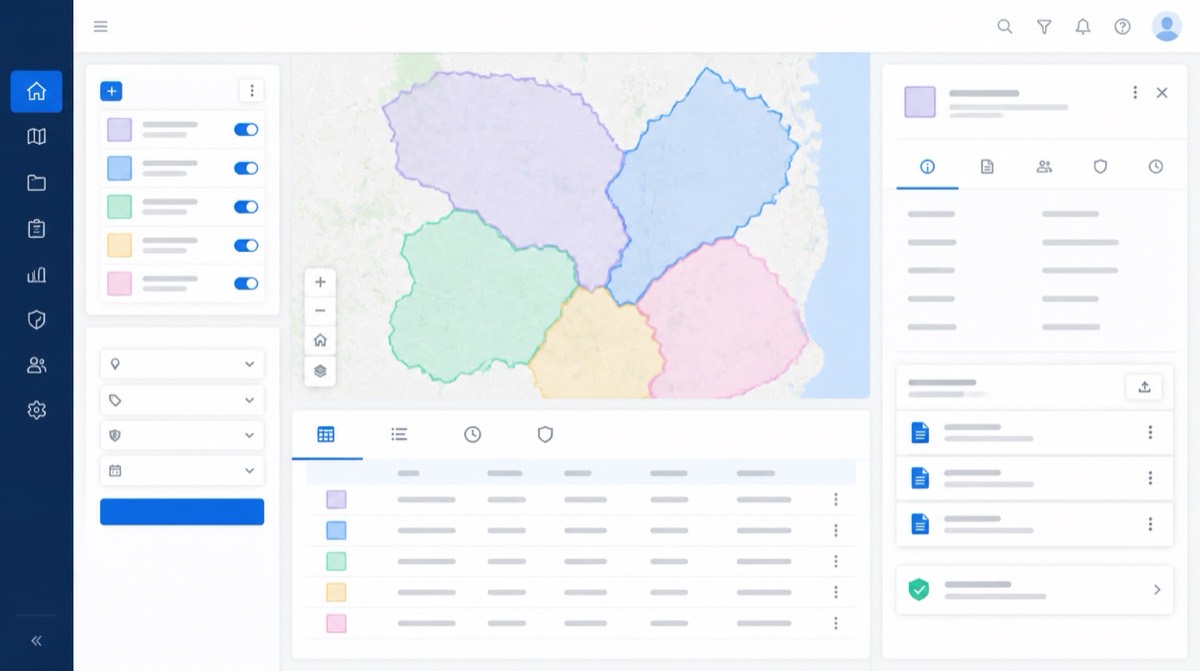
Every U.S. franchisor must provide a Franchise Disclosure Document to prospective franchisees, and Item 12 of that document is the territory section. It must inform prospective franchisees of three things. First, the location of the franchised business and its associated territory. Second, the rights of both parties relating to that territory. Third, the franchisor’s present or future plans to operate a competing franchise system offering similar goods or services. Each of the three is a specific disclosure obligation, and each has produced its own line of litigation when the disclosure proved incomplete.
Where the territory is undefined in size, the disclosure must state the minimum territory size the franchisee will receive. The minimum is normally defined as a set of zip codes, a mileage radius around the franchised location, or another specific designation that a prospective buyer can verify on a map. A franchisor cannot leave the minimum unstated and resolve it later; the figure has to be in the document the prospect receives during the disclosure period.
Item 12 also has to address how customers move across the boundary. The franchisor must disclose any restrictions on the franchisee’s right to solicit or accept orders from customers outside the designated area, and any rights of the franchisor to solicit or accept orders from customers inside it. The treatment of distribution channels, including the Internet, mail order, and direct marketing, has to be specified for both parties. This is where most modern disputes begin, because older agreements predate the channels they have to govern.
Many franchise lawyers recommend describing the Site Search Area in general geographic terms (town, city, county) and avoiding attached maps in Item 12. A pin and a circle on a PDF map look like a grant of “exclusive” land to a franchisee reading it for the first time, even when the surrounding contract language says otherwise. Written boundaries are precise. Pictures are interpreted. The same logic applies to any visual representation generated by territory-mapping software, which is useful for internal analysis and dangerous if attached to the disclosure document.
A subset of U.S. states layer additional requirements on top of the federal Franchise Rule. California requires FDD registration with the Department of Financial Protection and Innovation and maintains a $5 million net-worth exemption. New York requires franchisors to register the offering and receive approval before advertising, with a $5 million large-franchisor exemption and a $15 million super-large-franchisor exemption. Both states require the FDD to include an explicit statement of the question of exclusivity, removing any room for that question to sit unanswered in the disclosure. Other registration states impose comparable requirements with state-specific variations.
The variation across states is granular enough that any system selling across multiple jurisdictions needs the FDD’s territory language to be consistent and the supporting maps to be reproducible. A franchisor whose New York filing describes a protected territory by zip code and whose California filing describes the same kind of grant by radius is setting up a problem at audit and a different problem in litigation. The cleanest practice is to use one primitive for the contractual definition and to publish the analytical map separately, with the analytical map clearly marked as illustrative.
Beyond registration, a small number of states have relationship laws that govern franchise terminations, transfers, and non-renewals. Those statutes interact with territory grants in specific ways. A franchisee in a relationship-law state who has been granted exclusivity has stronger statutory protection at renewal than a franchisee in a state without one. The interaction is technical and is one of the reasons franchise counsel reviews territory language at every renewal cycle rather than treating it as fixed at the original grant.
Boundary Definition Methods
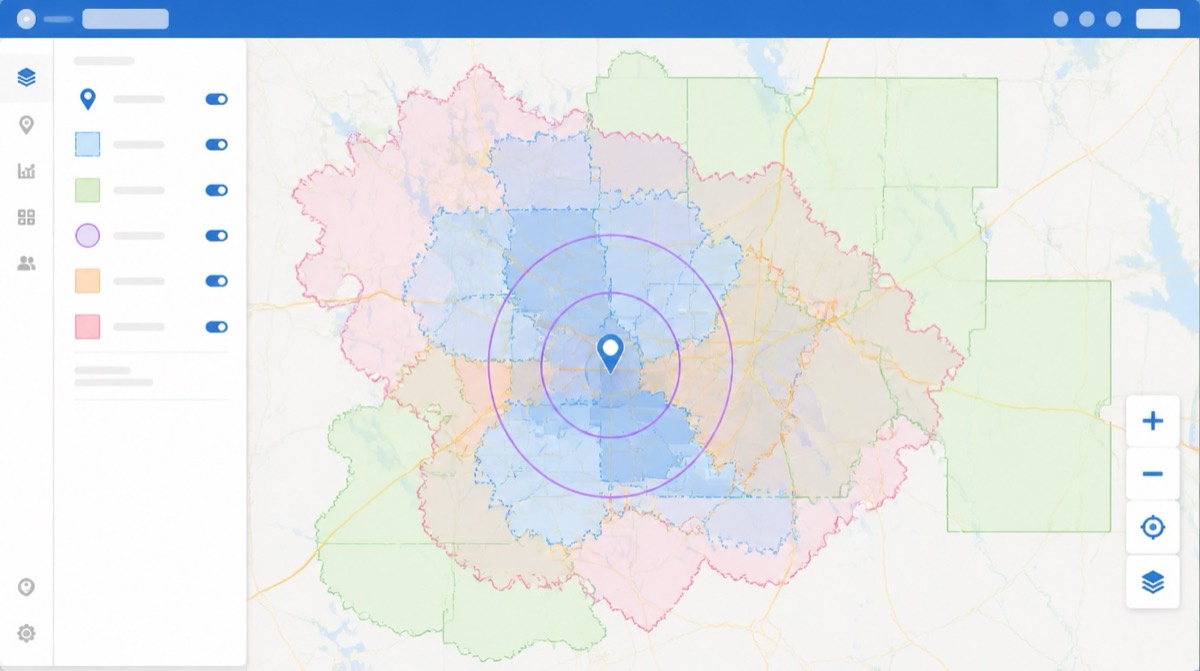
Once a franchisor has decided what type of grant to offer, the question becomes how to draw it. Six methods dominate practice:
- ZIP code bundles
- County, municipal, or Designated Market Area boundaries
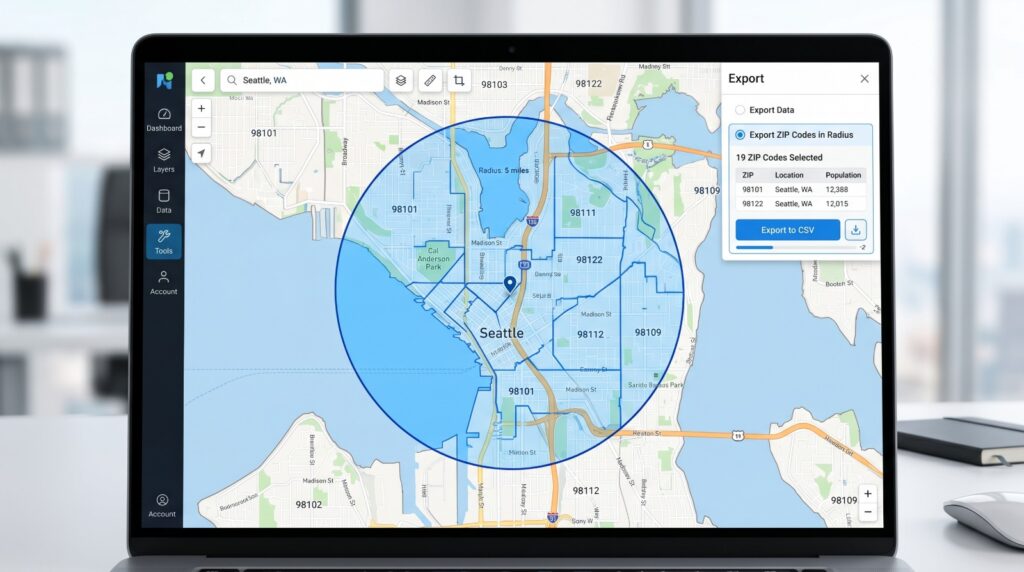
- Mile radius rings around a fixed point
- Drive-time isochrones from a fixed point
- Custom polygons drawn against demographic or trade data
- Hybrid definitions combining two or more of the above
Each method has its uses and its failure modes. A system that picks one and applies it everywhere will be wrong somewhere, and most mature systems use one primitive for contractual definitions and another for internal planning.
ZIP codes and the ZCTA distinction
ZIP codes are the most common boundary unit in U.S. franchise agreements because they are familiar, compact, easy to enumerate in a contract, and supported by Census Bureau population counts. Sales territories already aligned to ZIP geography integrate easily into operating systems, and customer data is almost always available at ZIP level.
The complication is that ZIP codes are USPS delivery-route designations, not census or city boundaries. They cross county lines, follow streets, and have uneven population distribution. Two adjacent ZIPs can hold 8,000 and 32,000 people. A franchisor relying on ZIP counts for territory equivalence will produce territories that look balanced on paper and unbalanced in revenue.
The standard workaround is to store 5-digit ZIP codes as the contractual definition while maintaining a parallel ZIP Code Tabulation Area set for analytics. ZCTAs are the Census Bureau’s approximation of ZIP geography for statistical purposes. They match the USPS ZIPs closely but not exactly, and the difference matters when computing population, income, or household counts. A franchisor’s mapping system has to handle both, and the staff drawing territories has to understand which is being displayed.
A second complication is that USPS ZIP boundaries change. New ZIPs are introduced, existing ZIPs are split, and small adjustments happen routinely. A territory defined by a 2018 ZIP set has to be reviewed against the current set at every renewal, because the underlying geography is no longer guaranteed to match. The work is administrative but necessary.
County, municipal, and DMA boundaries
Counties and municipalities are stable, well-mapped, and accurately describe existing political geography. They are good fits for systems that allocate by metro area or for B2B service brands selling into government or commercial accounts. The downside is that counties can be very large in the West and very small in the Northeast, producing unit economics that vary by an order of magnitude across the same brand. A system using county-defined territories has to accept that variability or supplement the boundary with population caps.
Municipal boundaries are even more variable, with city limits drawn to historical accident rather than population balance. Some U.S. cities annexed aggressively in the 20th century and now hold most of their metro population. Others stopped at the original incorporated area and are surrounded by independent suburbs. A franchisee granted “the city of X” can be looking at a market of 50,000 or 500,000 depending on the city.
Nielsen’s Designated Market Areas offer a different cut. There are 210 non-overlapping DMA regions covering the continental United States, Hawaii, and parts of Alaska. Each DMA is a group of counties and ZIP codes forming an exclusive area in which the home-market television stations hold a dominance of total hours viewed. Every county belongs to one DMA and only one.
Franchisors sometimes use DMA boundaries as a starting point for territory definition because they align with media buying geography. A franchisee in a single DMA can advertise within a defined broadcast footprint without spillover into a neighboring territory. The pairing of operating area with media area reduces wasted spend and clarifies who pays for what advertising. Floor Coverings International, for example, defines its “designated market area” as one or more postal codes containing between 50,000 and 80,000 dwellings. The structure ties the operator’s marketable area to a unit count the corporate office can model.
Mile radius rings
A radius ring is the simplest method. A fixed mileage drawn around a point. It is useful for quick standardized initial screening across many candidate markets, and it produces a number a franchise prospect can grasp immediately. The simplicity is the appeal, and the simplicity is the limitation.
The method breaks down for actual site decisions in any market where physical barriers matter. A 3-mile circle drawn over a city bisected by a river, a highway, or a bay includes points the customer cannot reach without a 20-minute detour. The territory looks defensible on the map and is not defensible in practice. Radii are still common in agreements because they are easy to write, but most operating systems supplement them with drive-time analysis before approving sites.
The radius method also misrepresents directional asymmetry. A point at the edge of a residential neighborhood may have 80% of its addressable population on one side and a state park on the other. A 3-mile circle implies symmetric coverage and produces symmetric demand expectations, which then fail when the unit opens and the trade area turns out to be 80% concentrated on one side of the point. The trade-area analysis that should have informed the territory grant got skipped.
Drive-time isochrones
A drive-time polygon, also called an isochrone, maps every point reachable from a location within a given drive time by tracing the actual road network and accounting for road speeds, barriers, and access points. The 5-, 10-, and 15-minute isochrones are the standard thresholds for franchise trade area analysis, with values varying by time of day to capture commuting effects.
Drive time is the more accurate basis for defining a real trade area because it incorporates the road graph that radius mapping ignores. For drive-through, service-on-site, or quick-service models, drive time is the operational geography. The trade-off is computational. Drive-time polygons require routing data, must be recomputed when the network changes, and produce shapes harder to describe in contractual language than zip codes or radii.
The common practice in modern franchise systems is to use drive-time analysis to inform territory design while still defining the boundary in the contract using a zip-code or radius shorthand that approximates the analyzed area. The shorthand is what the franchisee signs. The analysis is what the franchisor uses to decide where the shorthand should sit on the map.
Isochrones also have to be recomputed after road construction, highway expansion, or major routing changes. A territory drawn against the 2019 road network may include or exclude blocks that the 2024 network now treats differently. The maintenance cycle is part of running a system based on drive time, and it is one of the reasons most franchisors translate the analysis back into a stable contractual primitive once the territory is set.
Custom demographic polygons
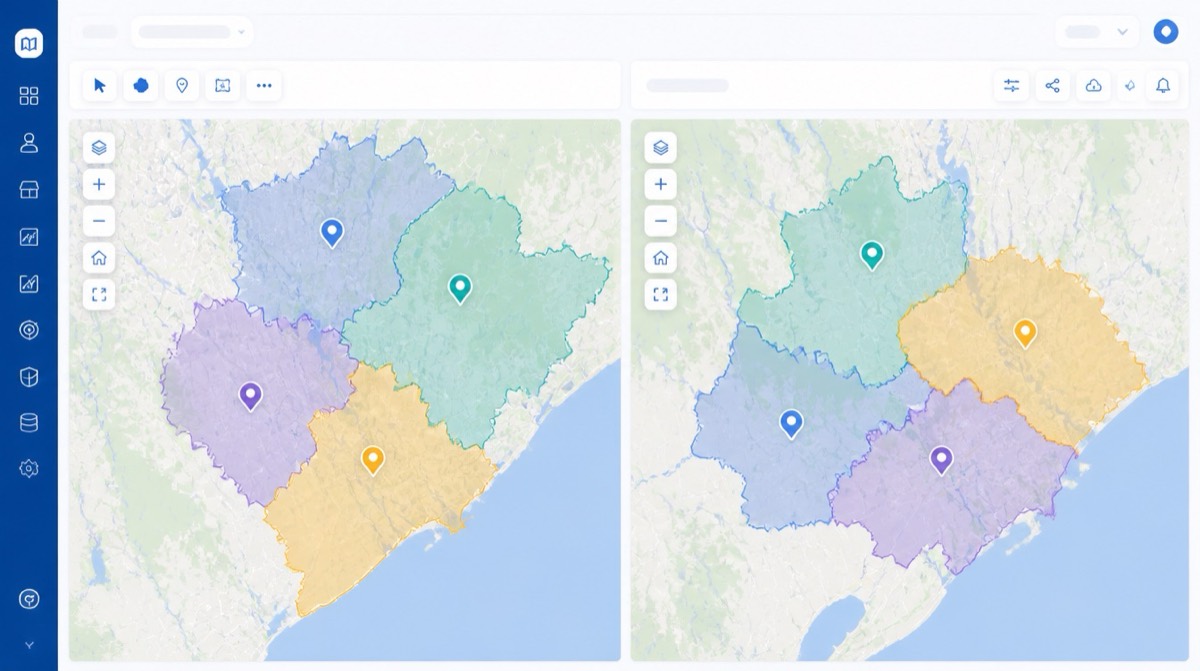
The most flexible method draws the boundary against a demand surface rather than a geographic primitive. A custom polygon can be shaped to include the 40,000 households closest to a site by drive time, the contiguous block groups whose median income exceeds a threshold, or the area within which a brand’s customer profile reaches a target density. The polygon is built from the data, not imposed on it.
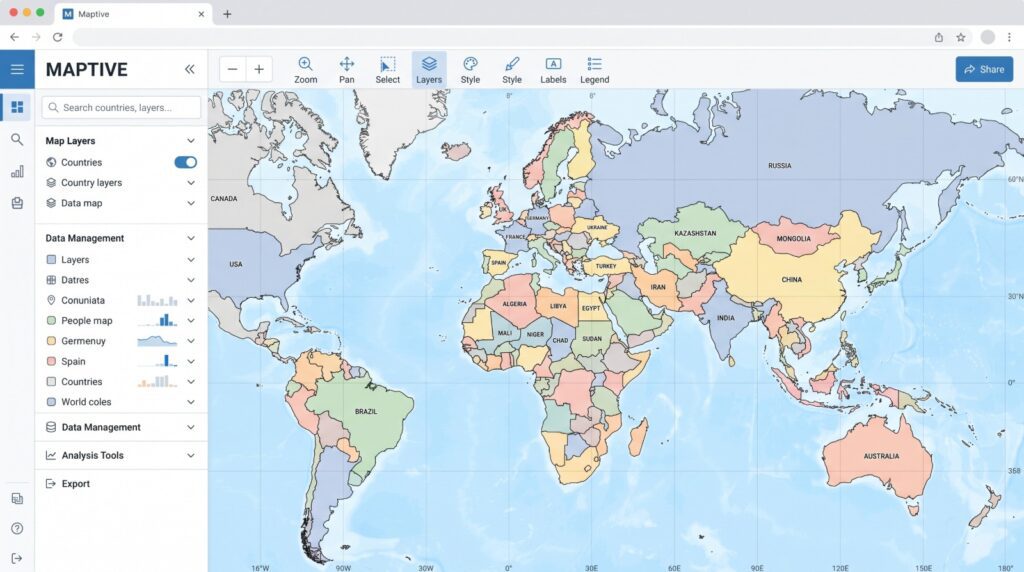
This is where territory mapping software earns its place in the workflow. The tools combine Census Bureau geography, road networks, mobile-device foot-traffic panels, and traffic-volume datasets into a single editable map. Maptive and other platforms allow a franchisor to draw, score, and revise polygons across hundreds of markets without rebuilding the data layer for each one. The franchisor’s analytical team produces the polygon, the legal team translates it into the FDD’s primitive, and the operations team reviews against it once the territory is live.
Custom polygons are expensive to maintain in contract because they have to be described in detail or referenced by a stored map. Most franchisors use them for internal planning and reduce to a simpler primitive for the FDD. The polygon shows the franchisee what the brand thinks the territory contains. The contractual primitive shows the franchisee what the brand can be held to.
Trade Area Analysis and Demand Modeling
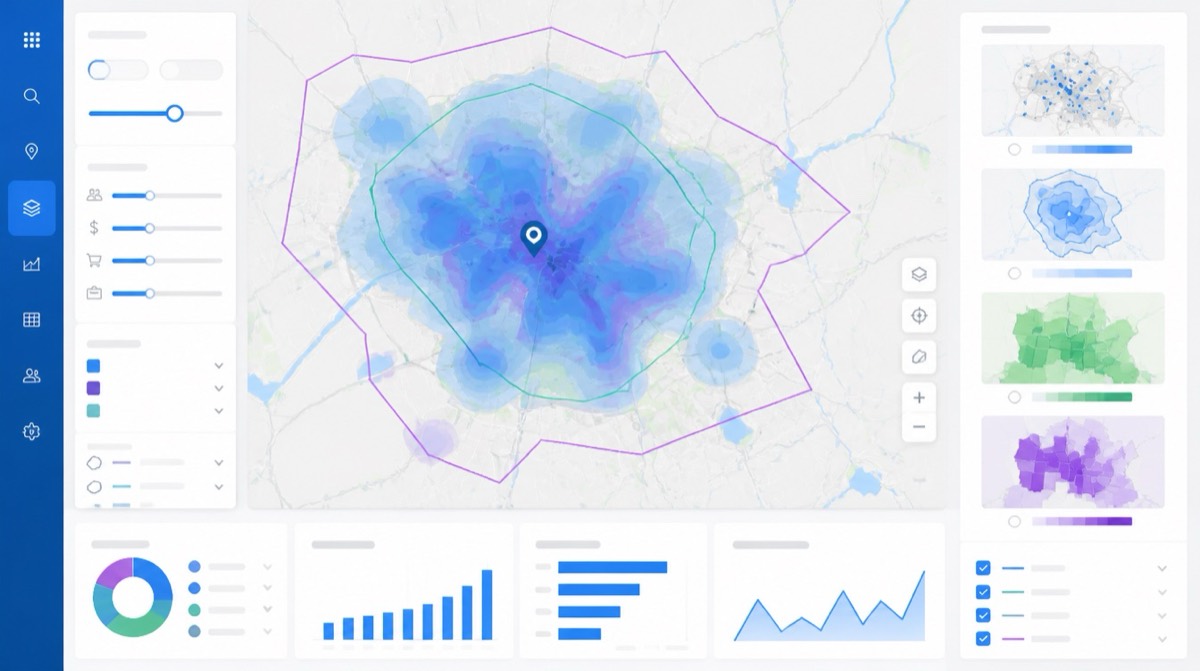
A trade area is the geographically delineated region containing potential customers for whom there is a probability greater than zero of buying from a given site. The definition comes from David Huff’s 1963 paper on retail trade areas, and it remains the working frame for site selection in retail and service franchising across the 60-plus years of research that have followed.
Huff’s gravity model predicts the probability of a consumer visiting a site as a function of distance to the site, the site’s attractiveness (typically proxied by store size in square footage), and the relative attractiveness of competing alternatives. Probability decreases as distance increases and as competitors become more attractive. The model has been validated as a strong fit for grocery, apparel, fuel, and dining retail categories, and it underlies most modern trade-area software, even in systems where the underlying math has been refined or replaced by machine-learning estimators trained on observed visit data.
The practical importance of trade area definition is that the trade area sets the denominator for every demand estimate downstream. If the trade area is drawn wrong, the household count is wrong, the demand forecast is wrong, and the revenue projection is wrong. Sizing decisions made from a misstated trade area cascade through pro forma, royalty math, and territory boundaries. The first analytical mistake usually turns into the most expensive one.
The demographic layers used to score a trade area are standardized across the industry. The American Community Survey, an ongoing U.S. Census Bureau survey running continuously since 2005, supplies five-year estimates of population, income, age distribution, and housing down to the census tract and block group. ACS data is the baseline for almost every commercial demographic product. Daytime population, traffic counts, competitor density, and household-purchase patterns are added on top, often from commercial data providers that aggregate mobile-device location panels covering tens of millions of devices.
Foot-traffic platforms estimate visits to specific locations using machine learning on mobile-device panels, allowing comparison of actual visit patterns across sites within a market. Traffic-count platforms now cover more than 25 million road segments across North America with pre-processed volumes for motorways, arterials, ramps, and residential streets, refreshed regularly. Combining published traffic counts with mobile-device data gives the most reliable representation of both vehicles and people at a candidate location, and is the standard input set for franchisors operating drive-through, drive-up, or destination-trip formats.
The demographic inputs commonly used to score a franchise trade area include the following.
- Population density at the block-group or tract level.
- Median household income, often with a minimum threshold by brand.
- Age splits matched to the brand’s customer profile.
- Daytime population for sites near employment centers.
- Traffic counts on the primary access road.
- Competitor density inside the trade area and at its edge.
- Mobile-derived visit patterns at comparable sites.
What these inputs share is that they describe the customer in geographic units a franchisor can match to a territory boundary. The trade area is where the customer is. The territory is where the franchisee operates. The goal of the analysis is to keep those two shapes close enough that the franchisee can serve the demand assigned to them. When the shapes diverge, the franchisee either over-serves a portion of the area (paying for capacity they cannot monetize) or under-serves it (leaving demand on the table that the system will eventually seek to capture some other way).
The output of the trade-area analysis is a recommendation, not a contractual term. The contractual term is the territory grant. The recommendation feeds the grant decision, but the grant itself has to survive the next 10 years of contracts, renewals, and market changes. Strong territory work treats the analysis as the input to a durable contractual boundary, with periodic re-analysis built into the renewal cycle.
Territory Sizing Benchmarks
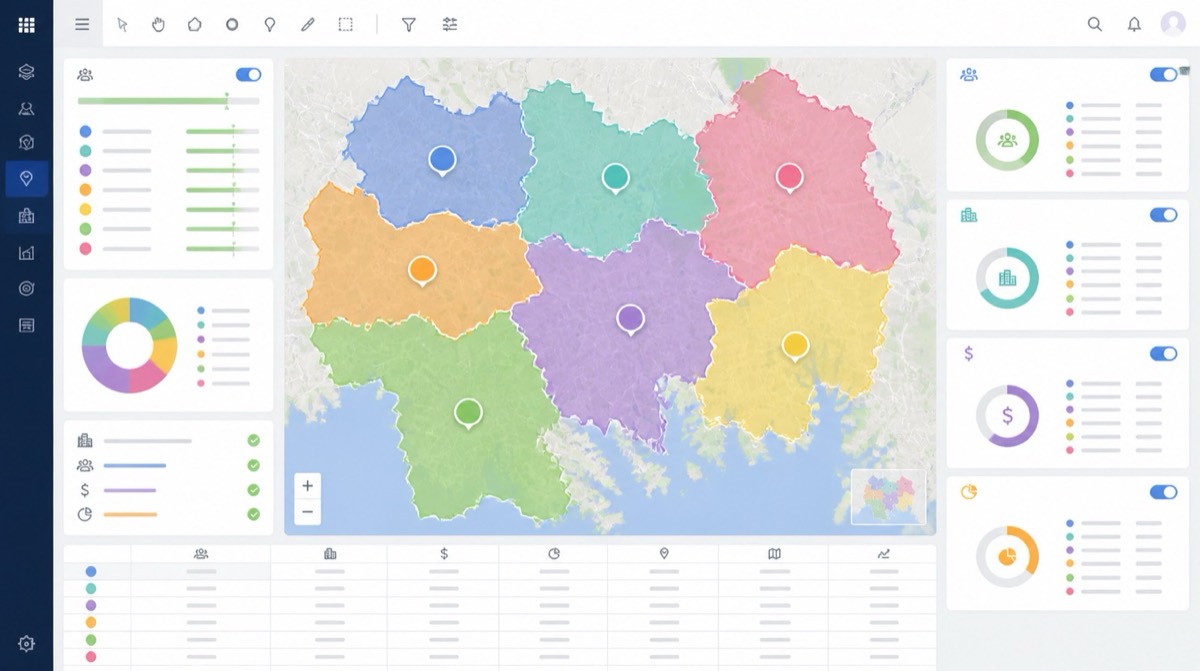
The first question a prospective franchisee asks is how big the territory will be. The answer varies by vertical because unit economics vary by vertical, but a small set of benchmarks recurs across the industry.
A common baseline cited in early-stage planning is a minimum population of around 75,000 people, calculated from Census data. The figure is a floor, not a target. Concept type, ticket size, frequency of purchase, and capital intensity all push the appropriate territory size up or down. A premium restaurant with a $40 average ticket and a once-a-quarter purchase cadence needs a different territory than a fitness studio with a $40 monthly membership and a daily visit cadence.
Across verticals, the published benchmarks settle around the following ranges.
- Retail concepts. 1 to 5 mile radius around the unit, with smaller radii in urban markets and larger ones in low-density areas.
- Service-based franchises. Populations of 25,000 to 100,000, with the upper end appropriate for low-frequency, high-ticket categories.
- Fitness clubs, with Anytime Fitness as the specific reference. 3-mile radius, 30,000 population, with the franchisor setting the boundary using its mapping software.
- Massage Envy. 7,500 qualified households per territory, with qualifying income thresholds of $75,000 in suburban markets and $50,000 in independent markets. The brand does not grant territory protection.
- Child care. 125,000 to 250,000 population, or a 10-mile radius, with the smaller of the two governing. Most U.S. states require 35 to 50 square feet of indoor space per child depending on age group.
- Salon suites. A 10- to 15-minute drive-time or 1- to 3-mile walk and transit shed, since the suite operators serve hyperlocal clientele.
- Quick-service restaurants. Highly variable. The average minimum investment for a QSR franchise is $655,000, with average investment ranges across brands from $876,000 to $2.4 million, which affects how much territory a developer can amortize.
- Home services. Roughly five to ten times less capital-intensive than QSR, with correspondingly smaller territories drawn around route density.
These numbers describe the average case. Inside any one brand the actual grant depends on the population already covered by existing units, the developer’s track record, the capital committed up front, and the brand’s use of area development to consolidate multiple units under one operator. A franchisee buying into a mature system in a saturated metro will typically receive a smaller territory than a franchisee opening in a market without prior presence.
The benchmarks also embed assumptions about adjacent capacity. A territory drawn for a service franchise assumes a defined number of route hours per day per technician. A territory drawn for a retail concept assumes a defined number of weekly transactions per square foot. The franchisor’s pro forma has to match the territory’s demand to the unit’s operating capacity, and any sizing decision that ignores one or the other produces problems on opening.
Territory size has two failure modes. Drawn too small, the territory leaves the franchisee with insufficient market to hit performance standards, creating dependence on a narrow customer base and increasing the risk of contract violations or forced consolidation. Drawn too large, the territory overwhelms a single operator with logistics, customer-service load, and marketing costs, brand presence dilutes, and the operator serves the area poorly. The sizing decision is the resolution of those two failure modes against the brand’s unit economics, with the further constraint that the franchisor cannot easily resize a territory after the grant without renegotiating the contract.
Encroachment and Cannibalization
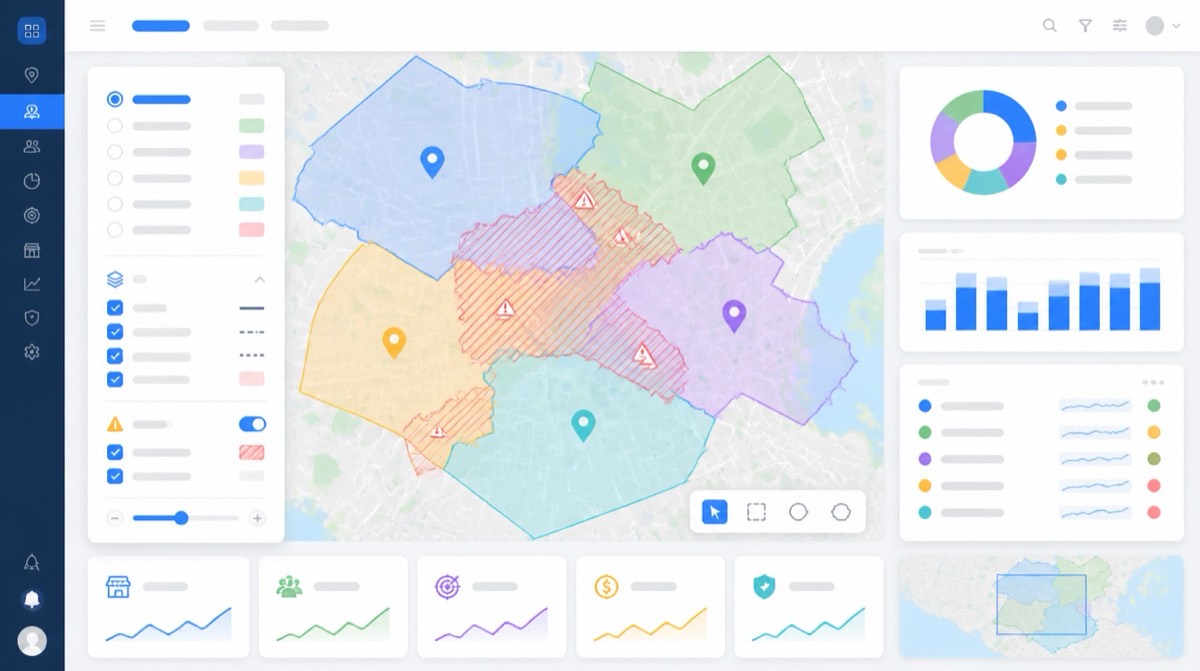
Most of the recurring disputes inside franchise systems trace back to two related problems. Encroachment, where the franchisor adds capacity inside or adjacent to a franchisee’s territory. Cannibalization, where two units of the same brand draw from the same customer base and reduce each other’s sales. The first is a contract question. The second is a planning question. They produce the same outcome on the franchisee’s P&L, and a system can produce both at once when poorly run.
Encroachment defined
Encroachment is any activity by the franchisor that reduces a franchisee’s ability to earn profit from a location. The category covers four distinct forms.
The first is in-territory expansion, where the franchisor opens a new franchised or company-owned outlet inside or near the territory granted to an existing franchisee. The second is virtual encroachment, where the franchisor sells directly to customers inside the territory through online channels, mobile apps, or direct marketing. The third is alternative-brand encroachment, where the franchisor introduces a sister brand operating in the same trade area and competing for the same customers. The fourth is channel encroachment, where the franchisor places products in supermarkets, convenience stores, kiosks, or institutional accounts inside the territory.
The Internet has been treated in case law as a “ubiquitous outlet” risk. A franchisor’s transactional website is, by definition, present in every franchisee’s territory. The breach analysis turns on what the contract said when it was signed and how the channel revenue is allocated. Older franchise agreements predate modern online ordering and delivery platforms, and their territory definitions usually do not contemplate centralized online channels at all. Franchisors building new systems are advised to amend agreements to include explicit definitions of online territory and the applicable revenue channels.
Alternative-brand encroachment has become a meaningful concern as franchise groups acquire multiple brands and operate them under shared corporate parents. A territory granted exclusively for Brand A may or may not bar the same parent company from placing Brand B, which serves the same customers with the same business model, in the same area. The exclusion has to be drafted into the territory grant, because absent specific language, the alternative brand is technically a different franchise system.
Channel encroachment is the oldest of the four forms and the easiest to police because the placements are physical and trackable. A franchisor placing branded retail product in a supermarket inside a franchisee’s territory is doing something visible. The disputes turn on revenue allocation and competitive impact, since the placement itself is a matter of record.
Cannibalization
Cannibalization is the transfer of sales from one location to another within the same brand. It happens when units are sited so close together that their trade areas overlap and they pull customers from each other rather than generating net new revenue. A territory should be sized so a unit can sustainably draw customers without pulling revenue from another unit in the same system.
The Krispy Kreme story is the most-cited cautionary case. The brand approved too many stores in too small a region during its mid-2000s expansion, leaving franchisees fighting for the same customers and producing a structural cannibalization failure traceable directly to territory design. The losses showed up in franchise financials before they appeared in corporate guidance, and the brand’s subsequent restructuring is a recurring reference point in franchise development conversations.
Subway is the larger and more current example. The agreements grant no designated territories. Approvals for new stores were historically cheap, fast, and abundant. The system reached saturation densities that became reference points for over-expansion, including ten Subway locations within a one-mile radius of a single Manhattan studio. The 702 arbitration actions Subway filed against U.S. franchisees in 2017 contrasted with one filed by McDonald’s and two by Dunkin’ in the same year, an indication of how cannibalization disputes resolve in a system without contractual protections. Subway’s “business development agents,” large franchisees granted managerial power over hundreds or thousands of locations within a geographic area, have been accused of using fee enforcement and store-evaluation pressure to push smaller operators to sell, with the development agents then acquiring the stores. The structural pattern is one of internal pressure that follows from saturation rather than from any single intentional act.
Case law
A small set of cases anchors the legal frame for encroachment claims.
In In re Vylene Enterprises, Inc., the Ninth Circuit held that a franchisor who opened a restaurant within 1.5 miles of an existing franchisee’s location breached the implied covenant of good faith and fair dealing. The case set a recurring benchmark for what proximity counts as actionable encroachment in the absence of explicit contractual protection.
In Kazi v. KFC US, LLC, 76 F.4th 993 (10th Cir. 2023), the Tenth Circuit addressed encroachment claims and the limits of the good-faith covenant in franchise agreements, narrowing the conditions under which an implied protection can be read into a contract that does not grant exclusivity. The decision tightened the doctrinal frame and made it harder for franchisees in non-exclusive systems to recover on implied-covenant theories.
In Davis v. McDonald’s Corp. (N.D. Fla.), a McDonald’s franchisee claimed a commercially reasonable expectation that McDonald’s would not act to substantially impact sales through new-store development. The court granted summary judgment for McDonald’s but cautioned that if McDonald’s had opened a unit immediately next door, it “might so completely frustrate the purpose of the franchise agreement” to support a contract claim. The dictum has been cited in subsequent disputes as evidence that even an explicitly non-exclusive agreement has outer limits, and it sits alongside Vylene as one of the recurring touchstones in encroachment doctrine.
An Embassy Suites encroachment matter from the late 1990s documents a franchisor granting three additional Embassy franchises in the Orlando market shortly after a franchisee opened, including one located only half a mile from the original. The placement became the factual record in subsequent litigation over the boundary of good-faith conduct and is now part of the standard reference set in franchise-law treatises.
More recent litigation, including a franchisee of United Imaging Partners suing its franchisor in Austin, Texas after the franchisor placed another franchisee in its territory, indicates that encroachment claims continue to surface in newer service-based franchise systems. The pattern is durable because the underlying tension between system growth and individual operator protection is built into the franchise model itself.
The 2022 McDonald’s owners’ demand
In 2022 the U.S. McDonald’s National Owners Association issued a public statement calling for the right to meaningful protection from encroachment or cannibalization by other corporate or franchised restaurants that would materially harm existing restaurants without good cause or fair compensation. The statement is notable because it came from operators of a brand whose franchise agreement explicitly disclaims any territorial rights. It indicates that franchise systems built on non-exclusive grants face renewed pressure to articulate practical limits even where the contract gives none.
The mechanisms for managing encroachment risk inside a system include impact studies before approving new units, formal good-faith review of any new site within a defined radius of an existing one, compensation frameworks for documented sales loss attributable to new corporate openings, and adjustment of online-channel revenue sharing for orders attributable to a franchisee’s territory. None of these are required by the Franchise Rule. All of them appear in well-run systems and are usually documented in operating manuals rather than in the FDD itself.
A common element across these protective mechanisms is documentation. A franchisor who can show that a new site was approved after a defined impact analysis, with input from the affected franchisee and a documented review of trade-area overlap, is in a much stronger litigation position than a franchisor who approved the site without process. The documentation does not change the contract. It changes the factual record on which the contract will be interpreted if a dispute arises.
Performance Measurement and Renewal

Territory health is measured at the level of the operating unit, not the contract. The metrics that recur across systems share a common form. Actual demand captured divided by potential demand available.
Market penetration rate is calculated as the number of customers (or households purchasing) divided by the target market size, expressed as a percentage. For consumer products, a typical “good” market penetration rate falls in the 2% to 6% range, with substantial variation by category, brand maturity, and channel mix. Capture rate is a related metric, defined as customers divided by total potential customers in the market multiplied by 100. The two are sometimes used interchangeably, but the distinction matters when comparing across brands, because target-market definitions and total-potential-customer definitions are not the same.
Sales per household and units per household are the more granular versions, often computed at the ZIP-code level and used to identify portions of a territory underserved by the existing unit’s operations. A territory whose center performs at 4% penetration but whose outer ZIPs sit at 0.5% is signaling either an access problem, a demand-modeling error, or an opportunity for additional outlets. The diagnostic value of the granular metric is that it points to a specific sub-area of the territory rather than to the territory as a whole.
A right of first refusal grants the franchisee the first opportunity to acquire an additional unit or territory in the franchise system when the franchisor decides to sell or offer one. The provision matters at renewal because adjacent territory can be made available to outside operators if existing franchisees do not have priority access. Franchisees expanding within a brand typically negotiate the right of first refusal for contiguous territories as part of the original agreement and renew it at each territory renewal.
Renewal of a territory grant is normally conditioned on maintenance of performance standards, refresh or upgrade of the outlet, and continuing compliance with operating requirements. A franchisee underperforming at the territory level can find renewal denied, the territory shrunk to the unit’s actual draw, or the right transferred to a new operator. Area development agreements impose a stricter version of the same logic. Missing a scheduled milestone produces immediate consequences, including reduction of the development area or full termination, with the unopened portion returning to the franchisor for resale to another developer.
Strong territory design front-loads this work. The boundary is drawn against demand. The demand is verified against actual operating data once the unit is open. The contract is calibrated so the renewal and expansion mechanics reward the operator who serves the area well. The systems that produce the fewest disputes are the ones that did the analysis before the grant and revisited it on a defined cycle thereafter, and the systems that produce the most disputes are the ones that treated territory as a static line on a 20-year-old map.
Frequently Asked Questions
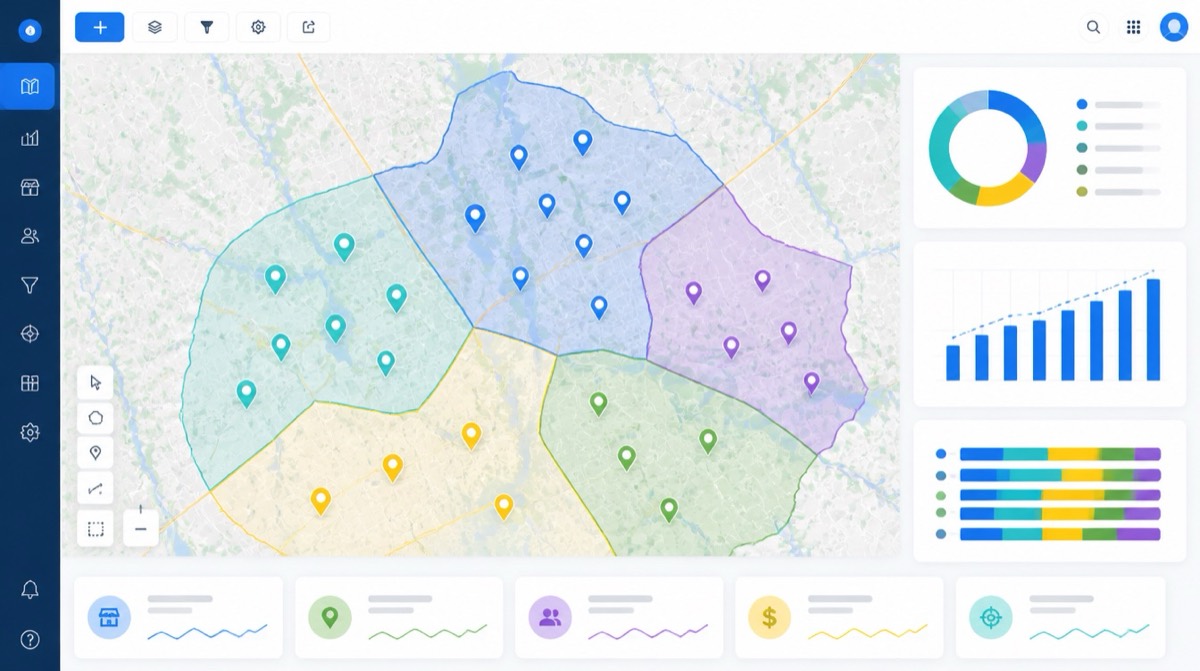
What is a franchise territory?
A franchise territory is the defined geographic operating zone in which a franchisee is granted rights to sell the franchisor’s goods or services. It is described in Item 12 of the FDD using zip codes, mileage radii, counties, drive-time polygons, or other specific designations. The grant can be exclusive, protected, or non-exclusive depending on what the franchisor agrees to reserve.
What is the difference between exclusive and protected territories?
An exclusive territory bars the franchisor from operating any competing outlet under the same trademarks anywhere in the granted area, including online and alternative channels. A protected territory typically only bars new brick-and-mortar units of the same brand and leaves online sales, alternative-brand operations, and non-traditional venues open to the franchisor. Protected is now the more common grant in mid-sized and large systems.
How big should a franchise territory be?
A common rule-of-thumb baseline is a minimum population of around 75,000 people, though retail concepts often work within a 1- to 5-mile radius and service-based franchises commonly cover populations of 25,000 to 100,000. The actual size depends on the brand’s unit economics, ticket size, purchase frequency, and capital intensity. A territory drawn too small starves the operator; one drawn too large dilutes brand presence.
What is FDD Item 12?
Item 12 is the section of the Franchise Disclosure Document that describes the territory associated with the franchise. It discloses the type of territory granted, the minimum territory size where size is undefined, restrictions on selling outside the territory, the franchisor’s rights to sell into the territory through the Internet or other channels, and the franchisor’s right to reduce or change the territory.
Can a franchisor sell online into my territory?
Most franchise agreements, including those granting exclusive or protected territories, reserve the franchisor’s right to sell online to customers anywhere. That reservation includes orders placed inside a franchisee’s territory. The treatment of online channels is one of the most contested aspects of modern franchising and is required to be disclosed in Item 12 of the FDD.
What is an area development agreement?
An area development agreement is a franchise contract granting a developer the right to open multiple franchised units within a defined geographic area on a mandatory opening schedule. The franchisor usually grants exclusive rights to the area for the duration of the schedule. Area development fees typically run in the mid- to high five-figure range, varying with the number of units, the timeline, and the perceived value of the geography.
What happens if a developer misses an ADA schedule?
Missing a scheduled milestone in an area development agreement can result in reduction of the development territory, removal of the exclusivity, or full termination of the agreement. The unopened portion of the territory returns to the franchisor for resale to another developer. The consequences are typically defined in the agreement itself and are not subject to discretionary leniency once the schedule has lapsed.
What is a designated market area (DMA)?
A Designated Market Area is one of 210 non-overlapping geographic regions defined by Nielsen in which the population receives the same local television and radio offerings. Each county is assigned to a single DMA. Franchisors sometimes use DMA boundaries as a starting point for territory definition because they align with media-buying geography, allowing a franchisee to advertise within a defined broadcast footprint without spillover.
Is drive time or radius better for territory mapping?
Drive time is generally more accurate for defining real trade areas because it accounts for road networks, traffic, and physical barriers such as rivers, highways, and bridges. Radius mapping is useful for quick standardized initial screening across many candidate markets but breaks down at the site-decision stage where barriers make straight-line distance misleading. Most modern systems use drive time for analysis and radius for contractual shorthand.
Does Chick-fil-A grant exclusive territories?
Chick-fil-A does not grant exclusive territories to operators. Corporate selects the sites and sets the territory boundaries through its own real estate team based on traffic counts, population density within a 3-mile radius, and corporate expansion goals. In 2023 the brand selected 94 owner-operators, less than half of one percent of the applicant pool.
What is a right of first refusal in franchising?
A right of first refusal gives a franchisee the first opportunity to acquire an additional unit or territory in the franchise system before the franchisor offers it to anyone else. It provides a way to expand into adjacent geography without facing new competitors in close proximity. Franchisees expanding within a brand typically negotiate the right as part of the original agreement and renew it at each territory renewal.