

Route optimization for field sales is the practice of sequencing a rep’s daily or weekly visits to minimize drive time and cost while respecting appointment windows, account priority, vehicle and driver constraints, and live traffic. It applies the math of the Traveling Salesman Problem and the Vehicle Routing Problem to a real territory and a real CRM.
The pressure on this practice is real. Outside sales reps average 21 hours per week behind the wheel, and 18% of reps report more than 40. Roughly 45% of an outside rep’s working time goes to traveling between client locations. Only 28% to 35% of the average sales rep’s week is spent actively selling. Every hour of drive time is an hour the rep cannot meet an account, log a call, or close a deal.
The math is also against the planner. A 10-stop day has more than 3.6 million possible orderings. A 50-stop route, brute forced, would take longer than the age of the universe to enumerate on current hardware. That is why production routing engines do not look for the perfect answer. They look for a very good answer fast, and the rest of this article covers how that decision shapes the way a field-sales team plans, executes, and measures its days.
The Routing Math Behind Field Sales
The TSP and VRP Foundations
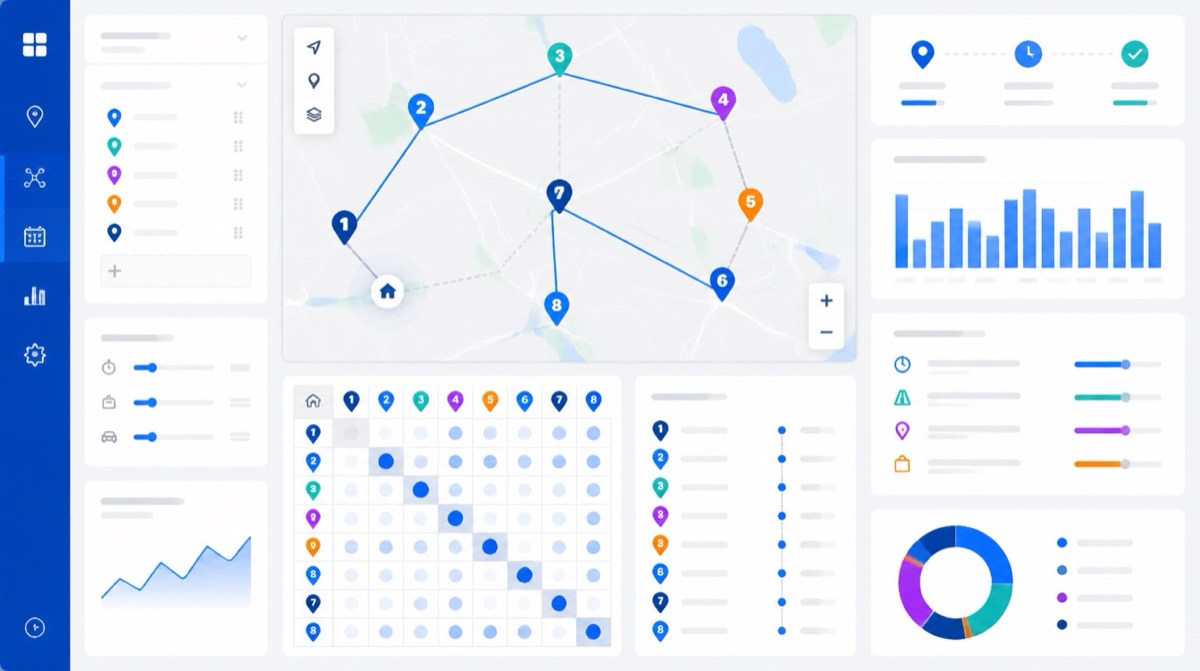
Two formal problems sit underneath every sales-route question. The first is the Traveling Salesman Problem, which asks for the shortest route that visits each of a list of locations exactly once and returns to the start. The second is the Vehicle Routing Problem, the multi-vehicle generalization of the TSP. Given a fleet of reps and a set of accounts, the VRP finds the optimal set of routes that serves every account at minimum total cost. Reduce the fleet to a single rep and the VRP collapses back into a TSP.
Both problems are NP-hard. The number of possible route orderings grows as the factorial of the stop count, which becomes intractable very quickly. A 10-stop tour has 10! orderings, or 3,628,800. A 30-stop tour produces a number with 32 digits. At a million permutations checked per second, brute forcing a 30-stop tour would require more than 200,000,000,000,000,000 years. A 57-stop route has roughly a 75-digit number of possible orderings. Brute force is not a strategy. It is an upper bound on what is possible to compute.
Heuristics and Metaheuristics in Production Solvers
Exact algorithms such as branch-and-bound and dynamic programming improve on brute force, but they still scale exponentially and become impractical past about 20 to 30 stops for repeated daily use. Production routing engines therefore rely on heuristics and metaheuristics. A heuristic gives up the guarantee of optimality in exchange for speed.
The simplest heuristic is nearest-neighbor. Start at a chosen depot, go to the closest unvisited stop, repeat. Nearest-neighbor is fast and easy to implement. It is also greedy and shortsighted, often locking in early choices that force long final legs. A human looking at the same map will frequently spot a shorter route.
Genetic algorithms treat candidate routes as a population that breeds and mutates across generations. Routes with shorter total distance survive into the next generation. With enough iterations, a genetic algorithm finds shorter routes than nearest-neighbor, although it still does not guarantee the global optimum. Hybrid methods improve further. A common approach for the Capacitated VRP uses a genetic algorithm to assign customers to vehicles and then a nearest-neighbor heuristic to sequence each vehicle’s route. The hybrid outperforms either method alone.
Google’s OR-Tools is the most widely cited open-source optimization toolkit for TSP and VRP. It combines local search with metaheuristics such as guided local search, simulated annealing, and tabu search. The pattern is consistent across commercial routing engines as well. Find a feasible starting solution, then move stops between routes and swap orderings under a guiding rule until the solution stops improving.
Isochrones, Time Matrices, and Multi-Depot Variants
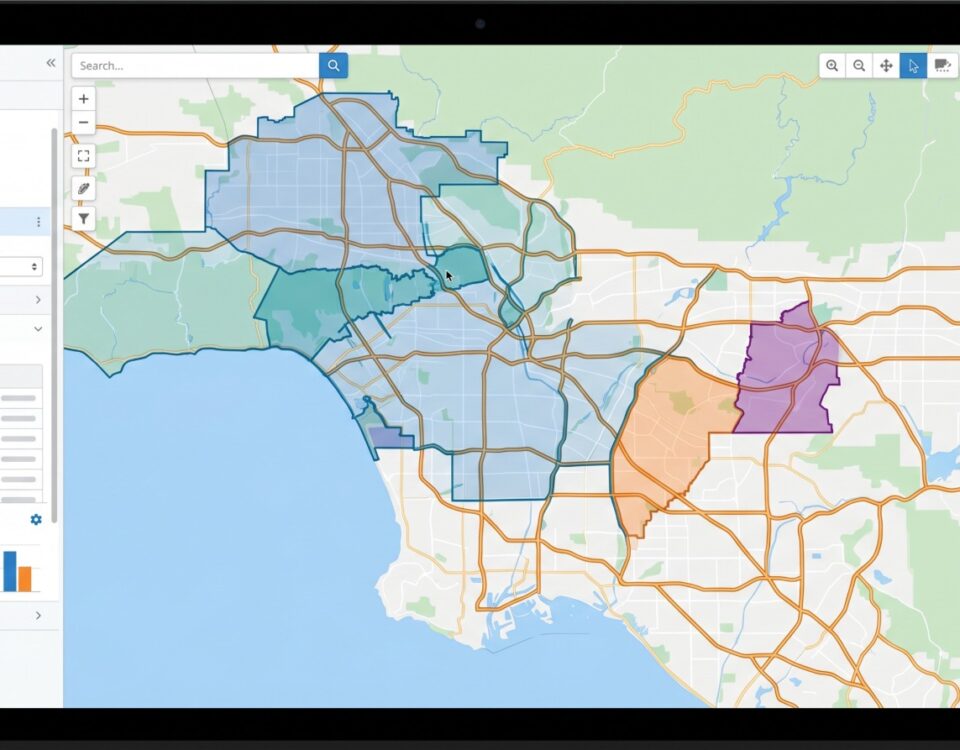
Two supporting concepts appear repeatedly in routing workflows. An isochrone is a contour around a starting point that encloses every location reachable within a specified travel time, given current traffic and road network conditions. A 30-minute isochrone from a downtown office at 9 a.m. covers a different set of accounts than the same isochrone at 2 p.m., because congestion compresses or expands the reachable area. Planners use isochrones to test feasibility before sequencing. The second concept is the time matrix, a precomputed table of travel times between every pair of stops, sometimes updated multiple times per hour against live traffic data. The quality of the time matrix sets the upper bound on what any heuristic can achieve. A solver running on a stale or coarse matrix produces an elegant plan that breaks when the rep encounters real traffic. The practical implication for buyers of routing software is that the underlying map data, traffic feeds, and time-matrix refresh cadence matter as much as the algorithm name on the marketing page. A weaker heuristic on fresh data routinely beats a stronger heuristic on stale data.
Multi-depot variants raise the complexity again. Multi-Depot VRP (MDVRP) sits among the hardest classes of routing problem because the algorithm must first decide which depot serves which customer, then sequence each resulting route. Modern solvers handle 200-stop multi-depot routes in under 300 milliseconds and 500-stop multi-depot multi-period routes in roughly 3 seconds. Multi-day route optimization APIs allow up to 20 days of forward scheduling against 50 or more hard and soft constraints, including working hours, waiting time, task lateness, and vehicle capacity. The academic formulation for sales reps who do not return to a depot is the Multi-Depot Open VRP with Time Windows (MDOVRPTW). Open VRP relaxes the requirement to return to the start. Closed VRP enforces it.
The takeaway from the math is practical. Past about 15 stops, no field-sales planner is computing an optimum in their head, on a whiteboard, or in a spreadsheet. They are running a heuristic, with or without naming it that. Choosing a routing engine is largely a choice of which heuristics it implements and how well its constraint model captures the real workflow. A solver that produces a mathematically shorter route but ignores account tier or service duration produces a worse business outcome than a heuristic that respects both.
Variables and Constraints That Shape a Real Route
The Core Variables in a Sales Route Model
The textbook TSP optimizes one number, total distance. A real field-sales route optimizes against many constraints at once, and the relative weight of those constraints determines if a route is usable or only mathematically short.
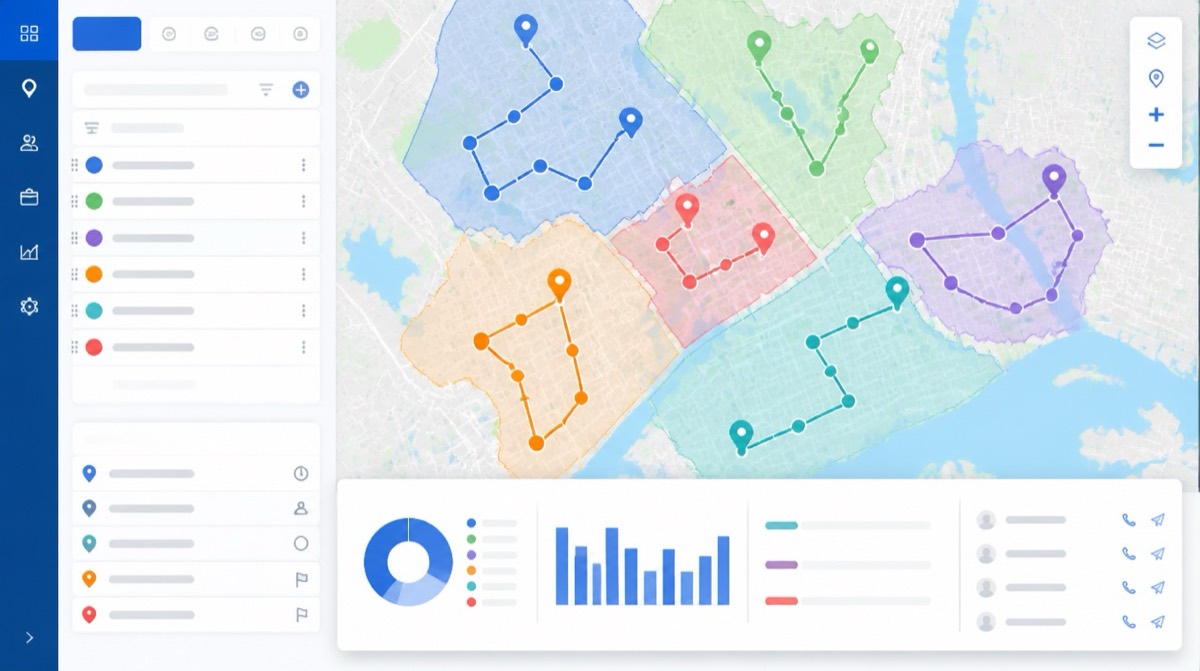
The variables that matter for sales route optimization include the following.
- Distance and live traffic. The straight-line distance between two stops is rarely the actual travel cost. Drive time at 7:45 a.m. is not drive time at 11:00 a.m. Routing engines that ignore traffic produce plans that fail by mid-morning.
- Time windows. Most accounts can only be visited within a defined window, often dictated by clinic hours, store delivery windows, buyer calendars, or contractual appointments. A window of 8:00 a.m. to 10:00 a.m. is a hard constraint. A preferred window of “afternoons” is a soft one.
- Account tier and visit cadence. A common framework assigns A, B, and C tiers. A accounts may be visited every two weeks, B monthly, C quarterly. An alternative model treats the top 20% of revenue accounts as Tier 1 with weekly or bi-weekly visits, the middle 30% to 40% as Tier 2 with less frequent contact, and the long tail as Tier 3.
- Service duration per stop. A 5-minute drop-off and a 45-minute discovery meeting cannot be treated as equivalent. Service time per stop drives the difference between a day plan with 12 visits and one with 5.
- Vehicle and driver capacity. Sample inventory, demo equipment, brochures, and physical goods all consume cargo space. Drivers have legal and contractual hour limits.
- Depot and home anchoring. Some reps start at a regional office. Some start at home. Some end at home regardless of where the day began. The routing problem changes when the rep must return to the depot (closed VRP) versus ending the day wherever the last stop sits (open VRP).
- Geocoding accuracy. A route is only as good as the coordinates underneath the addresses. CRMs accumulate dirty addresses over years of manual entry, and a single zip-code typo can send a rep across town.
Time Windows, Tiering, and Open Versus Closed VRP
Time windows deserve close attention because they are the constraint planners most often get wrong. Set a window too narrow and the route contains forced idle time, the rep arrives early and waits. Set the window too wide and the customer must keep themselves available longer than the actual visit needs. Both errors waste hours per week. The right window respects the customer’s actual calendar without padding it.
Account tiering is the second source of common error. The A/B/C model is a starting point, not a finished cadence. A territory’s revenue concentration determines how aggressive the Tier 1 cadence should be. A field rep covering 12 hospital systems with 80% revenue concentration in three of them will not produce useful plans if all 12 are treated as equal weekly stops.
Vehicle capacity and driver hours apply unevenly across field-sales verticals. A pharma rep in a sedan with a tote of samples has minimal capacity constraints. A medical device rep transporting a loaner instrument tray, or a beverage merchandiser servicing 30 to 50 stops on a beverage direct-store-delivery route, has capacity as a hard constraint. The Federal Motor Carrier Safety Administration’s hours-of-service rules apply to commercial motor vehicles, and drivers who are also salespersons are exempt from the 60-hour and 70-hour on-duty limits. That exemption is one of the few HOS carve-outs written explicitly for sales personnel, and it should be confirmed against vehicle class and weight before being relied on.
Open VRP versus closed VRP sounds academic and turns out to be the routing concept most relevant to outside reps. An outside rep almost never returns to a warehouse. The day ends at home, at the last appointment, or wherever the rep parked. Modeling the route as open removes a phantom final leg that closed-VRP solvers force into the plan, and it is the difference between a route that reflects how the rep actually works and one that adds 45 minutes of fictional driving every evening.
Geocoding sits beneath everything else. A 2024 benchmark across major geocoding APIs found Google’s geocoder most reliable, with other providers less accurate on rural and non-U.S. addresses. No provider matches every address perfectly because typos, abbreviations, and incomplete CRM records cannot always be resolved. Address hygiene is therefore an upstream variable. The cleanest routing engine produces a broken plan if the addresses are wrong.
Vertical-Specific Constraint Patterns
The verticals where these constraints bite hardest illustrate the spread. A pharmaceutical rep operates against tight clinic windows, short call durations of 5 to 10 minutes, and access rates that have only recovered to roughly 60% of pre-pandemic levels in 2023 to 2024. The route must respect lunch closures, surgical block schedules, and the difference between an academic medical center and a community clinic. A medical device rep starts the morning at a scheduled surgical case and routinely loses the afternoon to trauma cases or after-hours surgeries, with the rest of the day bending around the unscheduled. A beverage direct-store-delivery driver runs a fixed weekly route of 30 to 50 stops across convenience stores, restaurants, grocery, and bars. The route is largely cyclical, with margin for substitution only when a store is closed for inventory or remodel. A B2B account executive in industrial distribution or building products has fewer stops, longer service durations, and more variability in appointment confirmation.
Each of these patterns implies a different default for the constraint model. The pharma rep needs tight time windows and short service durations weighted heavily. The medical device rep needs aggressive replanning logic and tolerance for high cancellation rates. The DSD driver needs a cyclical template that holds the base route stable. The B2B account executive needs strong tier weighting and looser windows. A general-purpose routing engine handles all of these only if its constraint configuration is exposed to the planner and the planner uses it.
Regulatory Constraints in Pharma Routing
Regulatory constraints also belong in the constraint model where they apply. The Drug Supply Chain Security Act requires real-time electronic interoperability and serialization to the package level across the U.S. pharma supply chain as of November 24, 2024. Civil fines can reach $500,000 per violation, and intentional violations may produce criminal charges. Field-based pharma reps handling samples must follow the serialization workflow at every transfer, which means the routing engine has to account for sample-handling stops, secure storage requirements, and electronic signature steps as part of service duration. A route plan that schedules 10 sample-handling visits in 6 hours without buffer for the serialization workflow will fail compliance review even if it executes on time.
Static Routes, Dynamic Routes, and the Replanning Trigger
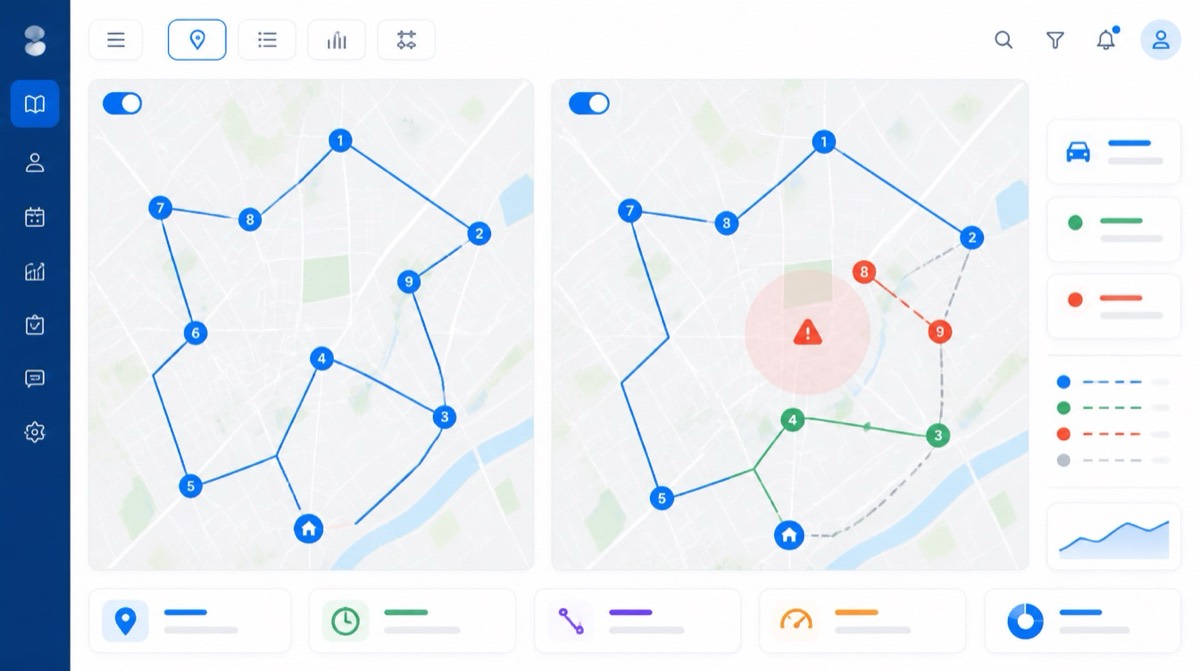
The next decision is between a route computed once and followed and a route computed continuously and adjusted as conditions change. The first model is static routing. The second is dynamic routing. Both have legitimate use cases in field sales, and the choice depends on how much of the day is fixed when the rep leaves the house.
Static routing computes a plan in advance, usually the night before or the morning of, and the rep follows it as written. A static plan is appropriate when accounts have predictable cadences, appointments are confirmed, traffic is regular, and cancellations are uncommon. Many pharma territories and most beverage DSD routes run on a static base schedule that varies only at the margins. Static routes also serve compliance because the plan can be archived, audited, and compared against actual driving history.
Dynamic routing replans in real time. When a customer cancels, a meeting runs long, a new urgent visit appears, traffic shuts a corridor, or a high-priority lead comes in mid-morning, the routing engine recomputes the remaining stops and pushes the updated sequence to the rep’s device. AI routing agents monitor live feeds and trigger replanning when defined thresholds are breached, for instance when average speed on a corridor drops below 15 mph or weather affects a delivery zone.
The market data shows where the investment is going. The global dynamic route optimization software market was estimated at $1.9 billion in 2024 and is forecast to reach $6.6 billion by 2034, a 13.1% compound annual growth rate. The wider route optimization market was $10.99 billion in 2025 and is projected at $42.65 billion by 2035. Last-mile delivery dominates the dynamic segment with roughly 33% market share. Field sales is a smaller but faster-growing slice driven by AI-enabled CRMs.
Predictive ETAs are the visible output of the dynamic stack. Machine-learning models trained on traffic patterns, weather, vehicle telemetry, and historical performance now predict arrival times with 90% to 95% accuracy. For field sales, this matters because it lets the rep give an account a tight ETA window instead of a 30-minute fudge, which materially improves the front-desk handoff at hospitals, dispensaries, and head-office reception areas.
When Static Routing Holds Up
Static routing is the right choice when three conditions are present. The accounts on the list have agreed appointment times or fall inside predictable windows. The territory geography is stable. The rep’s day rarely changes mid-morning. Many enterprise and named-account territories fit this profile, especially in pharma, medical device sales to large hospital systems, and beverage DSD routes with weekly cadences.
The advantage of static routing is auditability and discipline. A plan that is set the night before forces tier discipline, because the planner has to look at which accounts are scheduled in versus crowded out. A plan that recomputes every 20 minutes can hide drift, the slow replacement of A accounts with closer-but-lower-tier B and C accounts that happened to be on the way.
Static plans also reduce the cognitive load on the rep. Following a fixed sequence is easier than reacting to live changes. Reps who travel through congested metros where any replanning will introduce new delays often prefer a static morning plan they can execute without negotiation.
When Dynamic Replanning Pays For Itself
Dynamic routing earns its keep in territories where the day breaks. A medical-device rep who starts every morning at a scheduled surgical case will frequently end up in an after-hours trauma case the same day, and the rest of the route has to bend around that. A beverage merchandiser who finds a store closed for inventory will lose the visit unless the engine reslots the stop. A B2B account executive who picks up an urgent prospect call mid-route should be able to insert that meeting into the day’s plan and let the engine reorder the remainder.
The replanning trigger is the operationally meaningful concept here. A dynamic engine should not replan continuously, because that destroys the rep’s ability to commit to ETAs. It should replan when a defined threshold is crossed. A cancellation, a delay exceeding 15 minutes against the plan, an inserted high-priority stop, a corridor closure. Setting those thresholds is one of the configuration choices that separates a productive deployment from a noisy one.
A useful field test of the case for dynamic routing in a given territory is the cancellation rate. If less than 5% of stops cancel or move on the day, static routing with daily replanning at 6 a.m. or 7 a.m. is enough. If 15% or more of stops change between morning and afternoon, the rep is replanning manually all day, and dynamic routing recaptures that lost time.
The underlying AI infrastructure has matured fast. In 2025, 78% of service professionals using AI report measurable time savings, generative AI adoption among sales and service teams rose from 33% in 2023 to 71% in 2025, and 72% of supply chain companies rank AI investment as a top priority. The last-mile delivery segment dominates dynamic route optimization with roughly 33% market share and a growth rate above 14.6% through 2034. Field sales is a smaller adopter of dynamic routing, but the trajectory is the same. The data sources are now plentiful enough (traffic feeds, vehicle telemetry, weather APIs, CRM event streams) that a real-time replanning loop is no longer an engineering problem. It is a configuration and discipline problem.
The Daily Planning Workflow as Reps Actually Run It
The Six-Step Day-Plan Sequence
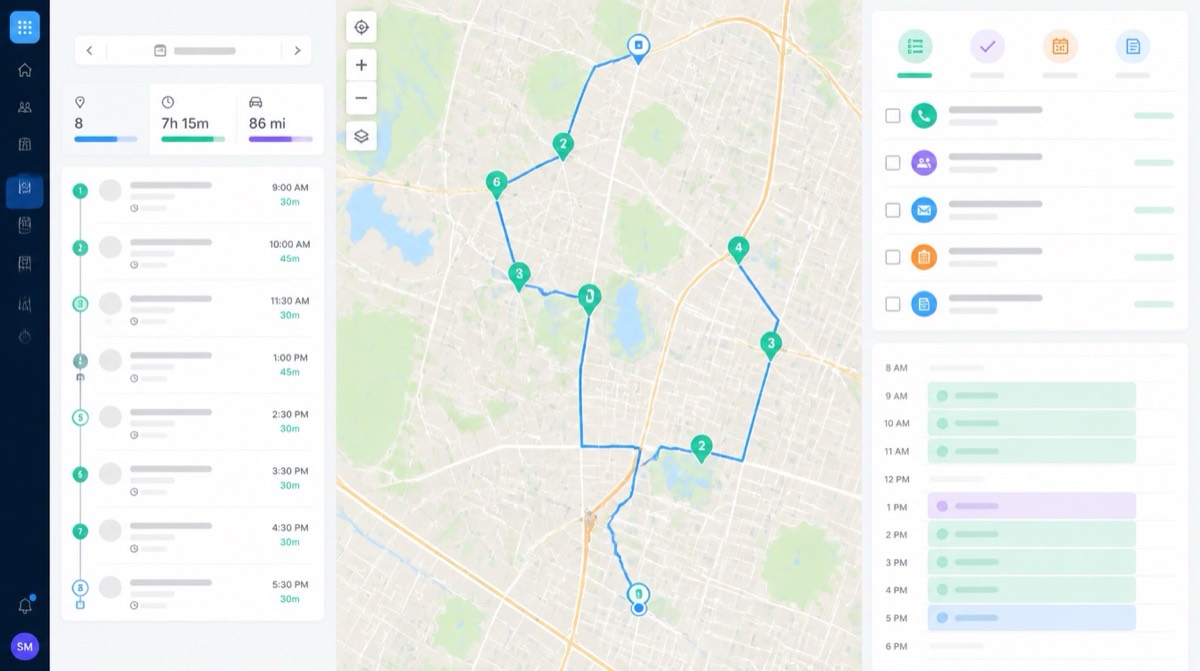
The mechanics of a day plan have stabilized into a six-step workflow that recurs across verticals. The vocabulary varies by industry. The shape does not.
- CRM pull. The rep opens the day’s account list and priority queue. For most B2B organizations, this list comes from Salesforce, HubSpot, or Microsoft Dynamics 365. The CRM is the system of record for accounts, contacts, prior activity, and tier classification.
- Priority and tier sort. Tier A accounts anchor the day. Tier B and C stops are added if they fit the geography around the A anchors, not the other way around. A common failure mode is sorting by proximity first and tier second, which fills the day with low-value stops because they happened to cluster.
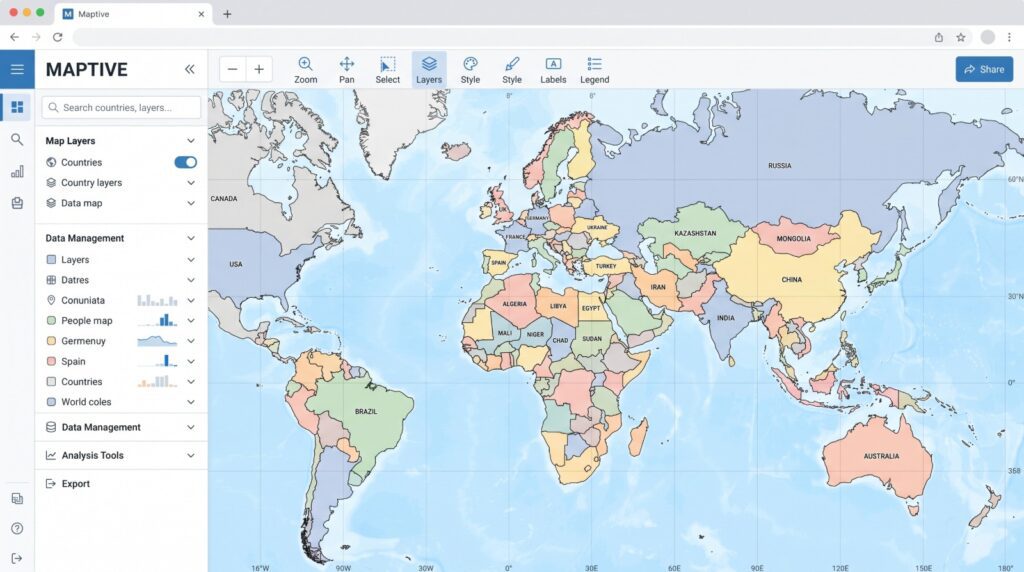
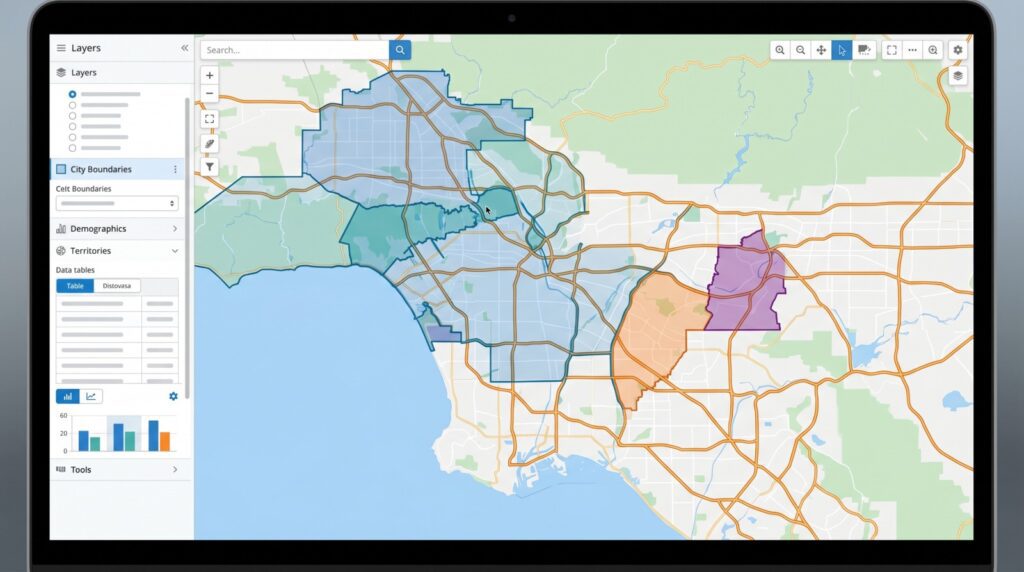
- Route compute. A routing tool runs a heuristic VRP or TSP solve over the sorted list, factoring time windows, service duration, traffic, and the rep’s start and end points. This is where map-based sales-route optimization platforms such as Maptive sit in the workflow, taking the CRM-tier output and returning a sequenced plan.
- Calendar sync. The optimized stops are written into the rep’s calendar with travel-time blocks between them. The calendar becomes the day-of working document, with each appointment carrying its drive-time prefix.
- Mobile dispatch. Turn-by-turn navigation pushes to the rep’s phone or tablet. Real-time updates push when a customer cancels or reschedules. The rep does not retype addresses or rebuild the route on a consumer maps app.
- Activity logging. At each stop, the rep logs the visit back to the CRM. Mobile capture (voice, photo, predefined templates) has largely replaced typing notes into a laptop in the parking lot. The logged activity feeds the next day’s tier review.
Each step has a failure mode. CRM pulls fail when the underlying CRM data is stale, with outdated contacts, wrong addresses, or accounts assigned to the wrong rep. Tier sorts fail when the tier definitions have not been reviewed in 12 months and no longer match revenue concentration. Route computes fail when constraint settings are wrong, for instance when service duration is left at a default 15 minutes regardless of meeting type. Calendar syncs fail when travel-time blocks are not included, leading to back-to-back meetings the rep cannot physically reach. Mobile dispatch fails when the rep ignores it in favor of a consumer navigation app that does not capture the planned sequence. Activity logging fails when the friction of logging is high enough that reps batch it at the end of the week, destroying the data foundation for next week’s plan.
CRM Integration and the Limits of Consumer Maps
Consumer mapping tools cannot stand in for this workflow at any meaningful scale. Google Maps allows a maximum of 10 destinations per route, will not automatically reorder them for efficiency, and cannot push real-time changes back to a planner. A rep doing 15 to 25 visits a day cannot manage that volume on a consumer maps app without juggling multiple maps or losing data when stops change.
The integration question between CRM and routing engine is the second decision after engine selection. Bidirectional sync, where the CRM is the source of truth for accounts and the routing engine is the source of truth for sequences, is the model most teams settle on. Field mapping has to be configured carefully because data models differ across systems. Salesforce splits Leads and Contacts. HubSpot uses one Contact object. A naive sync overwrites or duplicates records.
Execution-State Friction and the Activity-Logging Loop
Worth noting is that the workflow above describes the design state, not the execution state. In practice, the friction points multiply. Reps without a working tablet revert to printed maps. Routes pushed at 6 a.m. arrive after the rep has already left the house, so the first three stops of the day are run from memory. Mobile networks drop coverage in rural territories, and the optimization tool’s real-time replanning fails for several hours without flagging anyone. Calendar sync produces double-bookings when meetings booked by the rep in their personal calendar collide with system-generated travel-time blocks. Each of these is an operational fix, not a routing-engine fix. A team that treats the routing engine as an oracle and never inspects the breakdowns at each handoff produces worse outcomes than a team that runs a simpler tool with disciplined operational hygiene.
The activity-logging step at the end of the workflow is the one that operations teams undervalue most. A logged stop produces three pieces of data that the next day’s plan depends on. The actual arrival and departure times, which calibrate service duration estimates. The visit outcome, which adjusts tier and cadence. Any rep notes about access or scheduling, which update the constraint model for the next visit. Reps who batch-log at the end of the week destroy this loop. The plan-day-execute-log cycle is daily or it does not function as a feedback system.
Common Failure Modes in Sales Route Planning
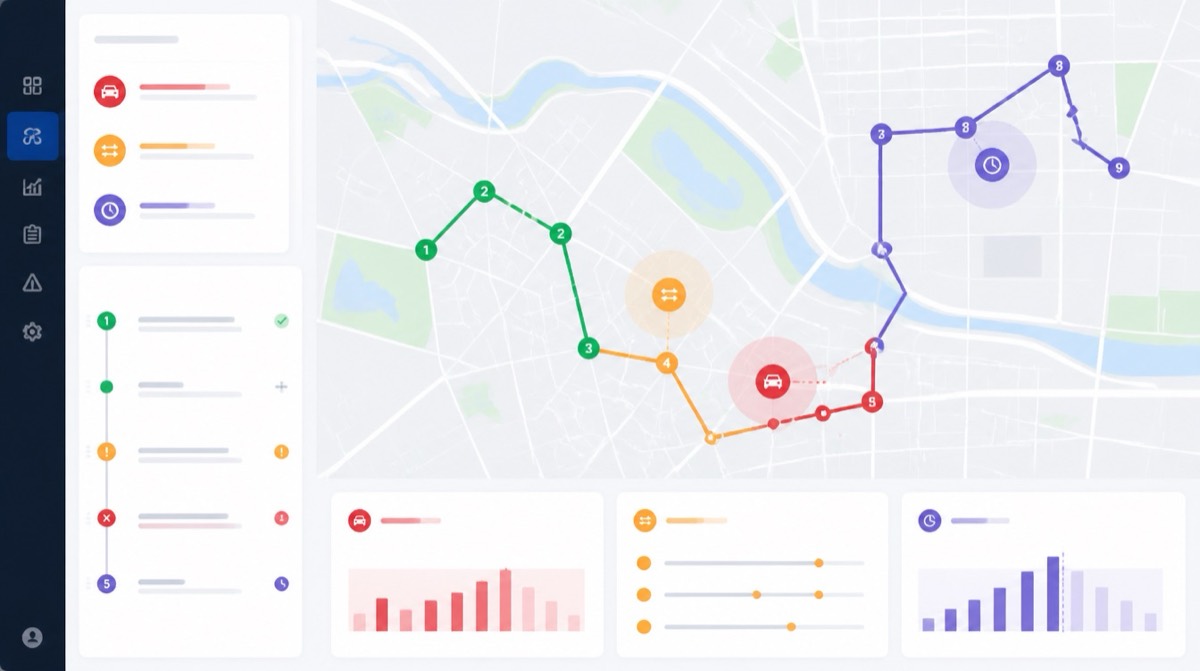
Routes break in predictable ways. The same mistakes recur across pharma, medical device, beverage DSD, building products, and general B2B field-sales operations. The most expensive errors are the ones that look reasonable on a planning screen and produce wasted hours in the field.
The most common failure modes in sales route planning include the following.
- Planning by zip code alone. Zip codes are not driving units. A single zip code can span 30 miles in rural geographies, and stops within the same zip can sit on opposite sides of a freeway with no easy crossing.
- Ignoring time windows. Routing stops in a geographically efficient order but in the wrong sequence for the customer’s actual availability produces routes the rep cannot execute as planned.
- No buffer time. A schedule with zero slack assumes every meeting ends on time and every road segment performs to its historical average. Neither assumption holds in real territories.
- Weekly plans where daily replanning is needed. A weekly plan locked on Monday will be wrong by Tuesday afternoon in any territory with a cancellation rate above 10%. Daily replans absorb that change.
- Quantity of stops over account value. Twelve B-tier visits in a day is a worse outcome than four A-tier visits if the A-tier value per visit is meaningfully higher.
- Relying on driver memory. A senior rep with 15 years in a territory can route a familiar zip code as well as software. The same rep cannot do it for a new product launch, a reassigned territory, or a temporary fill-in.
- Dirty CRM addresses. Wrong zip codes, missing suite numbers, and unverified geocodes route reps to the wrong building or, more often, to a parking lot two blocks off.
Address Hygiene and Geocoding Failure
Address quality is the upstream cost driver that most teams underinvest in. A single wrong zip code in a CRM can send a rep across town to a wrong address, costing 30 to 60 minutes per occurrence and one missed visit. A field-sales operation with 100 reps and a 2% bad-address rate is losing roughly two rep-hours per day to address failures, which compounds to about 500 lost rep-hours per year across the team.
Address hygiene is a CRM problem, not a routing problem. The routing engine consumes whatever the CRM gives it. Periodic geocoding audits, where addresses are batch-validated against a geocoding API and exceptions surfaced for review, prevent the worst failures. So does requiring rep verification at the first visit, when the rep is physically standing at the location and can confirm the suite number and entrance against the record.
Geocoding providers added millions of rooftop points and unit-level addresses to their U.S. databases in 2024, and one published case study attributed a 15% improvement in delivery times to better geocoding alone. The same principle applies to sales territories. Better address data is a route-improvement lever before any algorithmic change.
The Quantity-Over-Quality Trap
A second persistent failure mode is optimizing for stops per day as a primary metric. Stop count is easy to measure. Account value per stop is harder. The natural drift, especially under pressure from management dashboards that surface visit counts, is to fill the day with closer, easier B and C accounts and let A accounts slide.
The fix is to bake account tier into the routing constraint, not into a separate manual review step. A routing engine that treats Tier 1 accounts as mandatory anchor stops and Tier 2/3 accounts as optional fills produces a different daily plan than one that treats all stops as equivalent. The plan will look less efficient by raw stop count and produce more revenue.
A related failure mode is treating the visit duration as fixed at the engine’s default. Many planners leave service duration at a global 15 or 20 minutes regardless of meeting type, which collapses two failure modes into one. The A-tier discovery meeting needs 45 to 60 minutes plus 10 minutes of debrief. The C-tier check-in needs 5. A flat assumption packs the day so that A-tier conversations get truncated and C-tier visits get padded. The corrective is to attach service duration to the account record itself, with a default per tier and an override per meeting type. The routing engine then optimizes against the right time budget rather than a sales-organization fiction.
A third pattern is starting the day at the wrong location. Many reps default to “leave from home, return to home” without examining if that is the right anchor. A rep with three Tier 1 accounts clustered on the opposite side of the metro will gain 45 to 75 minutes per day by starting the morning at a Tier 1 anchor rather than at home. The routing engine should be configured to test alternative start points and surface the time differential, not to assume a fixed depot. The same logic applies to the end of the day. A rep who ends at a 4 p.m. account 30 minutes from home is finishing later than one who reorders the day to put a closer account in the final slot. Open VRP solvers handle both decisions natively.
Pharmaceutical sales teams have moved through this lesson publicly. The historical pharma model rewarded volume, with reps targeting 8 to 10 in-person physician calls per day at 5 to 10 minutes each. The 2024 trend is toward qualitative metrics, partly because access has changed and partly because raw call volume correlates poorly with prescription lift. Pharma rep access to U.S. healthcare providers recovered to roughly 60% in 2023 to 2024 from a pandemic low of 20%, but only 25% of providers expect in-person access to return to pre-pandemic levels. The volume math has moved, and the routing logic has to move with it.
Measuring ROI on Route Optimization
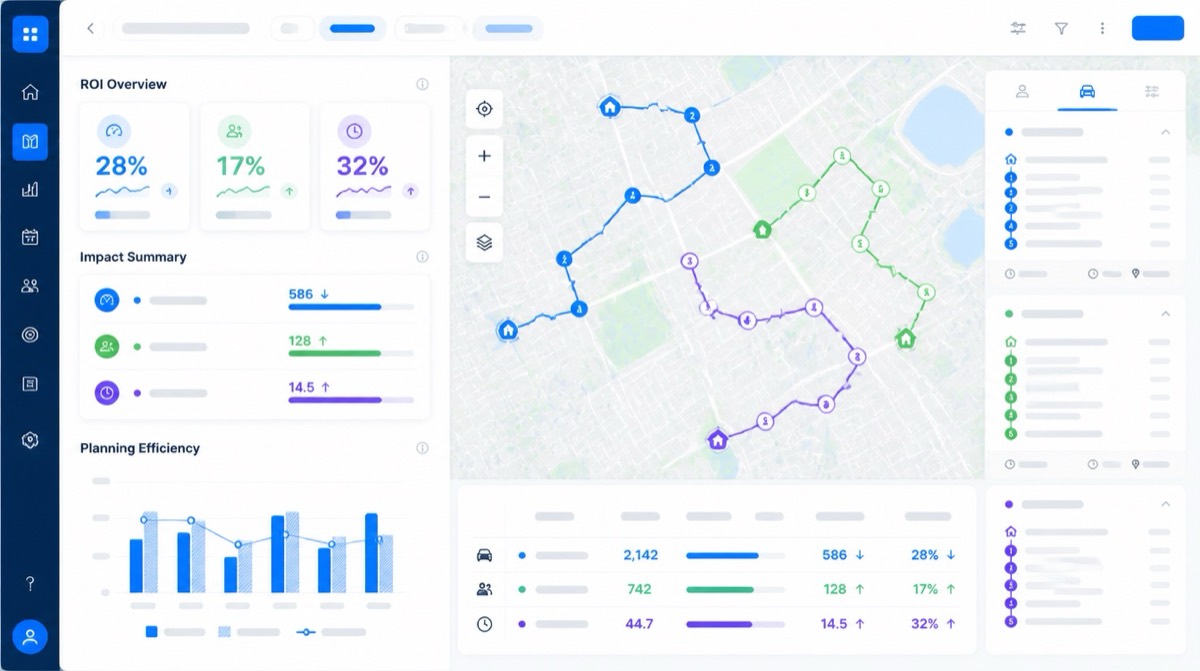
Reported Savings and Per-Call Economics
The case for routing software is simple to model because the inputs are observable. Hours saved, miles reduced, visits added, dollars per call, fuel cost, mileage reimbursement, and rep compensation are all measurable. The variability is in territory and vertical, not in the structure of the calculation.
Reported savings from optimized routing fall in consistent ranges. Drive time and fuel drop by 20% to 40%. Miles driven fall by 10% to 15%. Total delivery and visit cost falls by 15% to 20% in well-run implementations. Daily client visits increase by 18% to 44%, with an average of 3 to 5 additional visits per rep per day after adoption. Reps using routing software save roughly 8 hours per week on planning. Most companies see positive ROI within 3 to 6 months.
Translating those ranges into dollars requires the per-call cost. The average cost of an outside sales call is $215 to $400, compared with roughly $50 for an inside call. The IRS standard business mileage rate is 72.5 cents per mile in 2026, up 2.5 cents from 70 cents in 2025. The average car allowance paid to U.S. sales employees has held at $575 per month every year from 2020 through 2024, and that allowance is treated as taxable income rather than reimbursement.
A Worked ROI Calculation for a Five-Rep Team
A worked ROI calculation for a 5-rep team illustrates the magnitudes.
- Time recovered. 30 minutes per rep per day saved on planning and driving, 5 reps, 240 working days per year. That is 600 rep-hours per year, or roughly 12 additional selling days per rep per year.
- Visits added. 3 additional visits per rep per day. Across 5 reps and 240 days, that is 3,600 additional visits per year. At a midpoint outside-call cost of $300, the activity is worth $1.08 million in selling capacity, though only a fraction converts to closed revenue.
- Miles saved. A 15% reduction on a 100-mile-per-day average across 5 reps and 240 days is 18,000 fewer miles per year. At the 2026 IRS rate of 72.5 cents, that is $13,050 in direct mileage cost avoided, before fuel savings on company vehicles.
- Fuel cost avoided. U.S. retail gasoline averaged $3.30 per gallon in 2024 and is forecast under $3.00 per gallon in 2026. At 20 miles per gallon and 18,000 saved miles, fuel savings sit around $2,700.
- Planning time recovered. 8 hours per rep per week, 5 reps, 50 weeks. That is 2,000 hours of planning time redirected to selling or training.
Larger fleet operators show the same math at scale. UPS’s ORION routing system removes 10 to 14 miles per driver per day, and the company has stated that cutting one mile per driver per day across the fleet saves approximately $50 million annually. The unit economics flip in field sales because the cost per saved hour is higher (the rep is more expensive than a delivery driver and their output is revenue rather than packages delivered), but the structural argument is the same. Routing software pays back through hours and miles, and the payback period in published field-sales deployments is typically months.
Telematics, Override Data, and Fleet Composition
The ROI case strengthens further when paired with telematics. Fleet telematics separates productive idle time from waste idle, surfaces speeding and harsh braking, and feeds driver scorecards that managers can use in coaching. Excessive idling is increasingly fined in North American jurisdictions, and fuel analytics paired with telematics can attack the behavior directly. Telematics also enforces route compliance, confirming that reps actually visited the planned stops in the planned order rather than freelancing back to favorites.
The argument against route optimization investment is almost always cultural rather than economic. Reps who have run their territory for a decade resist software-generated sequences because the software does not yet know what they know. The countermove is to treat the routing engine as a starting plan that the rep can override with reason codes, rather than a script the rep must follow. Override patterns are themselves data. A territory in which the rep overrides 40% of stops every day is a territory in which either the rep has knowledge the engine lacks or the constraint model is wrong. Either way, the override data tells the operations team where to look.
A second economic factor that almost every routing ROI model leaves out is fleet composition. The U.S. commercial EV truck market was approximately $210 million in 2024 and is forecast to reach $6.5 billion by 2033, with approximately 192,000 public charging ports installed as of Q3 2024. Electrification proceeds fastest for fleets with predictable daily routes under 200 kilometers per day, which is a profile that fits many urban and regional field-sales territories. Battery capacities of 60 to 120 kWh sit at the current sweet spot for that range and utility balance. Routing tools that produce predictable daily mileage make the EV total-cost-of-ownership analysis tractable, because the planner can model 5 to 10 years of energy and maintenance cost against a known route profile rather than guessing. The cost case for EVs in field sales tightens when the routing engine produces tight, consistent daily distance distributions.
Rep Retention as the Compounding Driver
The largest single ROI driver, however, is not any one of the numbers above. It is the compounding effect on rep retention. Average annual sales turnover sits at roughly 35%, three times the cross-industry average, and the all-in cost to replace a field rep is roughly $115,000 in recruiting, training, ramp, and lost opportunity. Average time-to-replace is 5.42 months for a field rep and 3.69 months for an inside rep, so the months of pipeline gap are not small. A team that hands its reps a planned day, removes the planning burden, and gets them home at a reasonable hour holds onto reps longer. A retention improvement of even three to five percentage points on a 35% baseline, across a 20-rep team, recovers more than $200,000 in replacement cost per year. The dependent variable in retention models is rarely compensation alone. It is the daily quality of life, which routing decisions touch every day of the year. A planned day that ends at 5:30 p.m. with logged activities and a defined plan for tomorrow produces a different career trajectory than a planned day that ends at 7:30 p.m. with three hours of CRM cleanup waiting on a laptop in the kitchen. That figure is rarely captured in routing ROI models, and at most companies it becomes the largest line in the actual P&L.
A final operational note belongs in any honest ROI accounting. Sales reps who use automation tools are roughly twice as likely to exceed quota, while up to 70% of B2B reps missed quota in 2024 across the wider cohort. Field sales teams make up roughly 71% of the sales force across surveyed B2B organizations, and 65% of outside account executives attain quota, about 10 percentage points higher than inside reps. The routing tool is not the only variable. Better routing, better tier discipline, cleaner CRM data, and disciplined activity logging together produce the lift. The single largest predictor of routing-investment payback is the operations team treating it as one component of a sales-productivity system rather than as a standalone fix.
Frequently Asked Questions
What is route optimization?
Route optimization is the process of finding the most efficient sequence of stops for one or more vehicles, factoring in distance, traffic, time windows, vehicle capacity, and stop priority. It is the practical application of the Vehicle Routing Problem and the Traveling Salesman Problem. In field sales, it converts a list of accounts into a sequenced day plan that respects appointment windows and account tier.
What is the Traveling Salesman Problem?
The Traveling Salesman Problem asks for the shortest route that visits every required location exactly once and returns to the start. It is NP-hard. With only 30 cities, exhaustively checking every possible route at a million combinations per second would take longer than 200 quadrillion years. Production routing engines therefore use heuristics rather than brute force.
What is the Vehicle Routing Problem?
The Vehicle Routing Problem is the multi-vehicle version of the Traveling Salesman Problem. Given a fleet and a set of customers, it finds the optimal set of routes that serves every customer at minimum total cost. When the fleet is reduced to one vehicle, the VRP collapses into a TSP. Field-sales tools typically solve a VRP with time windows and account-priority constraints layered on top.
How is route optimization different from route planning?
Route planning is the act of sequencing a list of stops into a usable route. Route optimization runs algorithms over thousands of possible orderings to find the best sequence under business constraints such as traffic, time windows, and account priority. Planning produces a workable route. Optimization produces the best feasible route the solver can find within its time budget.
How much time do sales reps spend driving?
Outside sales reps average 21 hours per week behind the wheel, with 18% of reps reporting more than 40 hours weekly. Roughly 45% of an outside rep’s working time goes to traveling between client locations. For unoptimized field routes, driving consumes 30% to 40% of the rep’s working day.
How many sales calls per day should an outside sales rep make?
The average outside sales rep completes 5.1 in-person visits per day, or about 25 per week. Top performers average 8 to 12 face-to-face visits per day. Reps consistently making 3 to 4 visits per day typically have a routing or territory-design problem rather than an effort problem.
What is the IRS mileage rate for 2026?
The IRS standard mileage rate for business use is 72.5 cents per mile in 2026, up 2.5 cents from 70 cents per mile in 2025. The 2024 rate was 67 cents and the 2023 rate was 65.5 cents. The rate is used to deduct or reimburse the cost of operating a vehicle for business purposes.
Do sales reps need to follow DOT hours of service rules?
Drivers who are also salespersons are exempt from the Federal Motor Carrier Safety Administration’s 60-hour-per-7-day and 70-hour-per-8-day on-duty limits. It is one of the few HOS exemptions written specifically for sales personnel. Other HOS rules can still apply depending on vehicle class and weight, so the exemption should be confirmed against the specific vehicle and use case.
How accurate is geocoding for sales routes?
Geocoding accuracy depends on the address database and the cleanliness of the input. A 2024 benchmark across major geocoding APIs found Google’s geocoder most reliable, with others less accurate on rural and non-U.S. addresses. No provider matches every address perfectly because typos, abbreviations, and incomplete CRM records are not always resolvable, which is why dirty CRM addresses are a top cause of failed visits.
Can CRMs like Salesforce or HubSpot optimize routes?
Salesforce, HubSpot, and Microsoft Dynamics 365 manage accounts, contacts, and activities. They do not run route-optimization algorithms natively. Reps push CRM data into a mapping or optimization tool, run the optimization there, and sync the resulting sequence back to the CRM as calendar events and logged activities.
Can Google Maps optimize a sales route?
Google Maps allows up to 10 destinations per route, does not automatically reorder them for efficiency, and cannot push real-time changes back to a planner. A rep with 15 to 25 daily visits cannot manage that volume on a consumer maps app without juggling multiple maps or losing data when stops change.
What is windshield time?
Windshield time is industry shorthand for the hours a field worker spends driving between appointments. It is non-selling, non-billable time, and field-sales productivity research consistently identifies it as the single largest drain on rep capacity. Route optimization targets windshield time directly by sequencing stops to minimize between-visit travel.