


Subway’s franchise agreement reserves what it calls “unlimited rights to compete” with its own franchisees, with no radius restriction and no population cap. That clause, and the four paragraphs of carve-outs that surround it, are the real operating agreement.
Item 12 of any Franchise Disclosure Document decides the next 10 to 20 years of a franchisee’s competitive economics. Most candidates read it as a binary question about exclusivity. The answer is almost always “non-exclusive,” and the answer is almost never what matters. What matters is the reserved-rights paragraph, the captive-venue exception, the sister-brand language, and the renewal-modification clause.
A franchisee who has read those four paragraphs knows how much local revenue the franchisor has kept the right to take. A franchisee who read only the cover sheet will sign for a unit and learn later that the operating area is open to corporate fulfillment, third-party delivery, and a sister-brand kiosk inside the same shopping center.
The Federal Rule Behind Item 12
The 16 CFR 436.5(l) checklist is the floor. The FTC’s Franchise Rule, in effect in its current form since July 1, 2008 and most recently amended in July 2024, sets the minimum a franchisor must disclose. The amended Rule’s monetary-threshold changes did not alter Item 12 substance. Substantive Item 12 changes are anticipated in the 2026 rulemaking cycle.
The Rule does not protect anyone. It forces a written admission. The candidate who reads Item 12 against the federal checklist learns which protections the franchisor granted and which it kept for itself.
The Eight Required Disclosures
A compliant Item 12 must address each of the following:
A statement on the franchise being for a specific physical location or one to be approved later
The minimum size and definition method of any territory granted (radius, ZIP list, county, drive-time polygon, population threshold, custom polygon)
Conditions under which territorial protection may end, including failure to hit sales volume, market-penetration quotas, or development schedules
Circumstances under which the franchisor may modify or shrink the territory
The franchisor’s reserved rights to operate competing outlets, sell through alternative channels, or use captive venues
Any rights the franchisee may have to use those same alternative channels
How the franchisor will resolve conflicts between franchisees
Any options, rights of first refusal, or similar rights to acquire additional territories
Each bullet is the floor for one paragraph in Item 12. A franchisor that addresses fewer than eight is non-compliant. A franchisor that addresses eight in one sentence each is technically compliant and effectively unreadable.
The Verbatim Non-Exclusive Disclaimer
If a territory is non-exclusive, Item 12 must contain this language word for word: “You will not receive an exclusive territory. You may face competition from other franchisees, from outlets that we own, or from other channels of distribution or competitive brands that we control.” The franchisor cannot soften, paraphrase, or qualify the wording. Per FTC FAQ 37, the moment a franchisor reserves any non-traditional venue or any alternative channel inside the boundary, the territory becomes non-exclusive for disclosure purposes and the disclaimer must appear verbatim.
Candidates should look for this exact paragraph first. It tells the reader what category of agreement they are reading before they get to the marketing language.
The Three Functional Categories Behind the Disclosure
The Rule recognizes two states, exclusive and non-exclusive. Practitioners and the American Association of Franchisees and Dealers run three categories, because the disclosure binary collapses two very different operator positions into one bucket.
An exclusive territory means the franchisor and every other franchisee are barred from operating a same-brand outlet inside the boundary, and the franchisor retains no rights to compete through alternative channels. True exclusivity is rare in 2026 systems. A protected territory means the franchisor will not place another physical same-brand unit inside the boundary, while reserving rights to sell online, supply national accounts, run kiosks at captive venues, operate sister brands, or modify the territory at renewal. This is the most common modern structure. The third category is no territory at all. The franchisee holds a single location and nothing else.
Anytime Fitness’s 2024 and 2025 FDDs grant a protected territory defined as a radius circle no larger than three miles, containing a population of no more than 30,000 people. Massage Envy’s 2024 FDD grants a population-based territory of 7,500 qualified households in suburban markets, with a qualified household defined as one with annual income above $75,000. Both are protected, neither is exclusive, and both reserve channel rights to the franchisor.
McDonald’s, Subway, and Chick-fil-A operate the third category. McDonald’s grants no territory and reserves the right to license other restaurants immediately adjacent to existing franchisees. Subway’s 2024 FDD states franchisees “will not receive any territorial rights” and reserves “unlimited rights to compete.” Chick-fil-A’s Operator Agreement states: “Operators do not receive any exclusive or protected territory, express or implied.” Chick-fil-A retains the real estate and equipment, which makes the absence of territory a structural feature, not a contractual gap.
The label on the cover means little. A document titled “Exclusive Franchise Agreement” can grant a protected territory once the carve-outs are read. A document called an “Operator Agreement” can grant no territory at all. The category is decided by the carve-outs.
The Carve-Outs That Decide the Economics
The four paragraphs of carve-outs after the territory definition are where the franchisee’s competitive position is actually written. Each carve-out corresponds to a revenue stream the franchisor has kept. A candidate who skips this section because the language is dry is signing a contract whose operative terms they have not read.
Alternative Channels and Third-Party Delivery
Most modern FDDs reserve to the franchisor the rights to internet sales, catalog sales, telemarketing, and third-party delivery. Item 12 must disclose this. The 2023 to 2024 spike in delivery-channel disputes traces almost entirely to agreements drafted before 2015, which did not address DoorDash, Uber Eats, or Grubhub explicitly. An older agreement reserving “all internet sales” to the franchisor will be read in 2026 to cover third-party aggregators fulfilling from a sister location. The franchisee who assumed the gap protected them was reading the contract as written in 2014, not as enforced in 2026.
Domino’s grants a “Store Territory” defined by a specific list of streets, neighborhoods, or geocoded boundaries surrounding the store, typically a radius under 2 miles in urban markets. Delivery rights are limited to that defined area. Online ordering and third-party delivery platforms are reserved by the franchisor. The franchisee delivers inside the named streets. Everything else is corporate revenue routed through the local kitchen at the corporate margin.
Captive Venues and FTC FAQ 37
Per FTC FAQ 37, captive and non-traditional venues are not alternative channels. They are physical exceptions to the territory. The venue list practitioners watch for includes airports, stadiums, hospitals, universities, military installations, national parks, theme parks, casino floors, and toll-road plazas. If the franchisor reserves the right to operate at any of these venues inside the geographic boundary, Item 12 must disclose the territory as non-exclusive, even when the boundary on the map looks protected.
This is the most common drafting trap. The territory map shows a clean three-mile circle. Page 47 of the FDD reserves the franchisor’s right to operate at the regional airport, the hospital cafeteria, and the state university student center, all of which sit inside the circle. The boundary is real for street locations. The boundary does not exist for the buildings that attract the highest traffic in the region.
Sister Brands and Affiliate Competition
Franchisors that own multiple brands frequently exclude sister brands from the territory definition. The franchisor opens a different brand it owns, often with overlapping menu or service categories, inside the protected territory. Candidates who read only the same-brand language miss this. The question to ask is what brands the franchisor’s parent entity controls and which of those brands are excluded from the territory clause. Usually all of them.
Population Triggers and Renewal Modifications
Territories defined by population have a built-in shrink mechanism. A 30,000-person protected area shrinks geographically as the local population grows. The franchisee’s circle on the map gets smaller each year without any contract amendment.
Renewal modifications are the second mechanism. Many FDDs allow the franchisor to modify or reduce the territory at renewal, often without compensation. The candidate who reads only the original Item 12 will miss the renewal terms in Item 17 that cross-reference back to Item 12 modification rights. The territory described on signing day is the territory for the initial term only.
State Registration Overlays
Fourteen states impose additional franchise-registration or filing requirements beyond the federal Rule: California, Hawaii, Illinois, Indiana, Maryland, Michigan (notice filing only), Minnesota, New York, North Dakota, Rhode Island, South Dakota, Virginia, Washington, and Wisconsin. Several require state-specific addenda that modify Item 12 disclosures.
California, Maryland, Minnesota, and Washington require franchisors to add language clarifying that any state-mandated franchise-relationship protections override franchise-agreement terms. A candidate buying in California reads the California addendum first, then Item 12. The addendum is what controls. State regulators in California, New York, and Minnesota have increased scrutiny of Item 12 around third-party delivery disclosures in 2023 to 2024 reviews. The AAFD’s 2025 Legislative Activity Update tracks pro-franchisee territory bills in California (AB 525, reactivated), Virginia, and New Jersey.
State registration is not a substitute for due diligence. It adds disclosure obligations and a small set of relationship-law protections. Most Item 12 substance is set by the federal Rule, the franchisor’s drafting, and the franchisee’s willingness to ask before signing.
What the Candidate Should Demand Before Signing
Item 12 is a written disclosure. The operative answer is in the map and the litigation record. Two requests separate candidates who will sign with their eyes open from candidates who will sign and arbitrate later.
Ask for the map. Request a printed boundary file showing the exact territory, with captive venues and exclusions marked. A franchisor that grants a protected territory should produce a map within an afternoon. A franchisor that hesitates is signaling that the boundary on paper does not match the boundary they will enforce.
Ask for the encroachment list. How many arbitrations or lawsuits has the system seen in the last five years involving territory disputes. Subway’s franchise agreement requires American Arbitration Association arbitration, and most Subway disputes are non-public, with published reporting referencing hundreds of arbitrations annually. A franchisor that has been to arbitration repeatedly on the same carve-out is telling the candidate where the contract will fail.
The encroachment case law sets the limit on what implied covenants can rescue. Scheck v. Burger King (S.D. Fla. 1991, 1992) held that even where the agreement denies an exclusive territory, the franchisee retains the right to expect the franchisor will not “willfully act to destroy the rights of their franchisees to enjoy the natural fruits of the contract.” Scheck is the foundational encroachment case. Handlers-Bryman v. El Pollo Loco (L.A. Sup. Ct. 2017) produced an $8.8 million jury verdict for franchisees after El Pollo Loco used the Brymans’ required sales reports to site a company-owned restaurant 2.25 miles from their Lancaster location. The case settled on appeal in 2020.
Kazi v. KFC US, LLC (10th Cir. 2023) is the modern counterweight. Where a franchise agreement expressly addresses encroachment, the franchisee cannot invoke the implied covenant of good faith to expand protection beyond the contract’s terms. The lesson is plain. Implied covenants rescue franchisees only where Item 12 is silent or contradictory. Where Item 12 is explicit, the franchisee gets what Item 12 says they get. The four paragraphs of carve-outs that most candidates skip are the four paragraphs that decide which case controls.
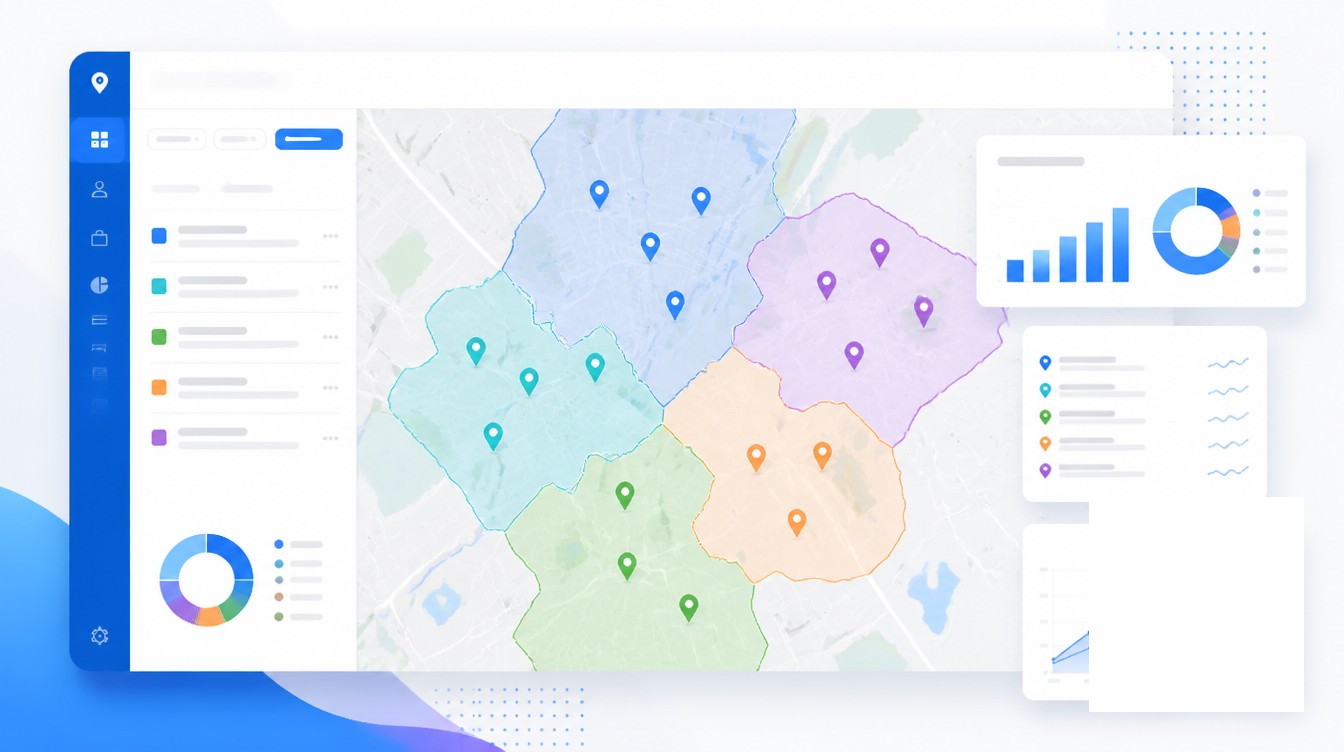
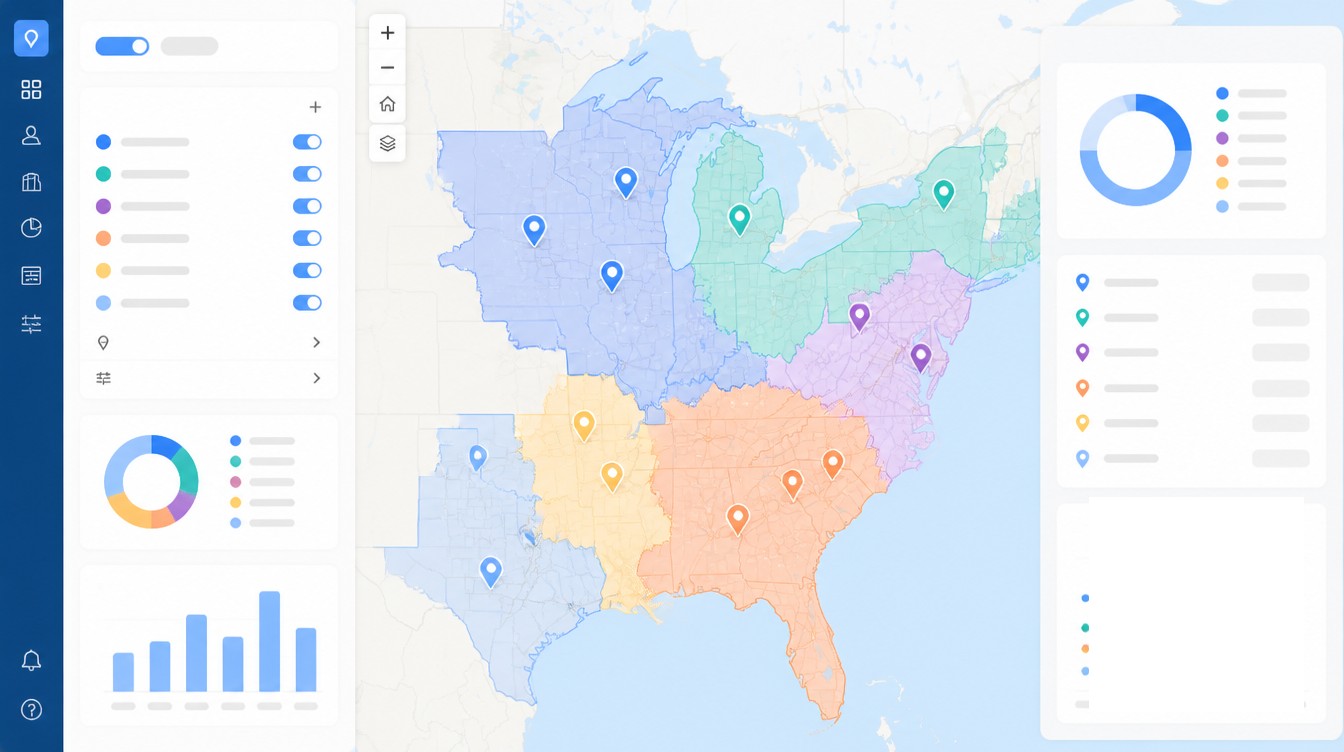
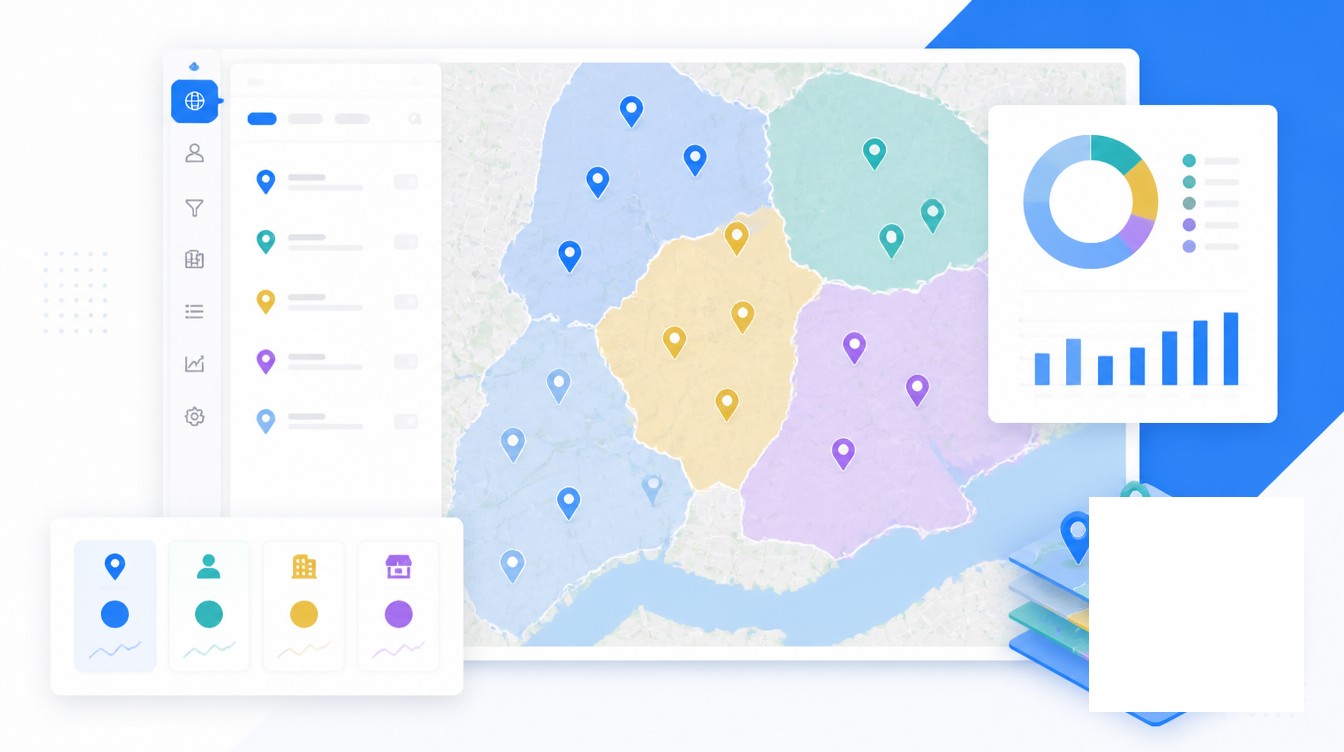
Mapping the territory before signing is the only check on the franchisor’s drafting. The candidate who plots their proposed boundary against a demographic layer, a captive-venue layer, and a sister-brand-location layer learns more in 20 minutes about the system’s competitive economics than they will from reading the FDD twice. Tools such as Maptive support that overlay process. Anyone signing without that exercise is buying blind.
Frequently Asked Questions
What is Item 12 of the FDD?
Item 12 is the Territory section of every Franchise Disclosure Document, required by 16 CFR 436.5(l). It must disclose the territory’s exclusive or non-exclusive status, the minimum size and definition method of the territory, the franchisor’s reserved rights to compete via alternative channels or non-traditional venues, modification and renewal terms, and any rights of first refusal on adjacent territories.
What is the difference between an exclusive territory and a protected territory in a franchise?
An exclusive territory bars both the franchisor and other franchisees from operating any same-brand outlet inside the boundary. A protected territory bars only another same-brand physical unit. The franchisor typically reserves rights to sell online, supply national accounts, run sister brands, or operate captive-venue units. True exclusive territories are rare in 2026 systems.
Do most franchises offer exclusive territories?
No. Most modern franchise systems offer either a protected territory (most common) or no territorial rights at all. Per FTC FAQ 37, the moment a franchisor reserves the right to open a non-traditional venue or sell through alternative channels, the territory must be disclosed as non-exclusive.
What is the FTC-required disclaimer for a non-exclusive franchise territory?
When the franchise is not exclusive, Item 12 must include this verbatim language: “You will not receive an exclusive territory. You may face competition from other franchisees, from outlets that we own, or from other channels of distribution or competitive brands that we control.” The franchisor cannot soften or modify the wording.
Can a franchisor open another location near my franchise?
It depends on Item 12. If the territory is exclusive or protected, the franchisor generally cannot place another same-brand physical unit inside the boundary. If the territory is non-exclusive or there is no territory at all, the franchisor can place a competing same-brand unit nearby. Even with protection, sister brands, online sales, and captive venues may still encroach.
What is franchise encroachment?
Encroachment is when the franchisor or another franchisee operates a same-brand or competing outlet close enough to an existing franchisee that it cannibalizes the franchisee’s sales. It can be physical (a new unit nearby) or virtual (online sales, third-party delivery, or sister-brand competition inside the territory).
What was Bryman v. El Pollo Loco?
A 2017 Los Angeles Superior Court case where a jury awarded $8.8 million to franchisees Michael and Janice Bryman after El Pollo Loco used their required electronic sales reports to open a company-owned restaurant 2.25 miles from their Lancaster, CA location. The jury found El Pollo Loco breached the implied covenant of good faith and fair dealing even though the franchise agreement granted no exclusive territory. The case settled on appeal in 2020.
Which states require franchise registration in addition to the FTC Franchise Rule?
Fourteen states: California, Hawaii, Illinois, Indiana, Maryland, Michigan (notice only), Minnesota, New York, North Dakota, Rhode Island, South Dakota, Virginia, Washington, and Wisconsin. Several require state-specific addenda that modify Item 12 disclosures.
How is a franchise territory typically defined?
By one of five methods. A fixed-radius circle (1 to 10 miles, most common), a list of ZIP codes, a county or municipal boundary, a drive-time polygon (for example, a 12-minute drive), or a custom polygon mapped to demographics or streets. Some systems use population thresholds. Anytime Fitness uses a 3-mile maximum radius with a 30,000-person population cap.
Can a franchisor sell online into my territory?
Usually yes, unless Item 12 specifically prohibits it. Most modern FDDs reserve internet, catalog, telemarketing, and third-party delivery rights to the franchisor. Older agreements drafted before 2015 often did not address third-party delivery apps, which has driven a wave of disputes in 2023 to 2024.
What is a right of first refusal on adjacent territory?
A contract provision in some Item 12 disclosures giving the franchisee the right to match a third-party offer for an adjoining territory before the franchisor awards it to someone else. It is a protective mechanism short of true expansion rights. The franchisee still has to pay. Most ROFRs have short timelines (30 to 60 days) and exclude franchisor-owned development.
Can my franchise territory shrink at renewal?
Yes, if Item 12 permits it. Many FDDs allow the franchisor to modify or reduce the territory at renewal, often without compensation. This must be disclosed under 16 CFR 436.5(l). Read renewal terms in both Item 12 and Item 17 carefully.